
Digitalisation projects
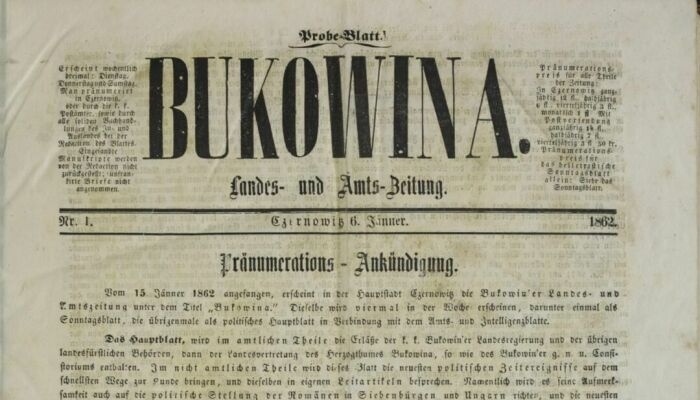
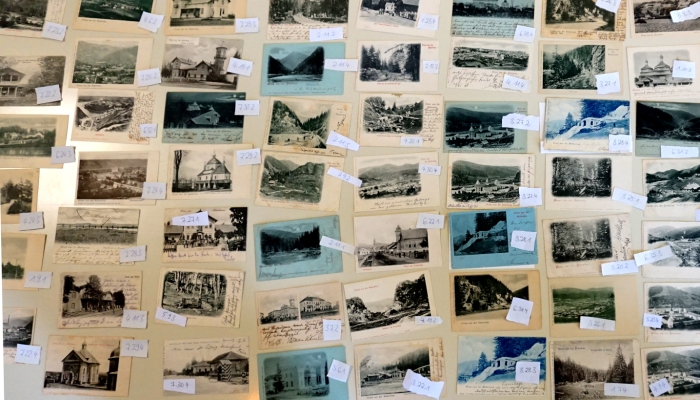
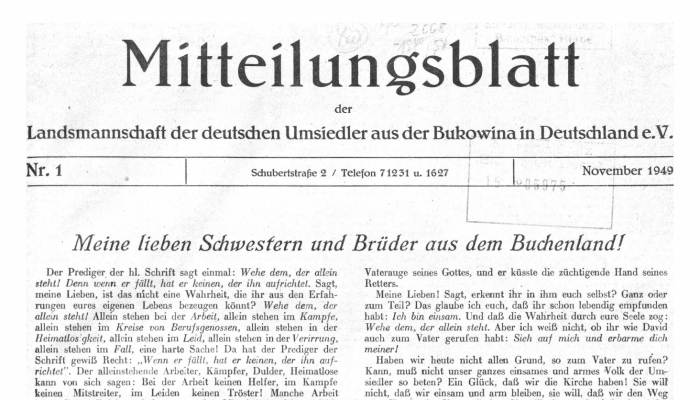
Das Bukowina-Institut hat sich zum Ziel gesetzt, Archivbestände wie beispielsweise Postkarten und historisches Schriftgut wie Zeitungen für die Nachwelt zu sichern, zu bewahren und zugänglich zu machen. In den letzten Jahren konnten wir mit Hilfe unserer Kooperationspartner*innen und Förder*innen einen wichtigen Beitrag zu diesem Ziel leisten. Auch in Zukunft sollen weitere Digitalisierungsprojekte vorangetrieben werden.
About the Project
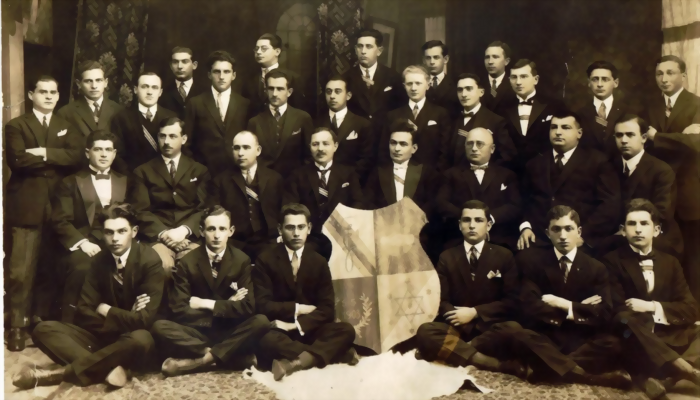
The current collaborative project was carried out in partnership with the Bukowna-Institute (Augsburg), the Institute for the Culture and History of Germans in South-Eastern Europe at LMU Munich (IKGS), the Institute for Foreign Cultural Relations (IFA, Stuttgart), the University and State Library of Düsseldorf, the National Library of Israel (Jerusalem), the World Organisation of Bukovina Jews (Ramat Gan, Israel), the Martin Opitz Library (Herne), the Leibniz Institute for East and South-East European Studies (IOS, Regensburg) and the Czernowitz Discussion Group.
The new collection consists of several parts. Firstly, there are historical newspapers which were published during the interwar period in Bukovina – formerly part of Austria and subsequently part of Romania – primarily under Jewish editorship and in German and Yiddish. Liberal newspapers, such as the 'Czernowitzer Morgenblatt' or the 'Czernowitzer Allgemeine Zeitung', found their readership amongst broad sections of the German-speaking population, as they generally represented the interests of what were now national minorities within the new state. The 'Tšernowitzer bleter', the 'Arbeter Tsaytung' and 'Di frayhayt', printed in Yiddish, by contrast, reflect political, cultural and ideological intra-Jewish discourses against the backdrop of the Romanian government’s progressive curtailment of the fundamental rights of Jewish men and women. Finally, the 'Czernowitzer Deutsche Tagespost' was also included – a newspaper which, after 1933, in concert with and supported by Berlin, participated in the numerous anti-Semitic smear campaigns that ultimately led to the extermination of a large part of the Jewish population in Bukovina as well. “Die Stimme”, founded as early as 1944 by Elias Weinstein in what was then the British Mandate of Palestine and still in existence today in Israel, became the printed information and communication platform for survivors after the Holocaust.
In addition to digitising and making available online a corpus of periodical sources comprising a total of 16 titles, DiFMOE, in cooperation with the Czernowitz Discussion Group – the global virtual network of around 500 Jewish Holocaust survivors from Bukovina and their descendants – integrated selected parts of the group’s own archive, containing valuable personal and family historical documents, into the Digital Library. Within the ‘Jewish-German Bukovina 1918+’ collection, the added holdings of around 1,000 items can be accessed both in their entirety and organised by the individual private collections of the members.
Kontakt

The Bukovina Institute is supported by:
The Bukovina Institute is supported by:




Bukowina-Institut
An der Universität Augsburg
Alter Postweg 97a
86159 Augsburg
86159 Augsburg
Opening hours
Montag bis Donnerstag
8:30-16:00 Uhr
8:30-16:00 Uhr