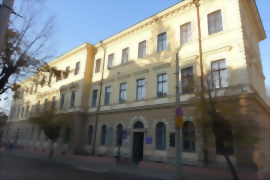
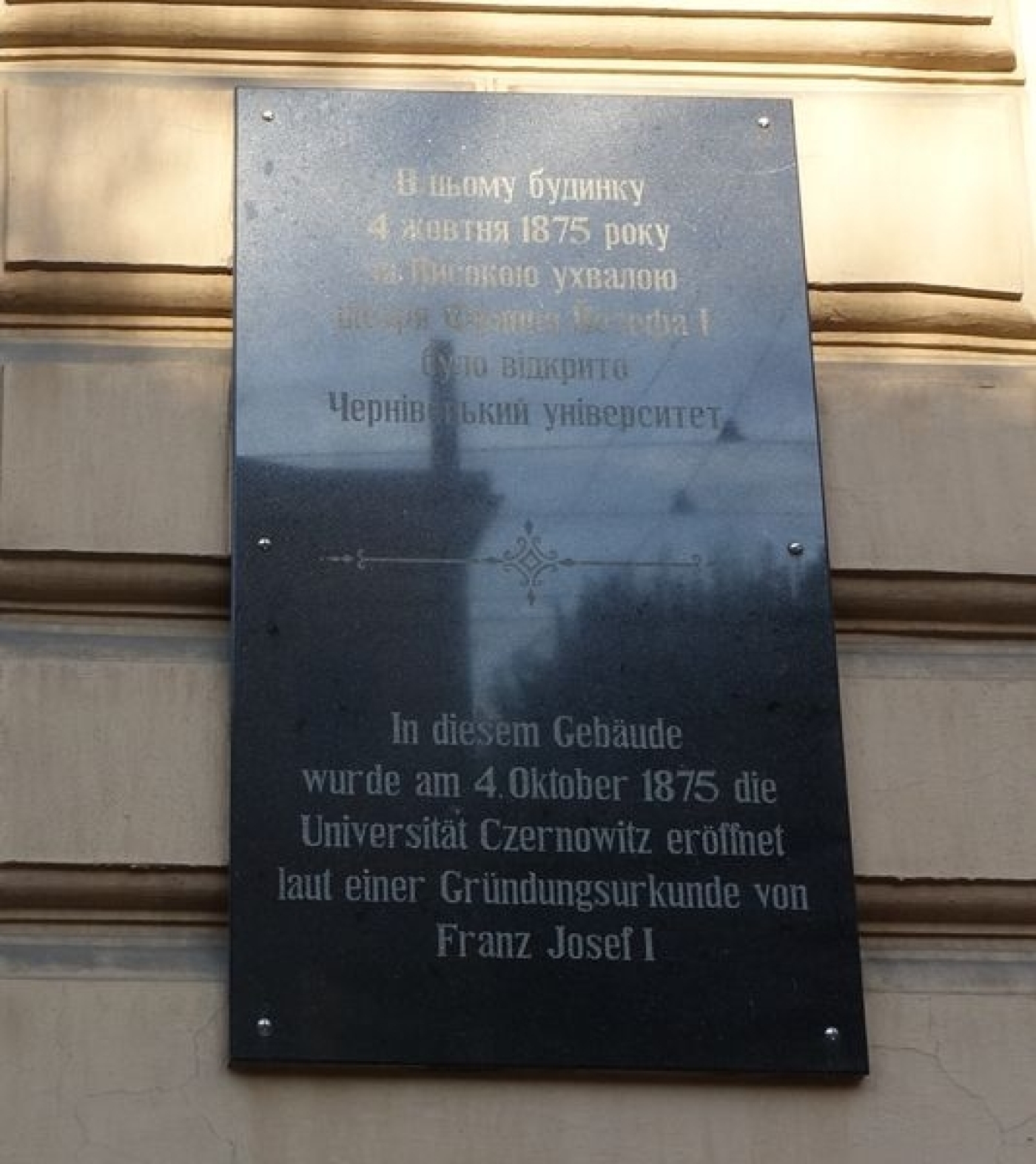
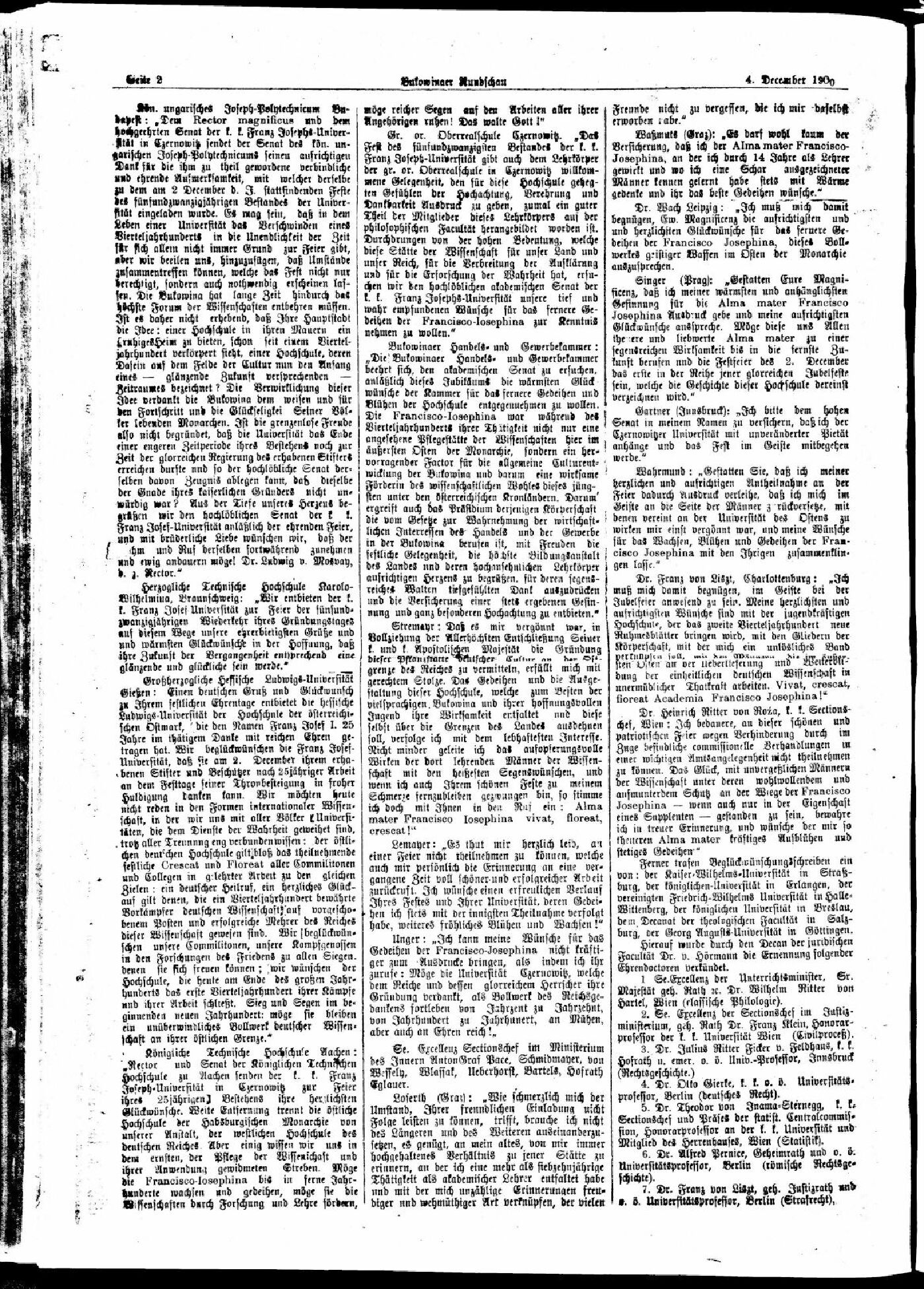
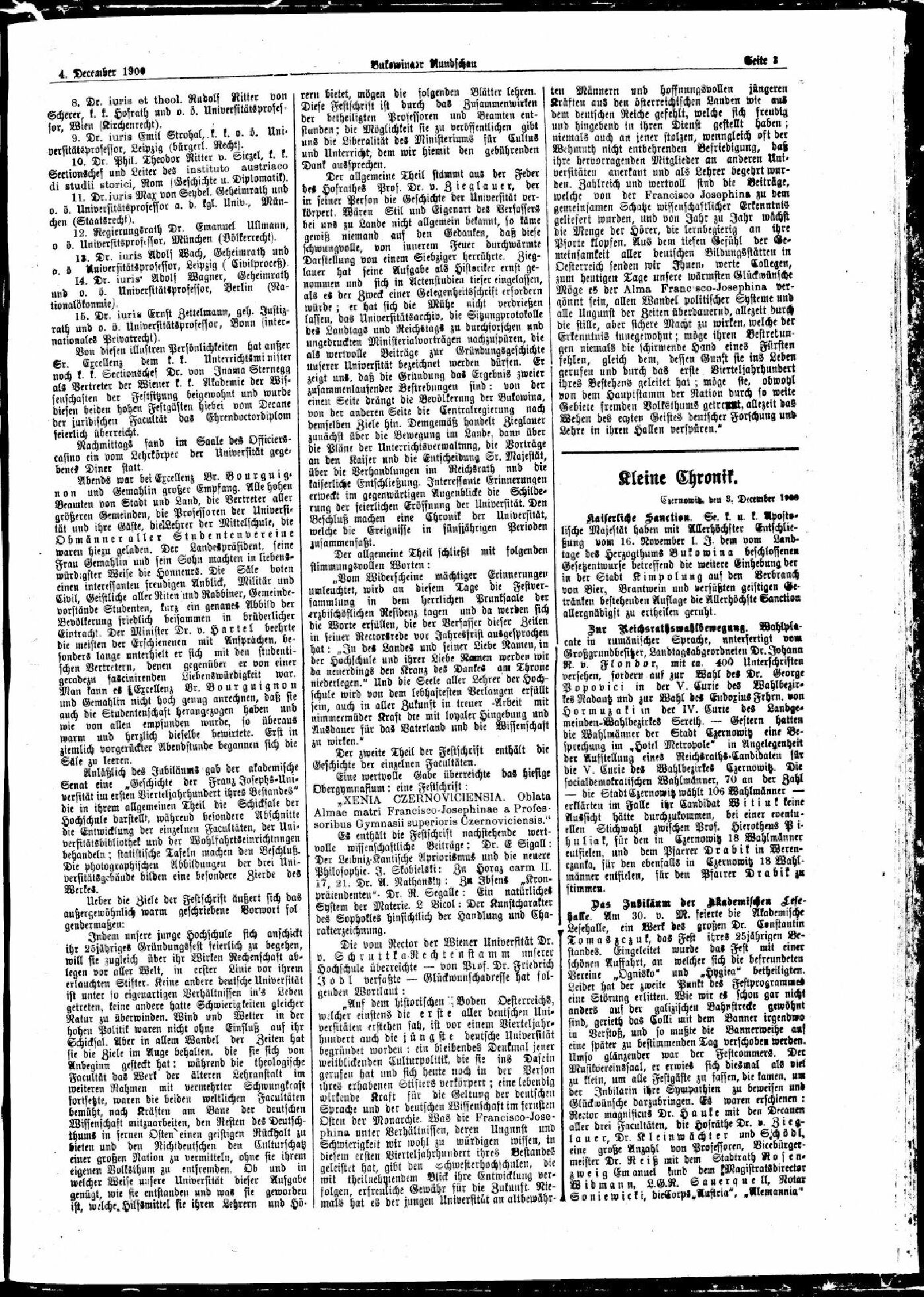
In the end, the initiative for the proposal that would eventually lead to the opening of the University of Chernivtsi in 1875 came neither from Vienna nor exclusively from the German-speaking Bukovinians. The document presented by Constantin Tomaszczuk, the university's first rector, was a collective effort of the regional parliament, supported by the regional president Eudoxius Hurmuzaki, and symbolic of the broad spectrum of Bukovina's cultural landscape: German, Romanian and Ruthenian national politicians were equally involved in the lobbying (Turczynski: Political Culture, p. 8). Tomaszczuk stressed that German science had a claim to universality, which was why non-German Bukovinians also sought a German education. He recognised the favourable conditions that Bukovina offered for this ambitious project: here the state, the church and the nationalities would work in harmony to modernise the crown land; moreover, Bukovina had an efficient and respected seminary and a well-equipped theological institute, both financed by the wealthy Greek-Oriental Religious Fund. The local nobility and intellectual upper class ensured that the considerable provincial library was well maintained, and its holdings constantly updated (Turczynski: Bildungsbürgertum, pp. 213-215). Locally, the idea was greeted with enthusiasm. When the decision had been taken at the highest level, the head of the provincial administration informed him that numerous local organisations, such as the Archbishop's Consistory, the Jewish Religious Board and the Ruthenian Association 'Rada Ruska', had expressly asked him to convey their thanks to Emperor Franz Joseph I (Alesani: Landespräsidium).
In the imperial charter of the Chernivtsi k. u. k. Franz Joseph University, the Emperor emphasised that it was the culmination of the educational reforms begun by Joseph II a century earlier. In addition to law and philosophy, the university was to include an Orthodox theological faculty. The necessary funds were provided by the state (Emperor Franz-Joseph I, Stiftbrief). At the insistence of Romanian and Ruthenian members of parliament, the university was also granted chairs in Romanian and Ruthenian philology (Turczynski: Bildungsbürgertum, p. 214).
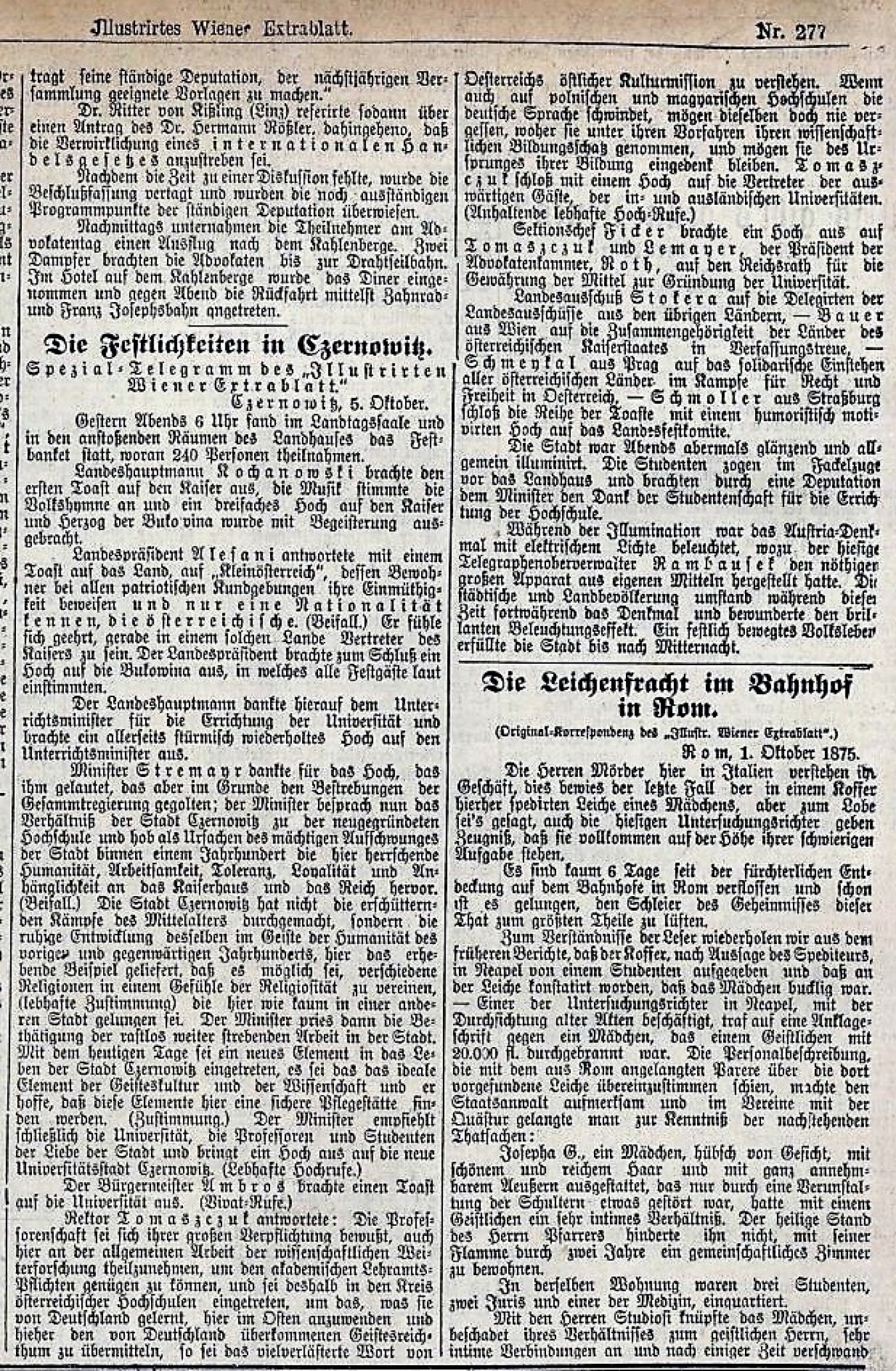
Despite the meticulous preparations and the balanced curriculum, however, the opening ceremony was marked by a series of speeches that conveyed German cultural superiority. The Rector of the University of Innsbruck, Karl Theodor Inama-Sternegg, expressed the hope that 'you [the university - J. v. D.] will always remain true to the spirit in which you were founded: the German spirit. For in it lies the cultivation of true freedom of thought and the cultivation of true love for our fatherland' (Friedwagner: Mommsen). In anti-Semitic circles in Vienna, the establishment of a German university and the associated celebration of German culture was seen as a farce. In this distant corner of the Empire, they claimed, most of the supporters of this culture were in fact Jews (Hausleitner, p. 40 and 'Die Czernowitzer Feste'. In: Das Vaterland, 5 October 1875, p. 3).
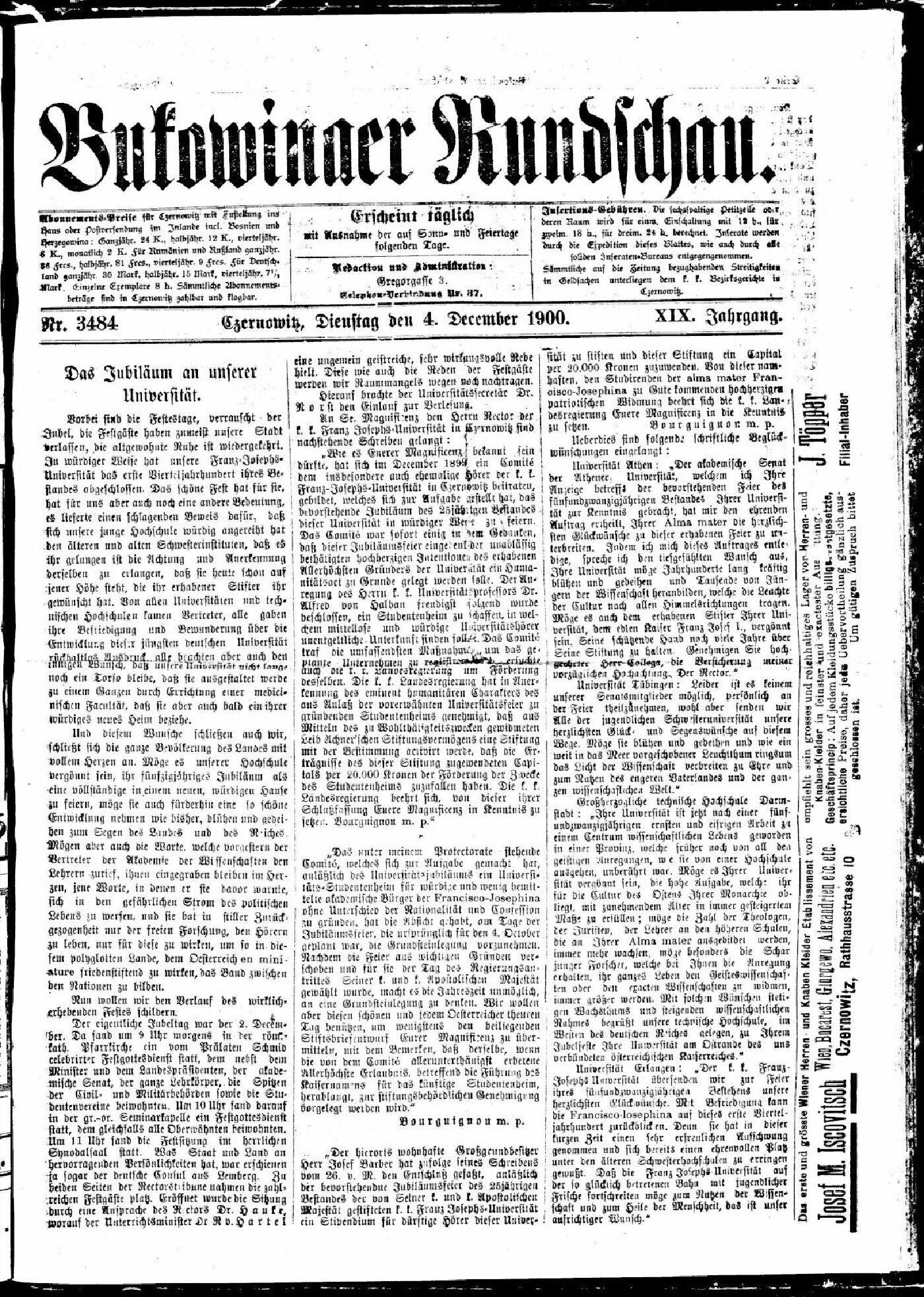
Nevertheless, such dissonances remained mostly in the background. Thirty years later, the Viennese and Chernivtsi press nostalgically recalled how 'all of a sudden the Buchenland in the far east of the Monarchy, which had hitherto received little literary recognition, became an object of general interest, not only in Austria, but in all German lands' (quoted from Neues Wiener Tagblatt, 3 March 1906, In: Heiteres und Ernstes aus der Bukowina. In: Czernowitzer Allgemeine Zeitung, 6 March 1906, p. 4)
The semester at the newly founded institution began with a manageable number of 188 students (Franz-Josephs-Universität: Statistische Übersicht), and even during the first decade of its existence the number of students never exceeded 280. During this period, it failed to live up to the high expectations of its intellectual fathers. It was not until 1909 that more than a thousand students were enrolled at the Franz Joseph University (Lechner, p. 6). Lecturers and professors had to be recruited from other crown lands and came mainly from Vienna, Innsbruck and Graz (Turczynski: Neuzeit, p. 156). The successfully negotiated chairs of Romanian and Ruthenian linguistics, with their well-organised collections of current publications, gave new impetus to Romance and Slavic studies as well as to the historiography of Eastern and South-Eastern Europe. Prominent academics such as the economists Joseph A. Schumpeter and Friedrich Kleinwächter began their careers in Chernivtsi. Many Chernivtsi scholars were associated with other universities as corresponding members (Turczynski: Bildungsbürgertum, p. 217f.). The Theological Faculty - with its roots in the Theological Institute of the Bukovinian metropolis - attracted students from all over the Habsburg Empire, but also from Romania, Serbia and Greece (Turczynski: Modern Times, p. 102).
Text: Jeroen van Drunen
Sources:
- Hieronymus Alesani: Brief an das Landespräsidium. Aktenrummer 748, 19. Dezember 1874. In: Deržavnyj Arhiv Černivec`koї Oblasti [Staatsarchiv des Czernowitzer Gebietes, i. F. DAČO], Fond [Findbuch] 3, Opys [Aktenregister] 1, Sprava [Aktenmappe] 3966
- Jeroen van Drunen: Deutsche Kultur und geistiges Proletariat: Zur Ambivalenz der Czernowitzer Franz-Josephs-Universität (1875–1918). In: Markus Winkler (Hg.): Partizipation und Exklusion: Zur Habsburger Prägung von Sprache und Bildung in der Bukowina. 1848 – 1918 – 1940. Regensburg 2015, S. 41-53
- Franz-Josephs-Universität (Hg.): Statistische Uebersicht der im Winter-Semester 1875/76 an der Franz-Josephs-Universität zu Czernowitz inscribirten Hörer. Czernowitz 1875. In: DAČO, Fond 3, Opys 1, Sprava 4070
- Kaiser Franz-Joseph I.: Kaiserlicher Stiftbrief. Wien, September 1875. In: Arhivele Naţionale ale României [Rumänisches Nationalarchiv, im Folgenden ANR] (Bukarest), Fond ‘Guvernământul Bucovinei’ [Landesregierung der Bukowina], Ministerul Culturii și Învățămîntului [Ministerium für Kultus und Unterricht, im Folgenden MCȊ], LXXXV/1.
- Matthias Friedwagner: Mommsen und die Czernowitzer Universität. In: Bukowinaer Rundschau, 10. Dezember 1903, S.1-2
- Mariana Hausleitner: Eine wechselvolle Geschichte. Die Bukowina und die Stadt Czernowitz vom 18. bis zum 20. Jahrhundert. In: Helmut Braun (Hg.): Czernowitz. Die Geschichte einer untergangenen Kulturmetropole. Berlin 2006
- Elmar Lechner: Die ehemalige k.k.Franz-Josefs-Universität zu Czernowitz. Eine Chronologie und eine Bibliographie. Klagenfurt 2001
- Emanuel Turczynski: Die politische Kultur der Bukowina. Harmonie ethnischer Kleingruppen. Stuttgart 1979 (Kaindl-Archiv, 2)
- Emanuel Turczynski: Geschichte der Bukowina in der Neuzeit. Zur Sozial- und Kulturgeschichte einer mitteleuropäisch geprägten Landschaft. Wiesbaden 1993
- Emanuel Turczynski: Czernowitz, eine vom Bildungsbürgertum errungene Universität im Dienst staatlicher Bildungs- und Wissenschaftsförderung. In: Peter Wörster (Hg.): Universitäten im östlichen Mitteleuropa. Zwischen Kirche, Staat und Nation – Sozialgeschichtliche und politische Entwicklungen. München 2008