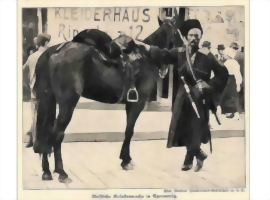
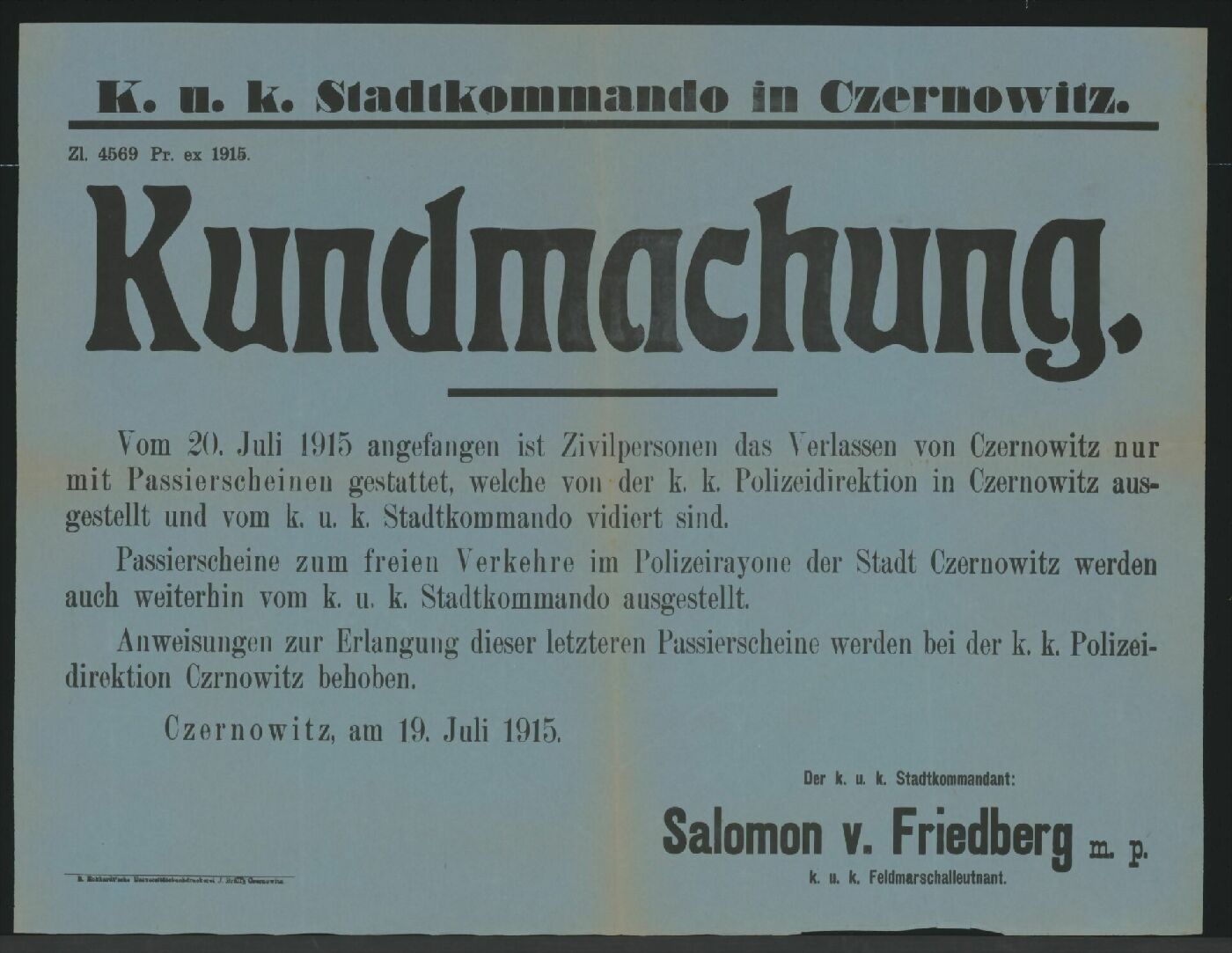
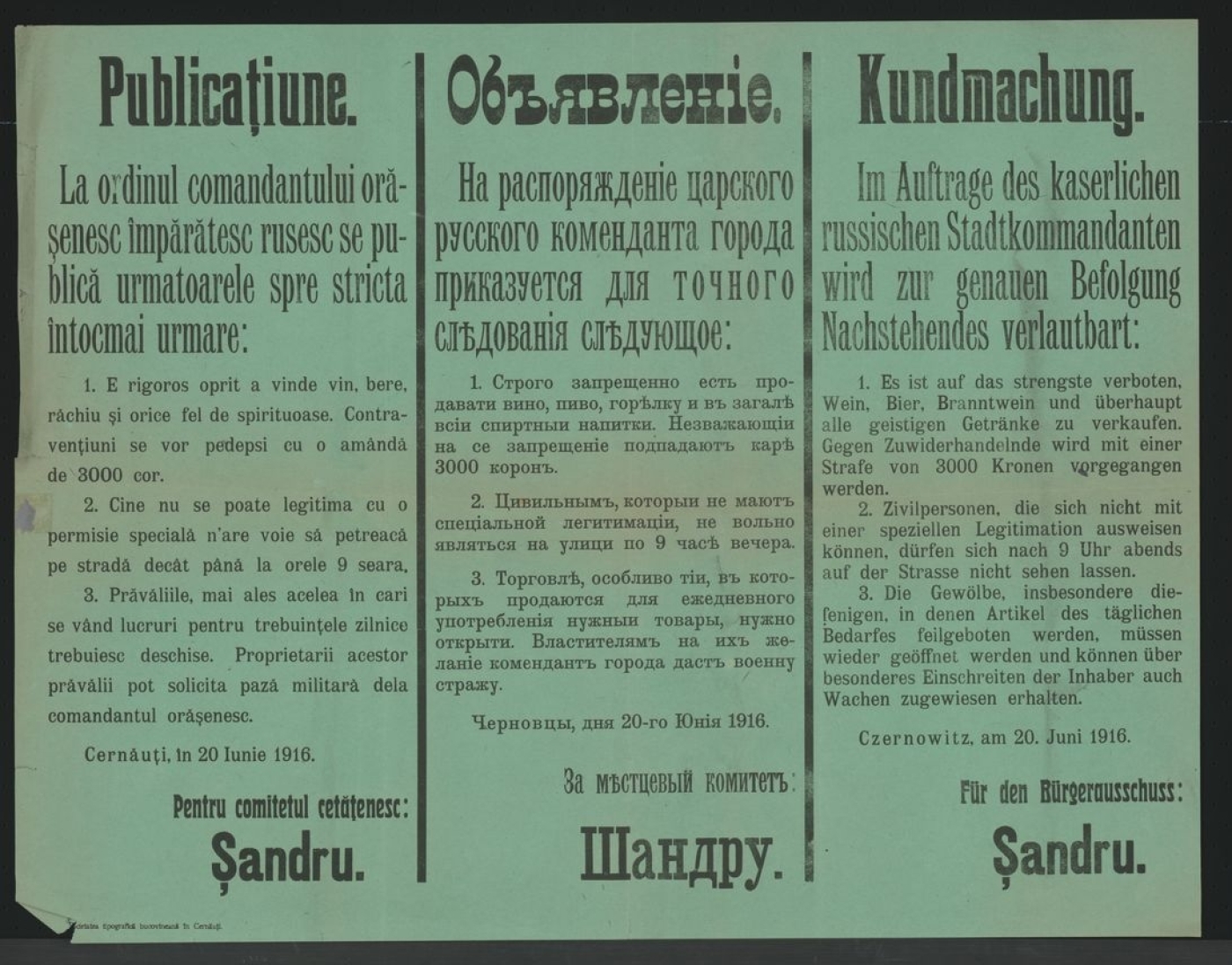
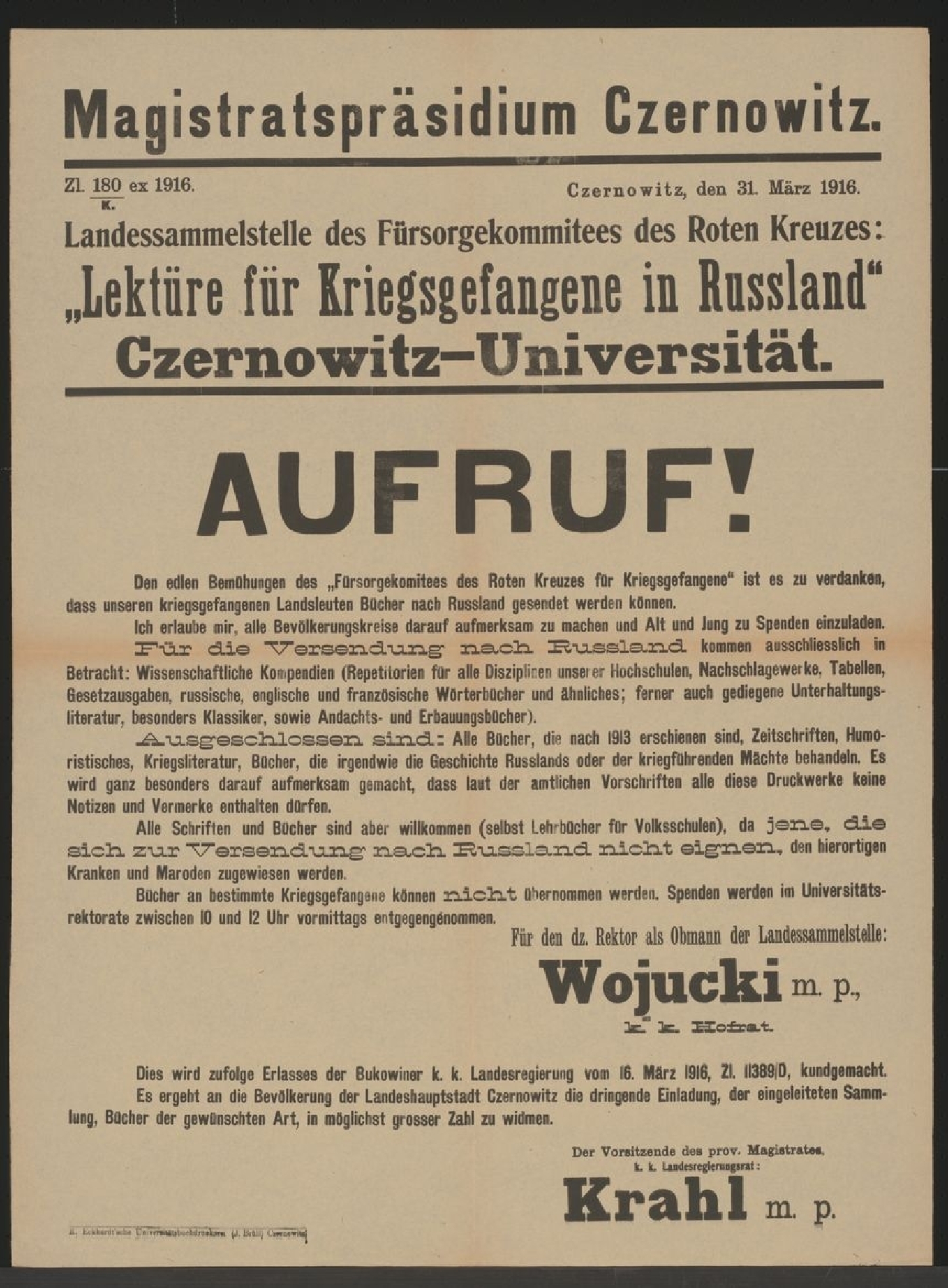
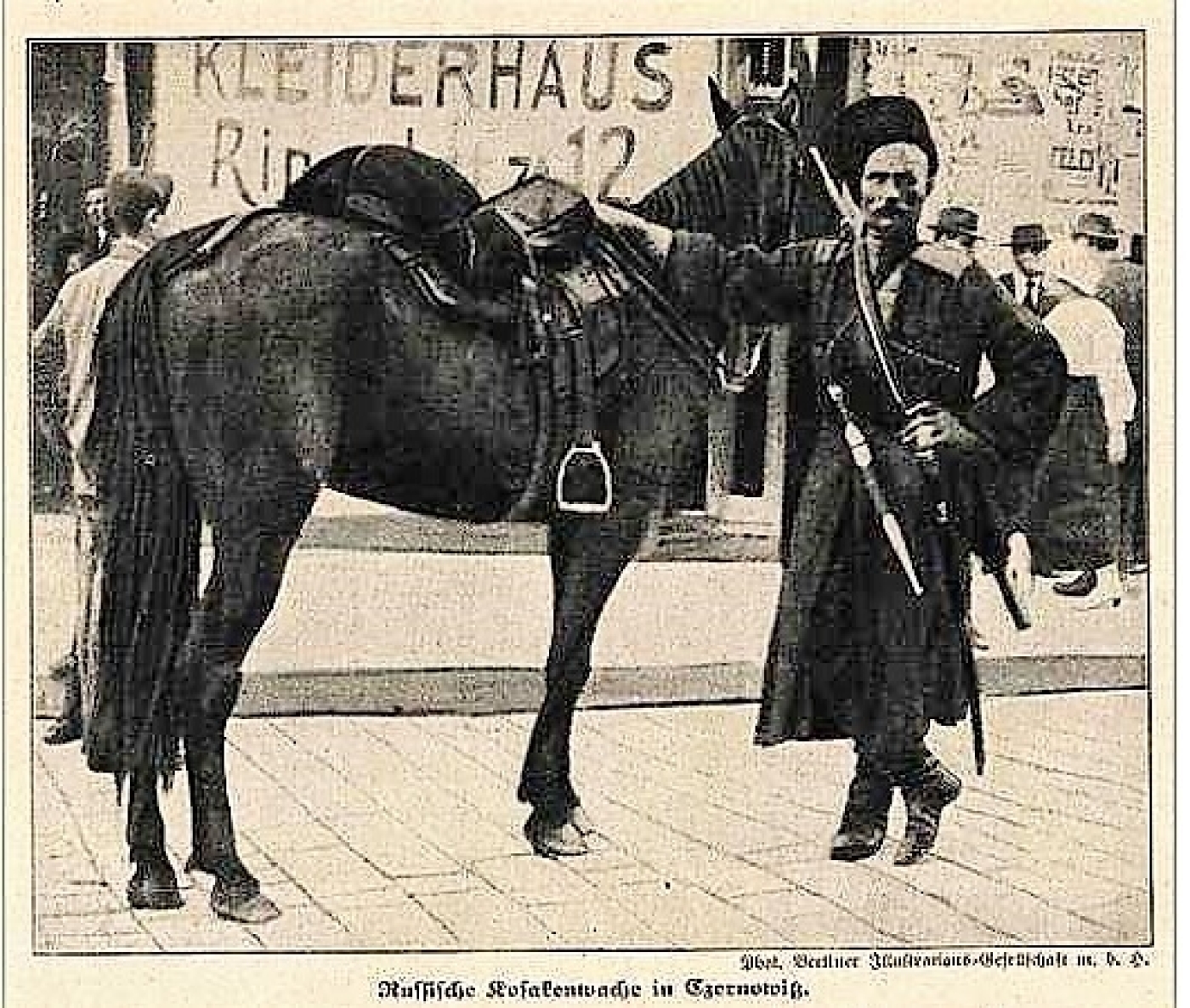
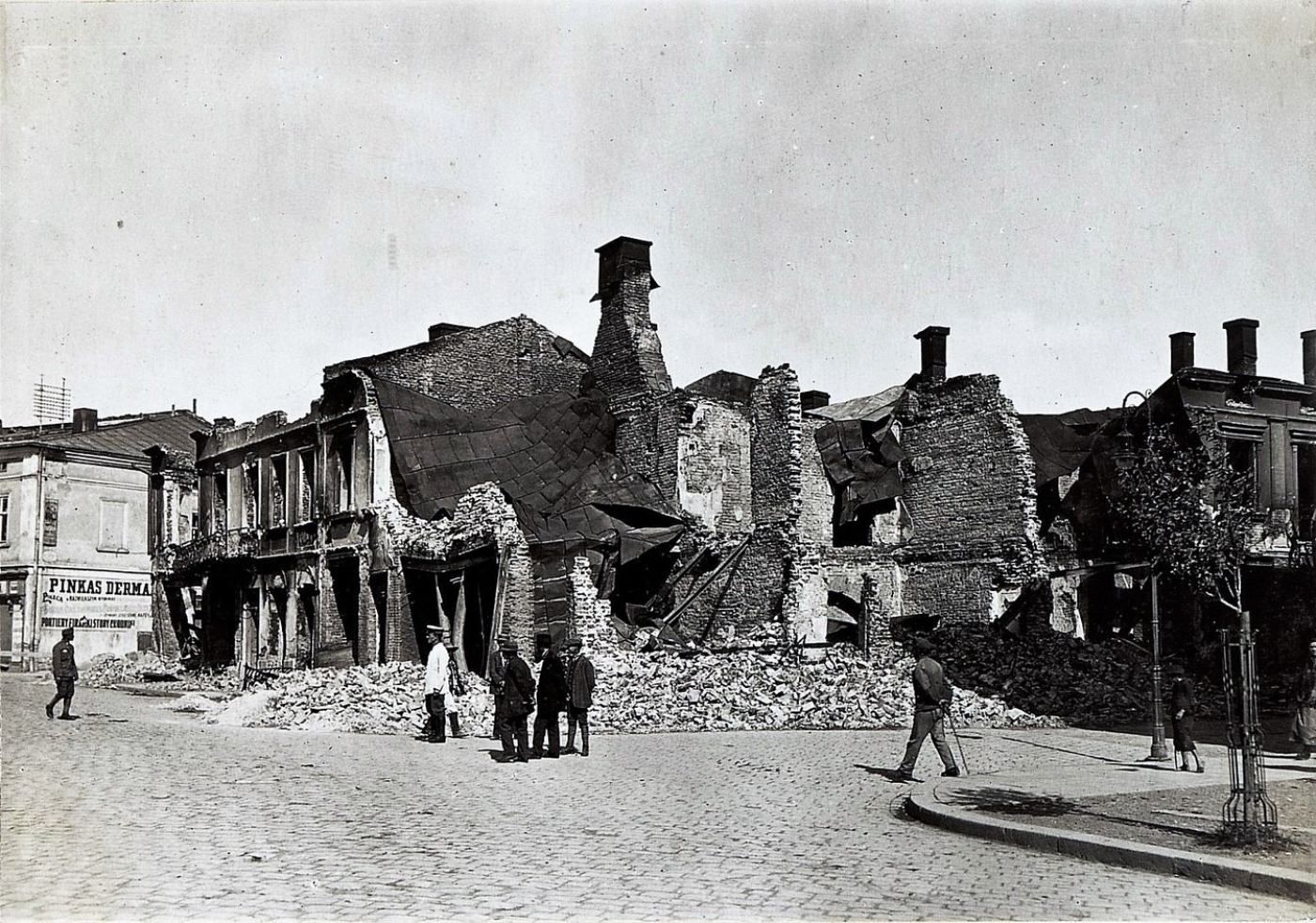
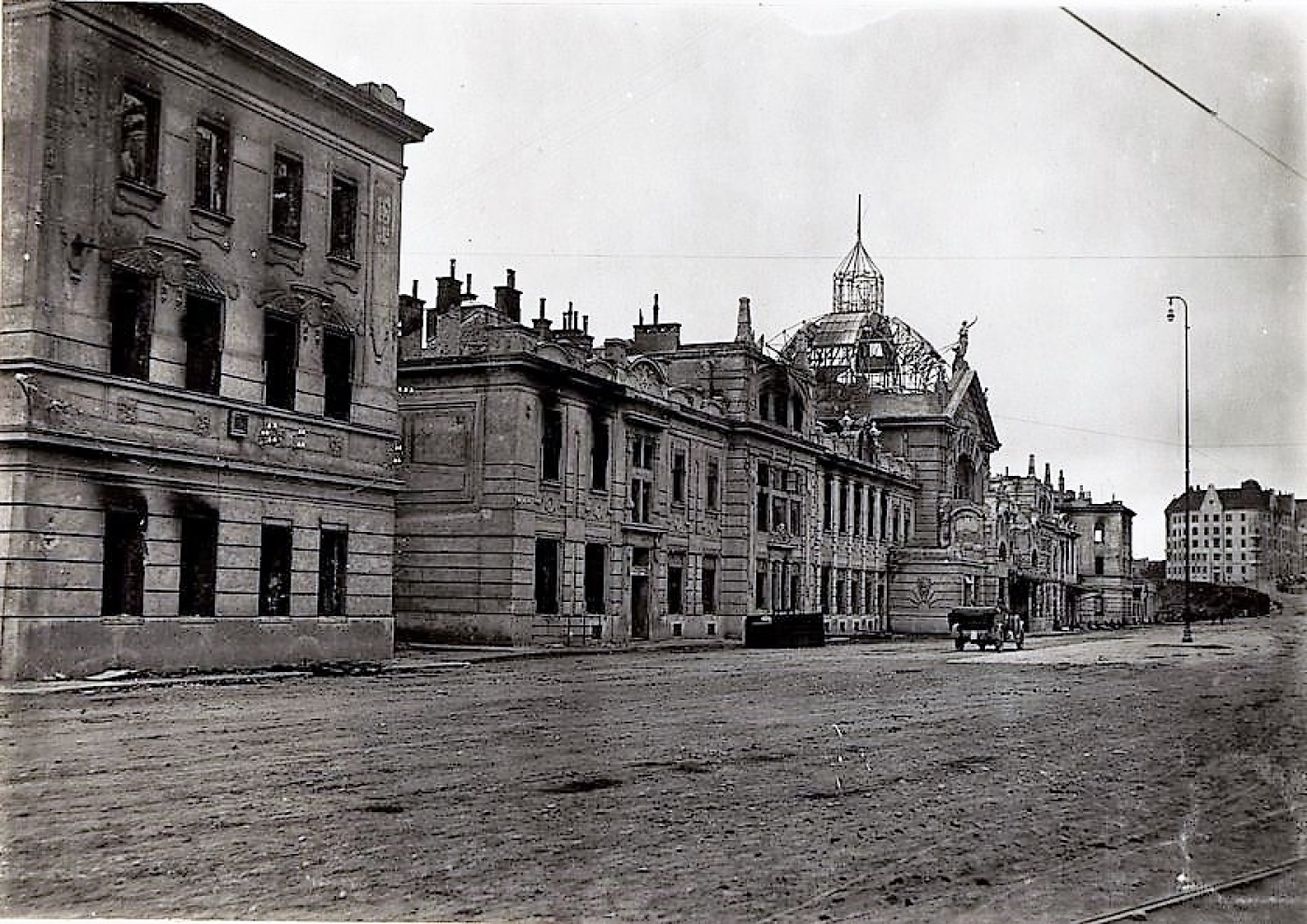
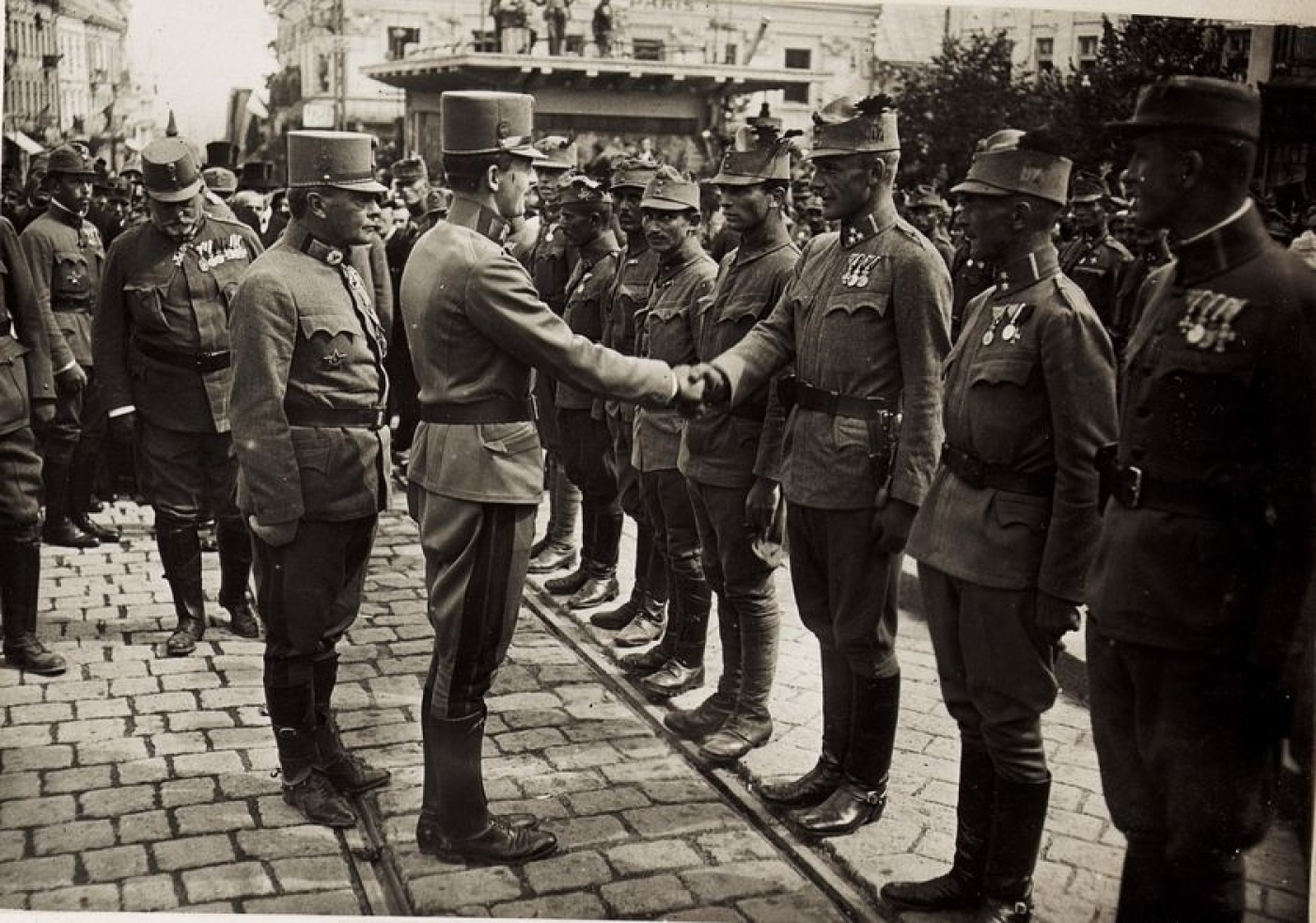
Five weeks after the start of the war, the first Russian invasion of the northern part of Bukovina and Chernivtsi began. The handover of the city to the commander of the Russian troops by the Jewish mayor Salo Weisselberger on 2 September 1914 was calm and without excesses. Shortly afterwards, however, local leaders, especially Jews, were deported from the city to Siberia and the regions of present-day Turkmenistan (Ashgabad) and Uzbekistan (Bukhara, Samarkand) as prisoners of war or prisoners of exchange. Among the deportees were Mayor Weisselberger, Philipp Menczel (lawyer and editor of the Czernowitzer Allgemeine Zeitung) and the Zionists Mayer Ebner and Manfred Reifer. Some of them recorded their war and camp experiences in writing and later published them. The first Russian occupation ended on 20 October 1914, after Colonel Eduard Fischer and his Landwehr regiment of volunteers, despite being outnumbered, managed to retake the town and hold it until 28 November 1914. This volunteer army included 500 Jews (Röskau-Rydel, 285).
During the second Russian invasion that followed, the situation was chaotic. The authorities left the town in a hurry without informing the inhabitants. There is only vague information about the number of refugees and the remaining inhabitants.
Information about the number of refugees and the remaining population is inexact. Allegedly, only 10,000 people remained in Chernivtsi at the end of November 1914. At least half of the Jewish population of Galicia and Bukovina - some 900,000 people - were on the run (Schuster, 125). On 17 February 1915 the region was retaken by Austrian troops and held until mid-June 1916. The third Russian occupation took place between 18 June 1916 and 3 August 1917. Few sources report on this last phase. The Bukowinaer Bote - a two-page supplement to the morning edition of the Prague German newspaper Bohemia, published weekly from 11 October 1916 to 8 August 1917 - informed the refugees about the war situation in Bukovina, about casualties and missing persons, and helped with administrative matters (at times all Bukovina authorities - with the exception of the Bukovina Regional Cultural Council in Vienna - were based in Prague). From March 1917, the region was under the influence of the Russian Revolution, the effects of which also left their mark on Chernivtsi. Immediately after its reappearance (25 August 1917), the Czernowitzer Allgemeine Zeitung printed an eight-part series of articles on the events of this period (between 28 August and 8 September 1917), titled ‘Die dritte Invasion von Czernowitz’ (‘The Third Invasion of Chernivtsi’).
Text: Markus Winkler
Sources:
- Frank M. Schuster, Zwischen allen Fronten. Osteuropäische Juden während des Ersten Weltkrieges (1914–1919) (Lebenswelten osteuropäischer Juden 9), Köln–Weimar–Wien 2004
- Isabel Röskau-Rydel (Hg.), Deutsche Geschichte im Osten Europas: Galizien, Bukowina, Moldau, Berlin 1999, S. 285. Angabe entnommen aus Eduard Fischer, Krieg ohne Heer: Meine Verteidigung der Bukowina gegen die Russen, Wien 1935
- Markus Winkler: Der Erste Weltkrieg: Wahrnehmung und Deutung aus der Perspektive deutschsprachiger Juden aus der Bukowina. In: Jüdische Publizistik und Literatur im Zeichen des Ersten Weltkriegs. Hrsg. von Petra Ernst und Eleonore Lappin-Eppel. Innsbruck 2015, S. 51-73
Materialien:
- Julius Weber: Die Russentage in Czernowitz. Die Ereignisse der ersten und zweiten russischen Invasion, Czernowitz 1915
- Philipp Menczel: Als Geisel nach Sibirien verschleppt. Berlin, Wien 1916
- Manfred Reifer: Menschen und Ideen. Tel Aviv 1952
- Prive Friedjung: „Nach einiger Zeit hatte die Front auch unser Dorf erreicht“. In: Christa Hämmerle (Hg.): Kindheit im Ersten Weltkrieg. Wien, Köln, Weimar 1993, S. 150-163
- Lydia Harnik: Erinnerungen an die Flucht vor der Russeninvasion nach Wien im August 1914. In: Albert Lichtblau (Hg.): Als hätten wir dazugehört. Österreichisch-jüdische Lebensgeschichten aus der Habsburgermonarchie. Wien, Köln, Weimar 1999, S. 261–266
- Moses Rosenkranz: Kindheit. Fragment einer Autobiographie. Aachen 2001
- Wolfdieter Bihl u.a. (Hg.): Czernowitz im Ersten Weltkrieg. Aus dem Tagebuch des k. k. Landesgerichtsrates Dr. Alfons Regius. In: Österreichische Osthefte. Zeitschrift des Österreichischen Ost-und Südosteuropa-Instituts 27 (1985) 2, S. 115–213