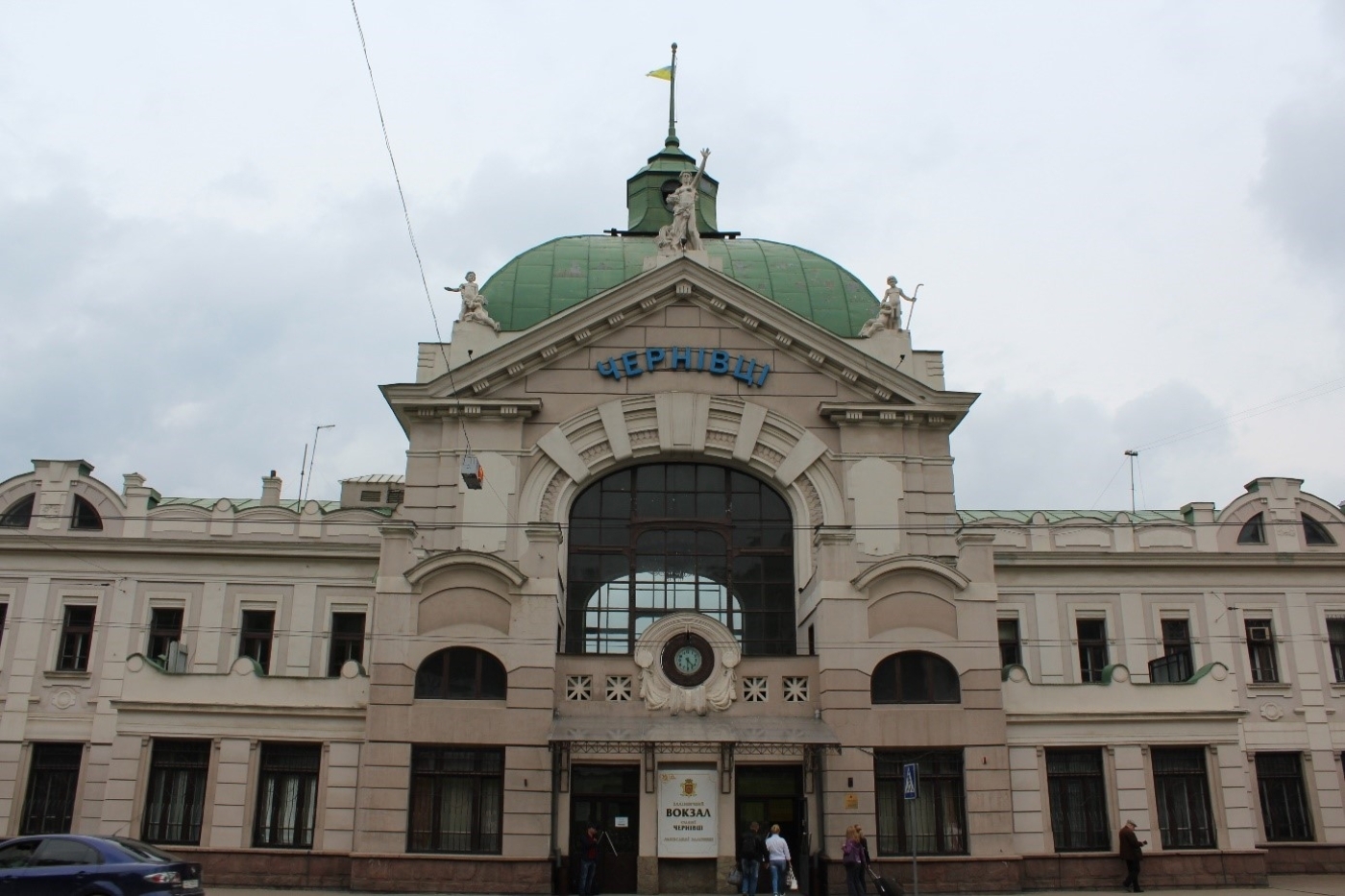
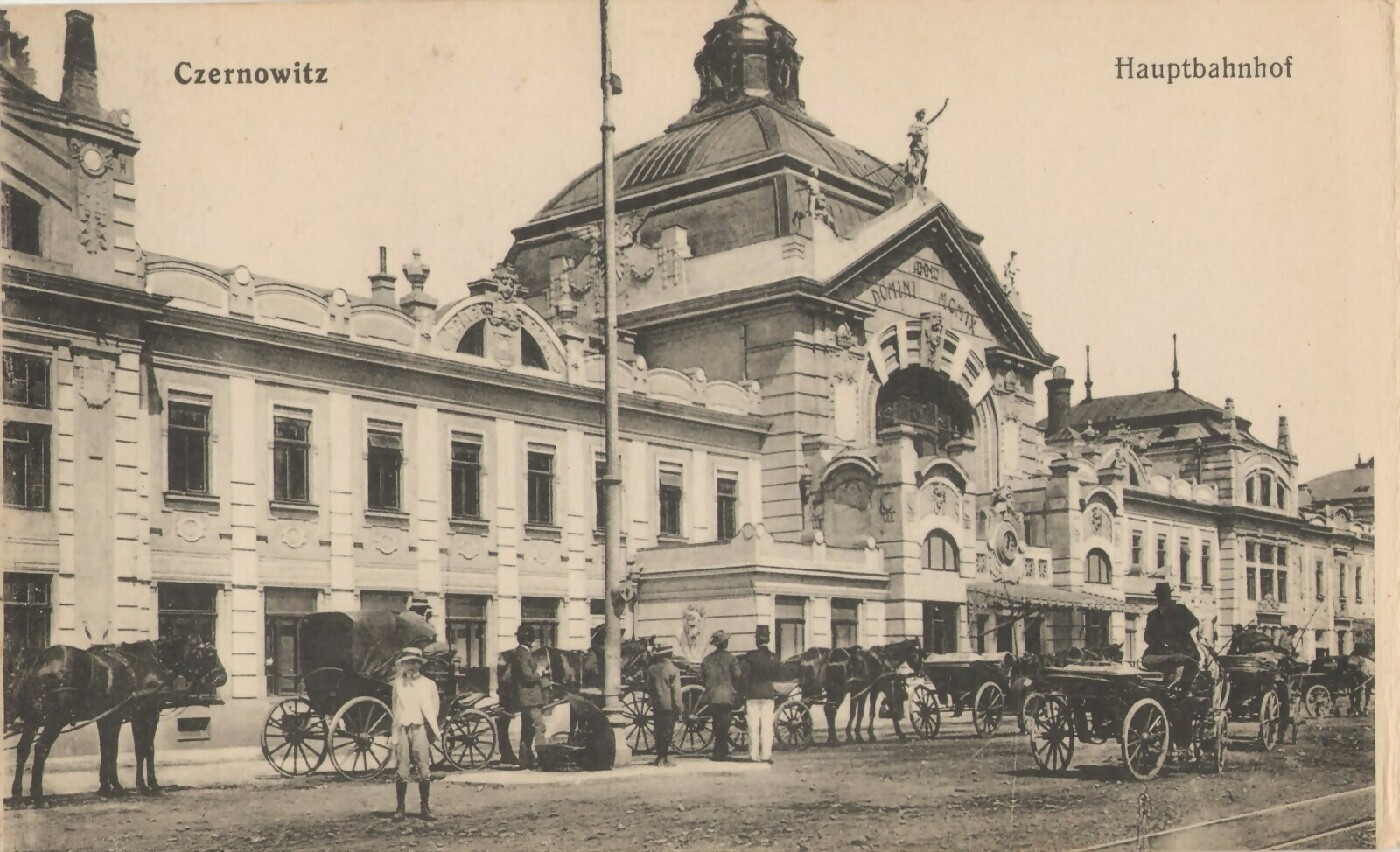
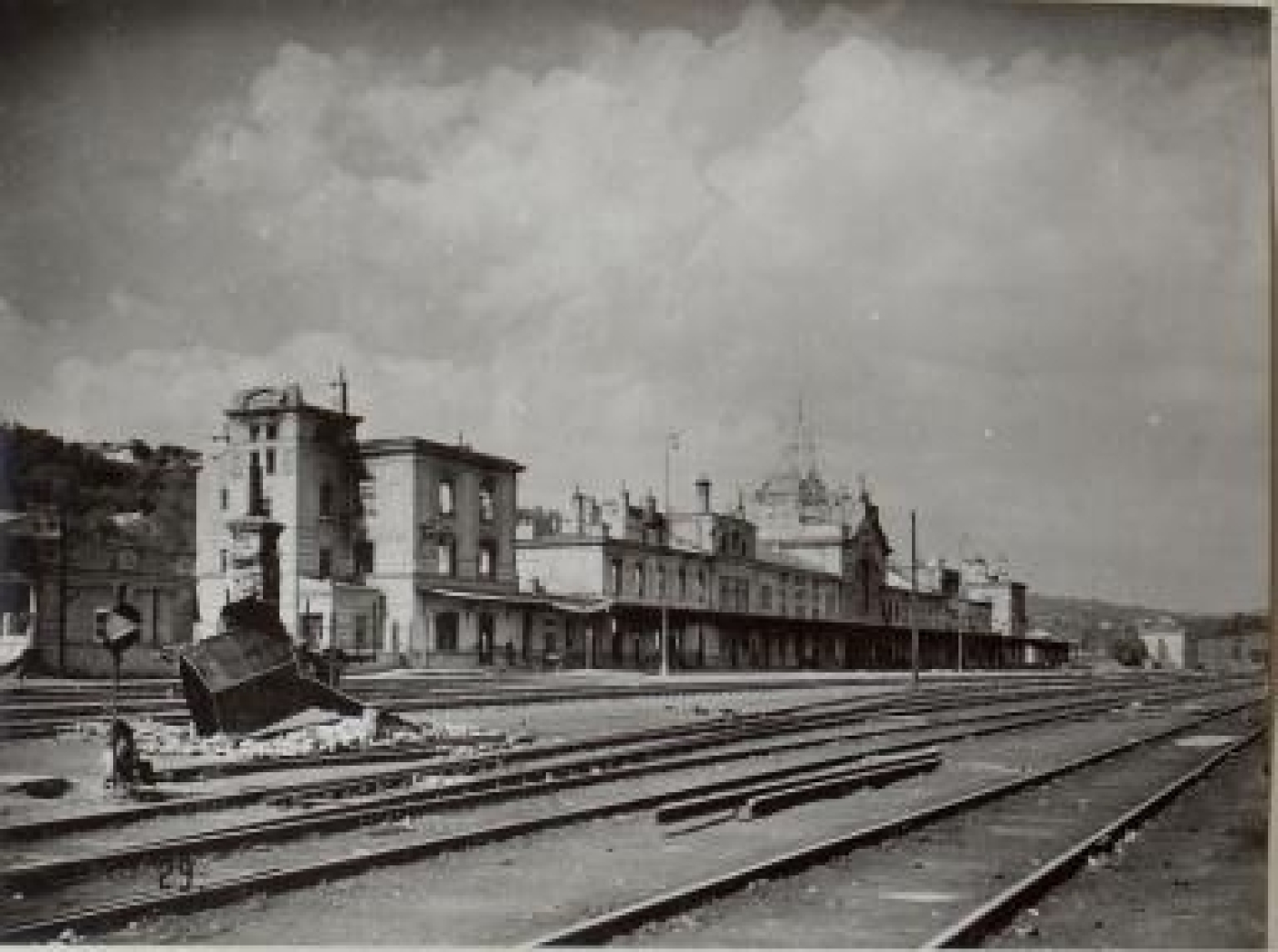
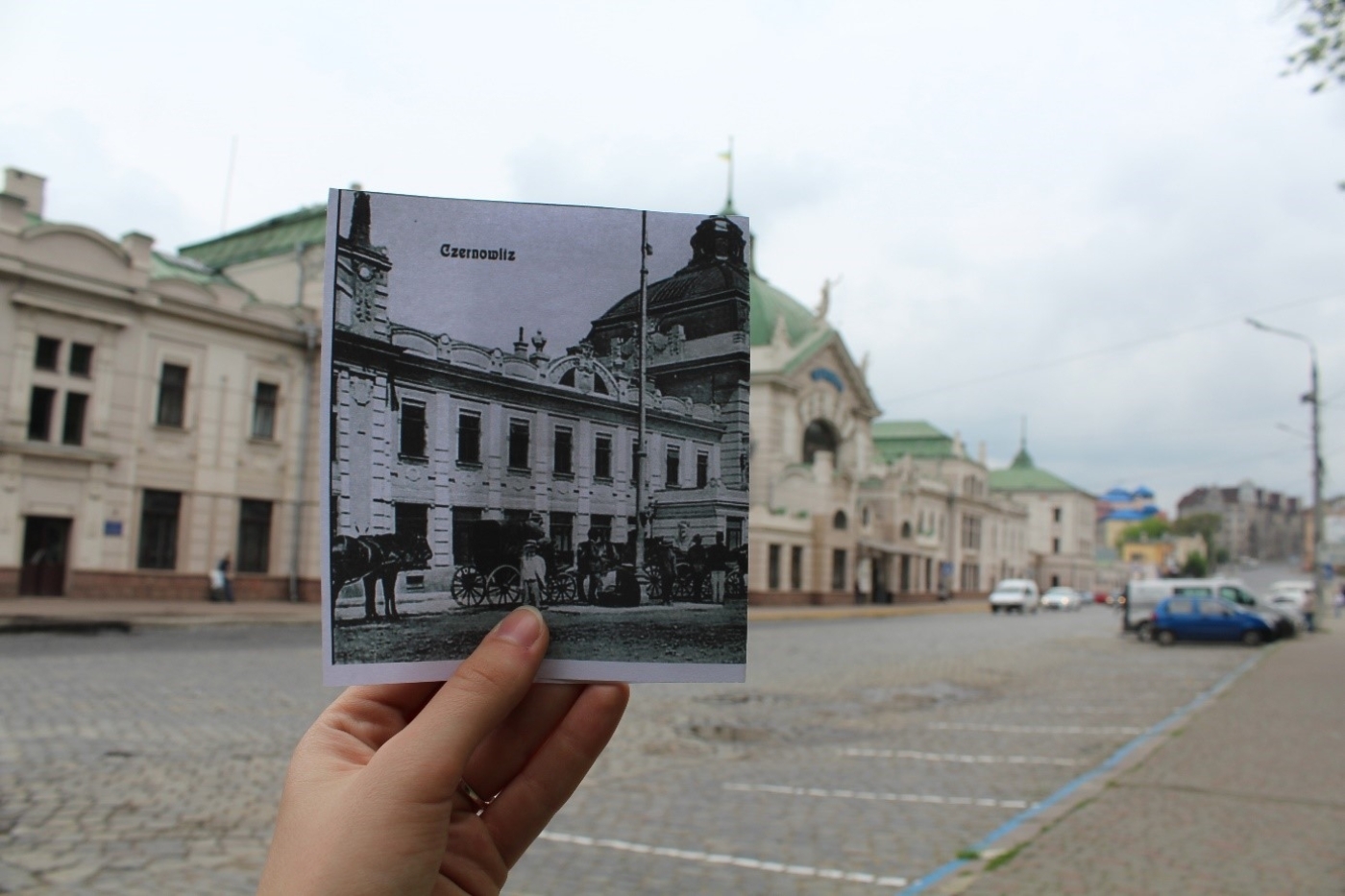
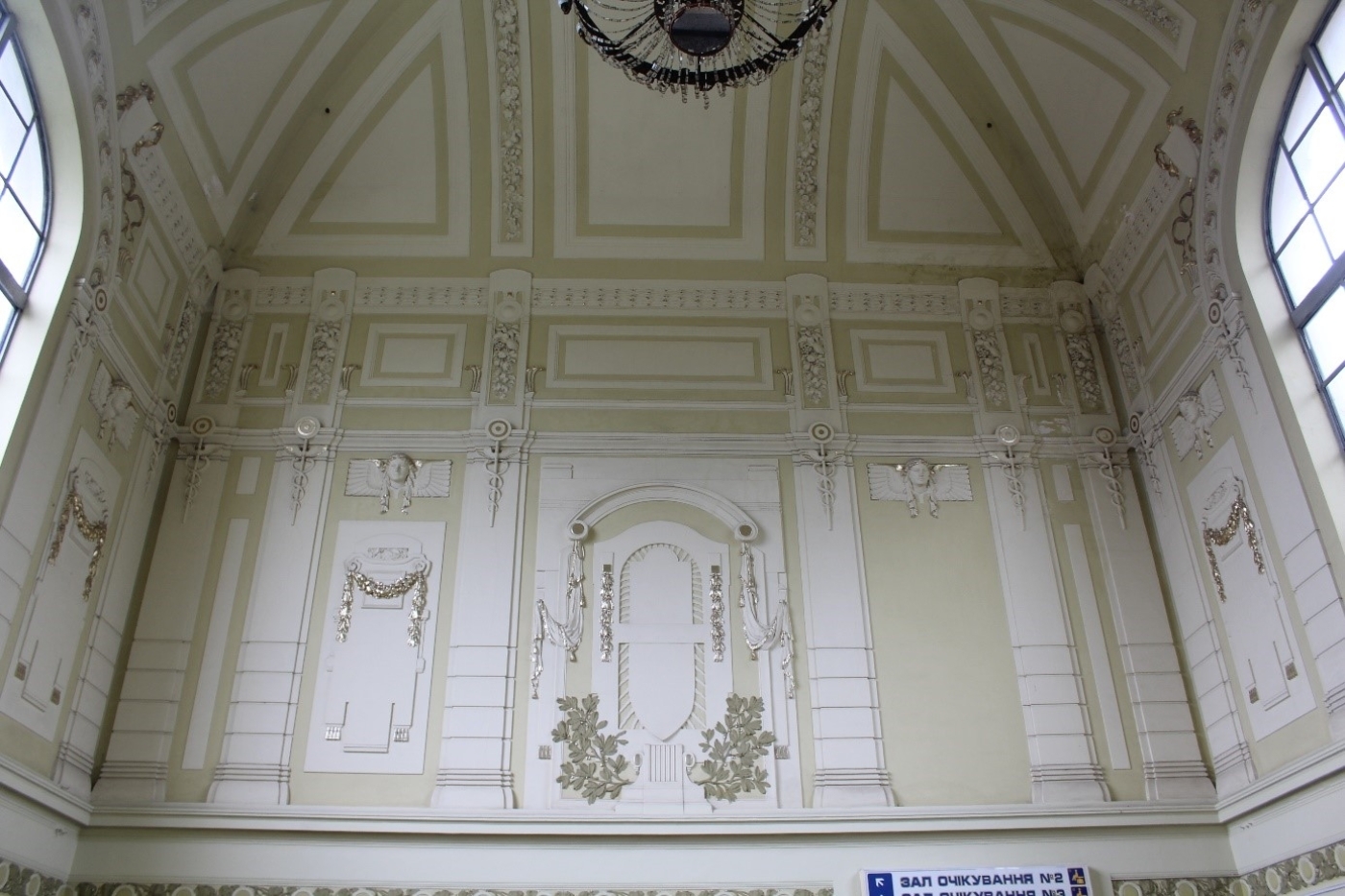
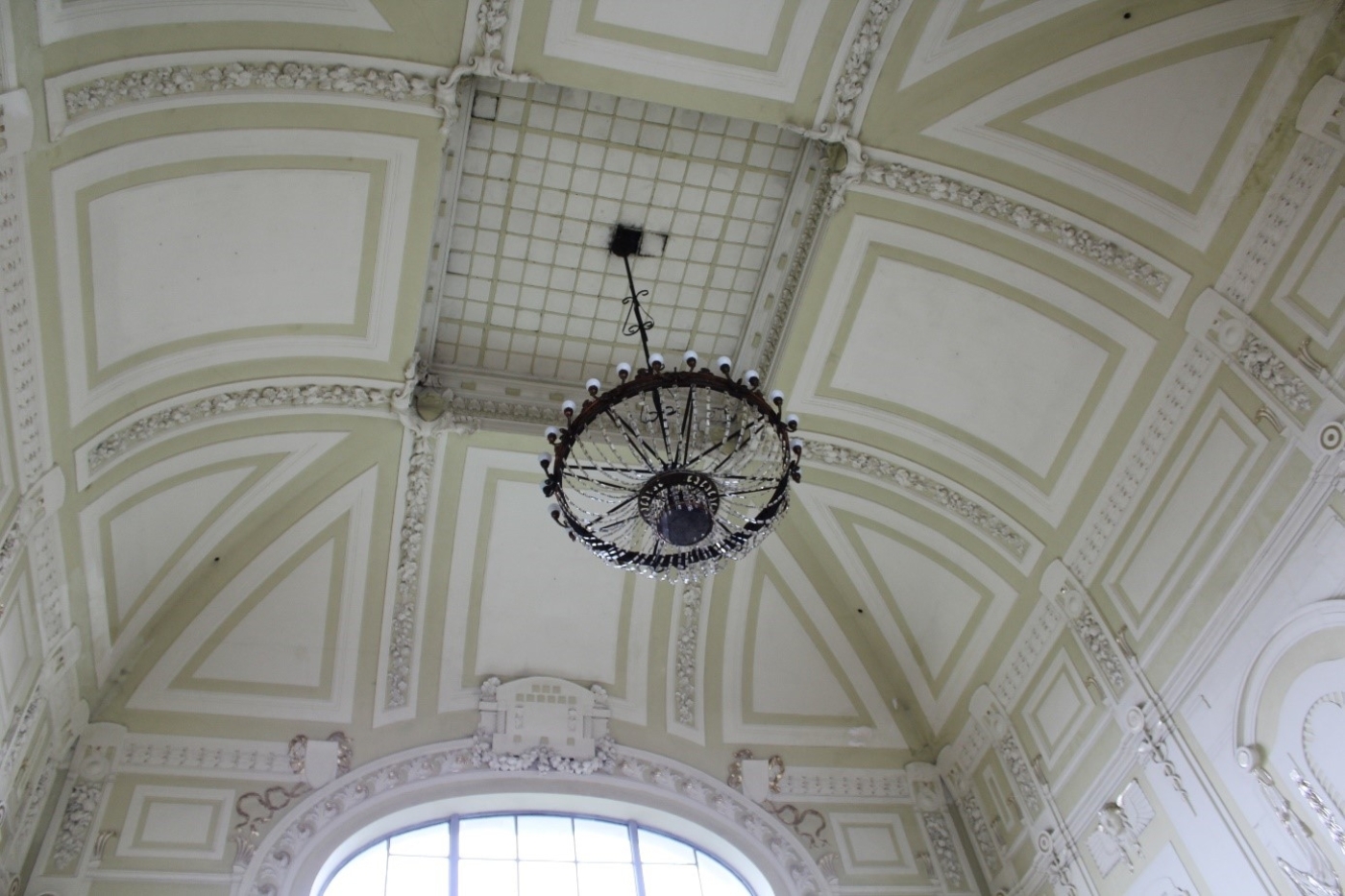
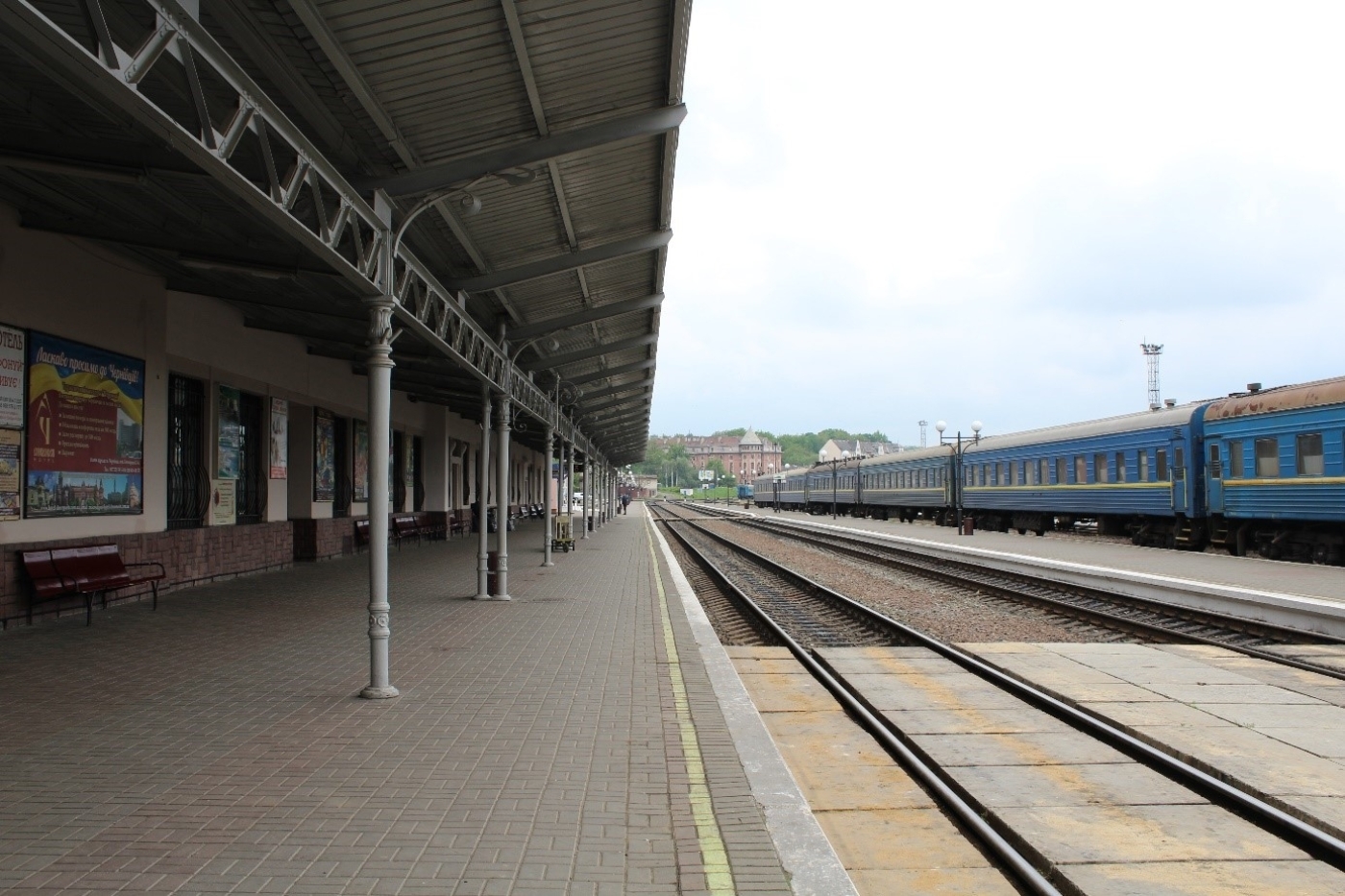
The Jewish member of the Reichsrat, Benno Straucher, was instrumental in the construction of the station. Straucher, who was later made an honorary citizen, was the founder of the initiative and played an organisational and supervisory role in the construction of the station. The station survived two world wars but was relatively badly damaged during the First World War. Renovations continued until 1920. The last major reconstruction took place in 1999.
A special feature of Chernivtsi railway station was that the Jewish song 7:40 was played by an orchestra at the arrival and departure of a train. The people of Chernivtsi often came to the station just to watch this spectacle. Today there is no orchestra, but a melody (Bukovinian folk songs) can still be heard when a train arrives and departs.
The background: In 1841 the imperial government decided to build a railway from Vienna to Lviv. On 3 November 1861, the first train, named Jaroslav, crossed the border between the Austro-Hungarian Empire and the Crown Lands. Shortly afterwards, a railway line was to be built between Lviv and Chernivtsi. The project was managed by Thomas Bressey and operated by the Lemberg-Czernowitz-Jassy Railway Company (LCJE). Construction of the 267-kilometre line was fraught with difficulties due to the mountainous and forested landscape. The first train left Lviv for Chernivtsi on 1 September 1866. Over time, the line was extended towards Russia and Romania. Initially there was only a small station building in Chernivtsi, which was later demolished and replaced by the building that still stands today (now Gagarin Street 18). Due to repeated complaints about the operation of the railway, it was placed under state receivership from 1872 to 1875. From 1889 the operation was taken over by the 'k.k. österreichische Staatsbahnen' (kkStB).
After the First World War in 1918, the railway line between Lviv and Czernowitz was now in Poland and Romania. The respective state railways took over the section in their respective countries until the Soviet Union took over both sections during the Second World War.
Text: Veronika Hilbertova