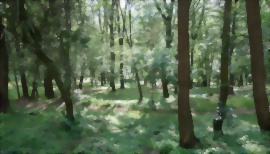
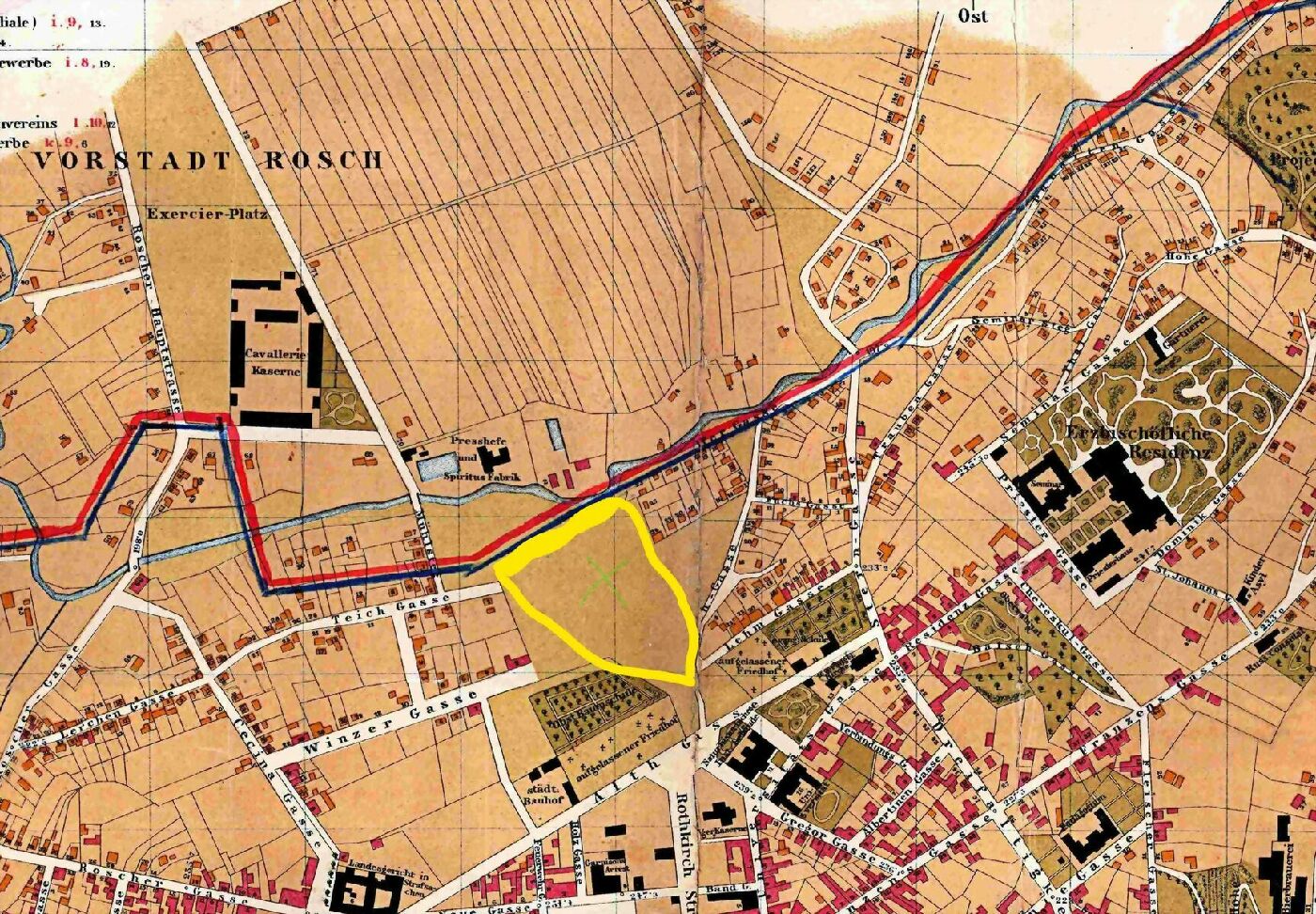
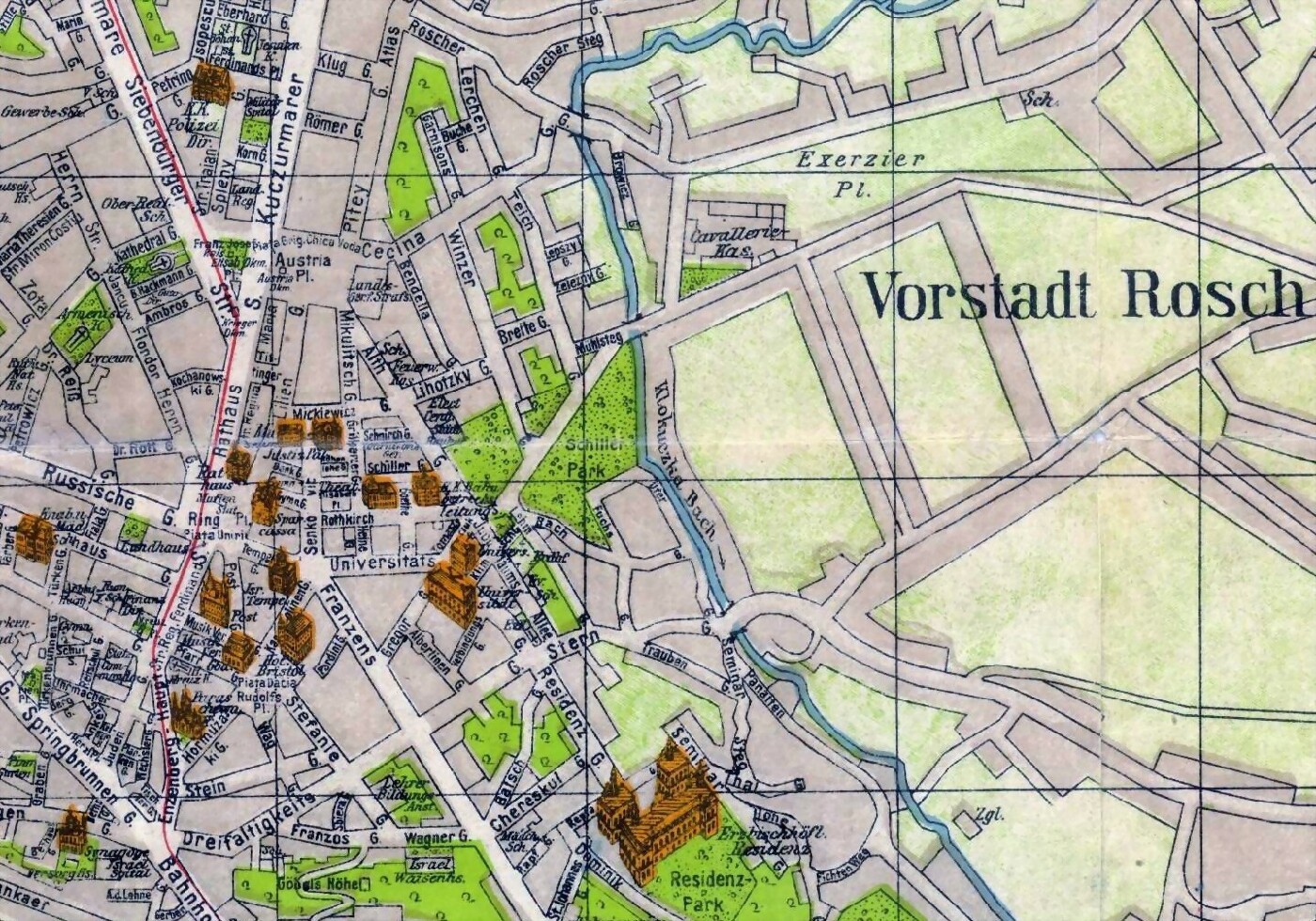
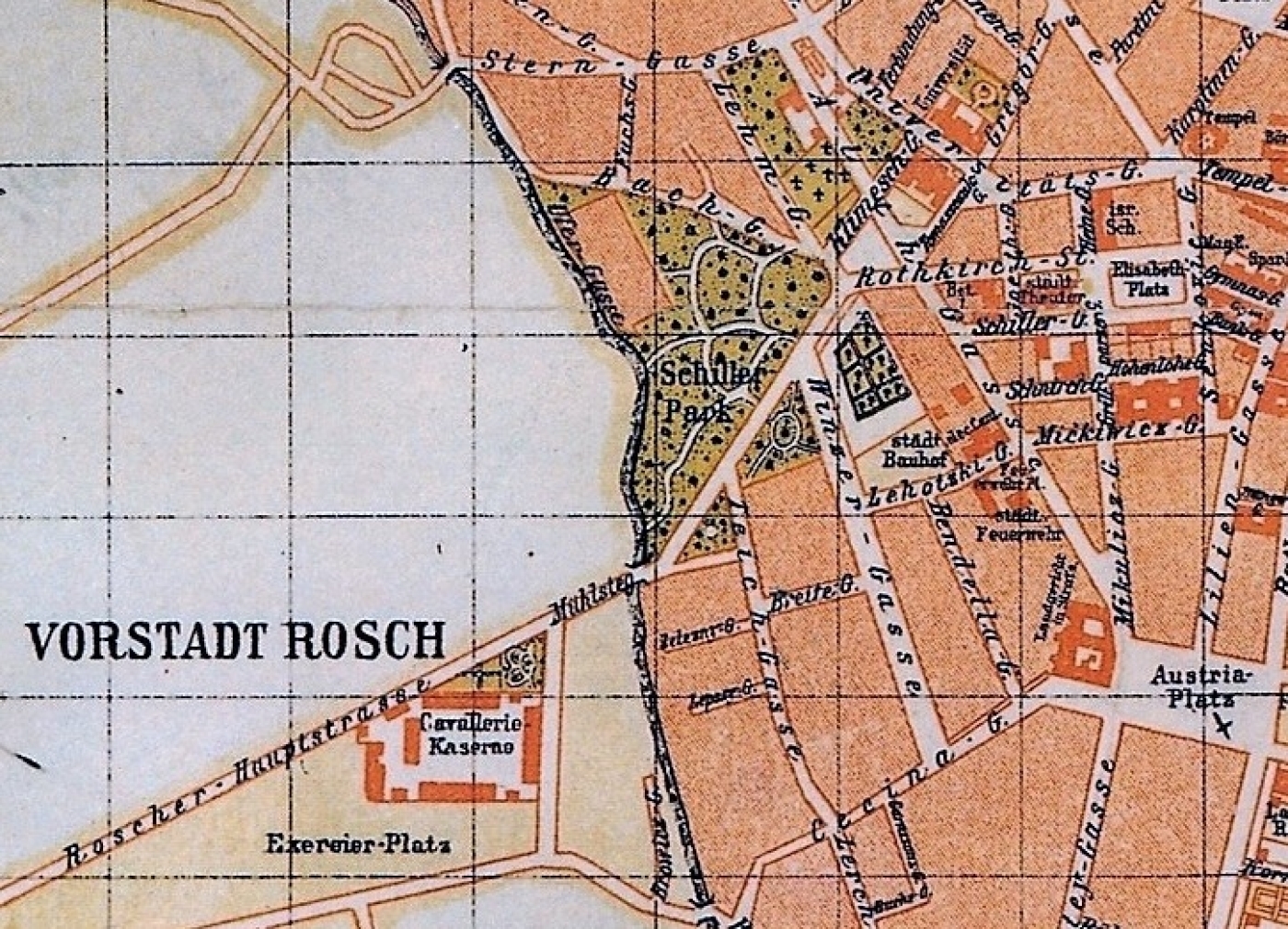
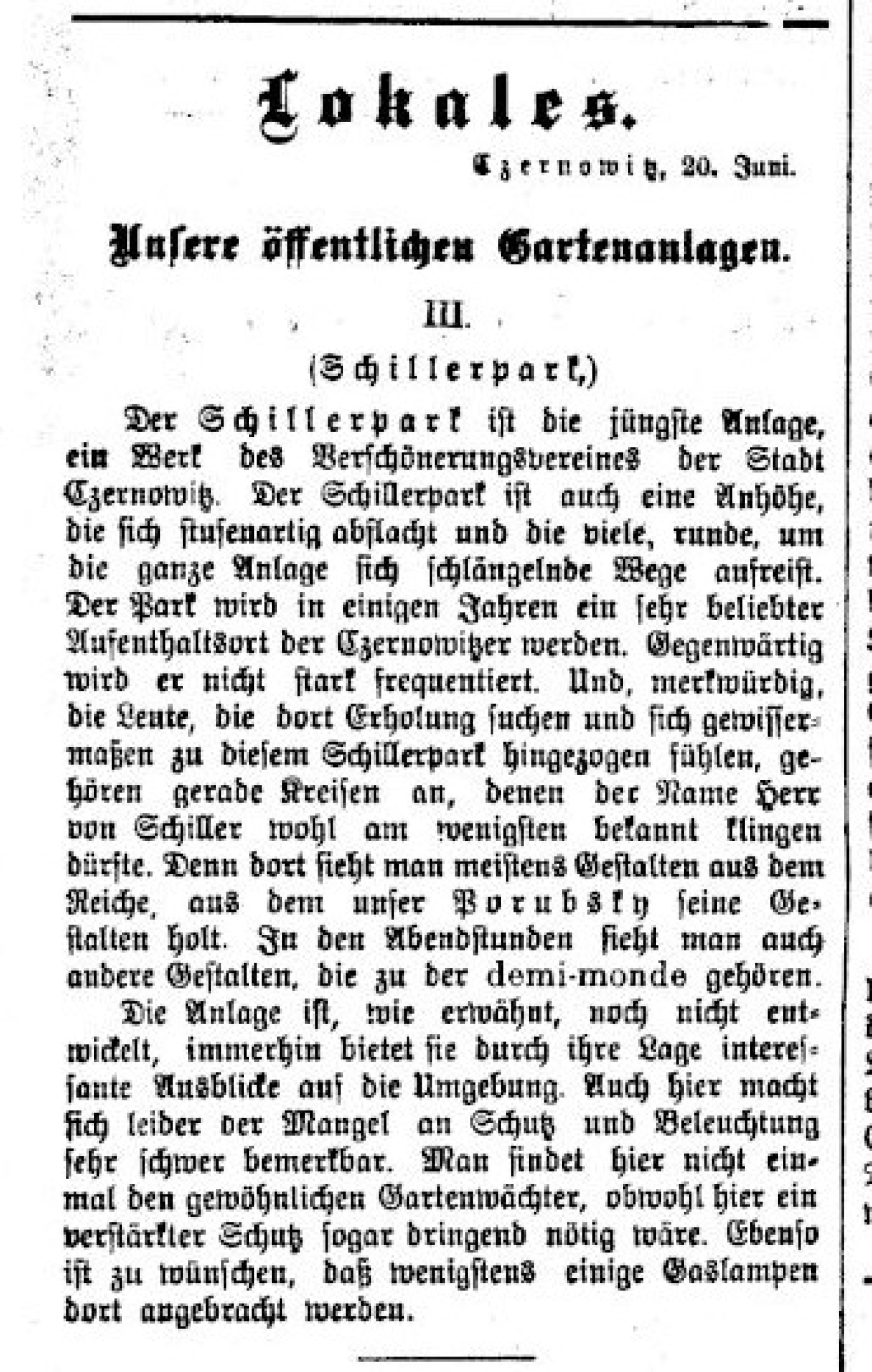
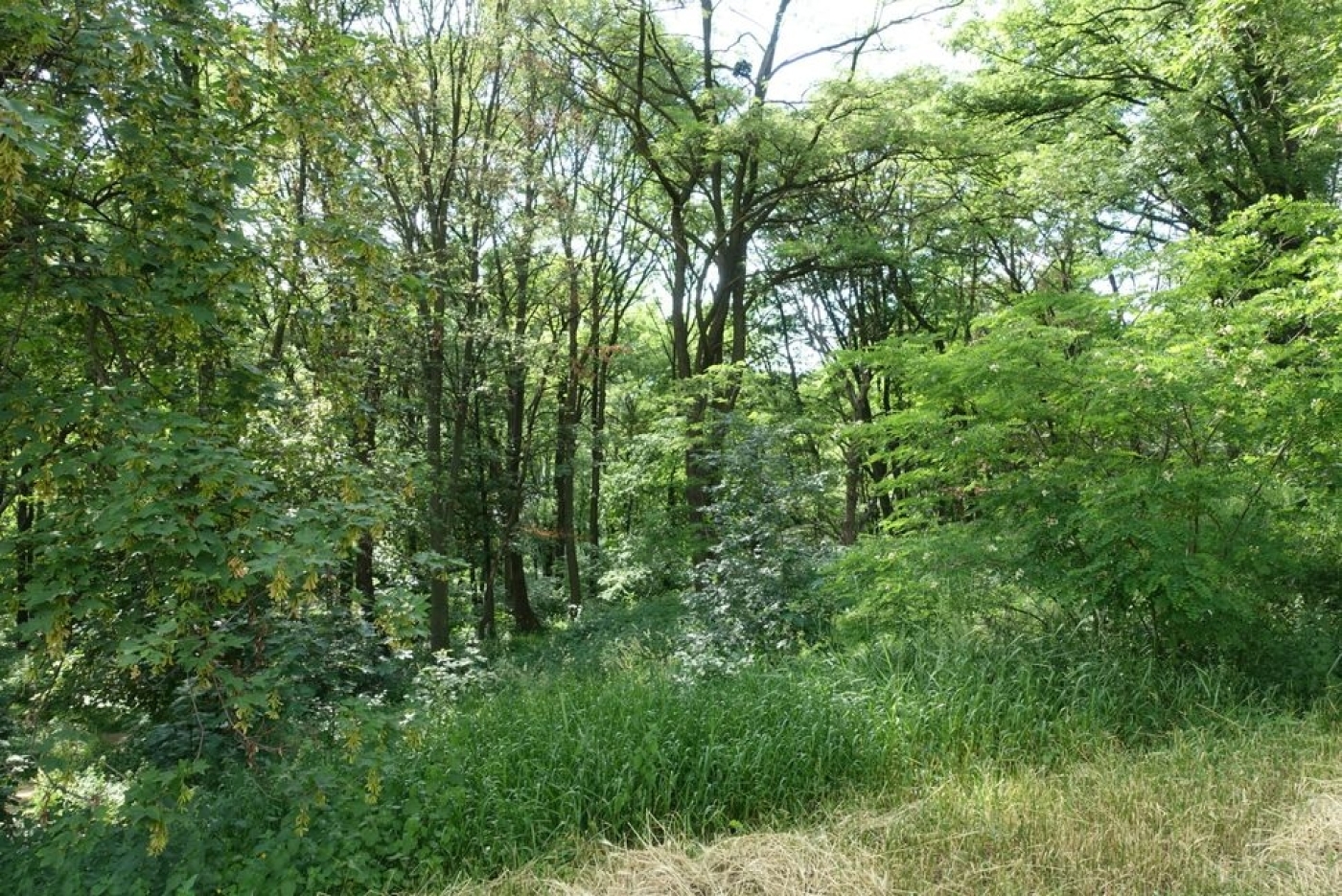
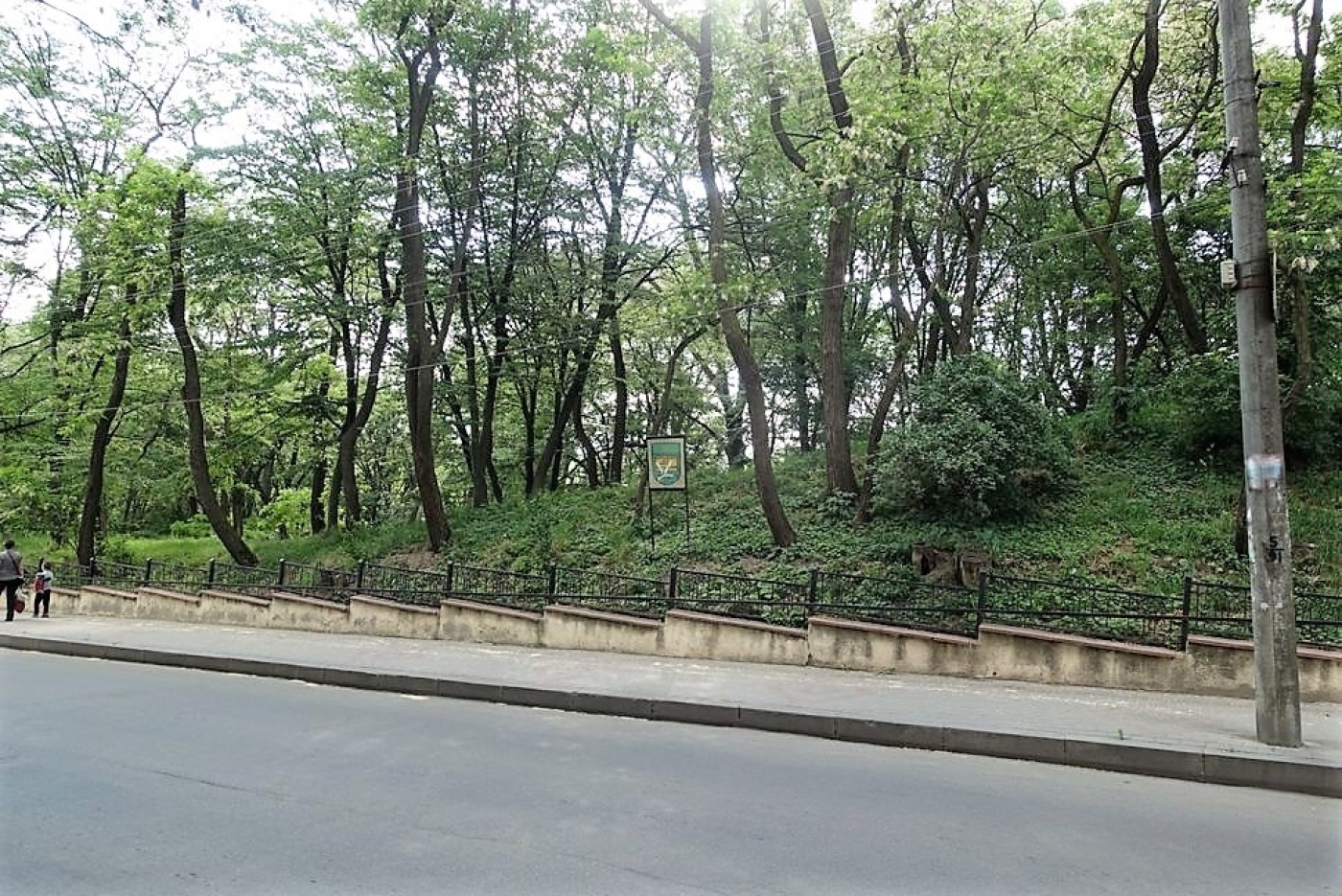
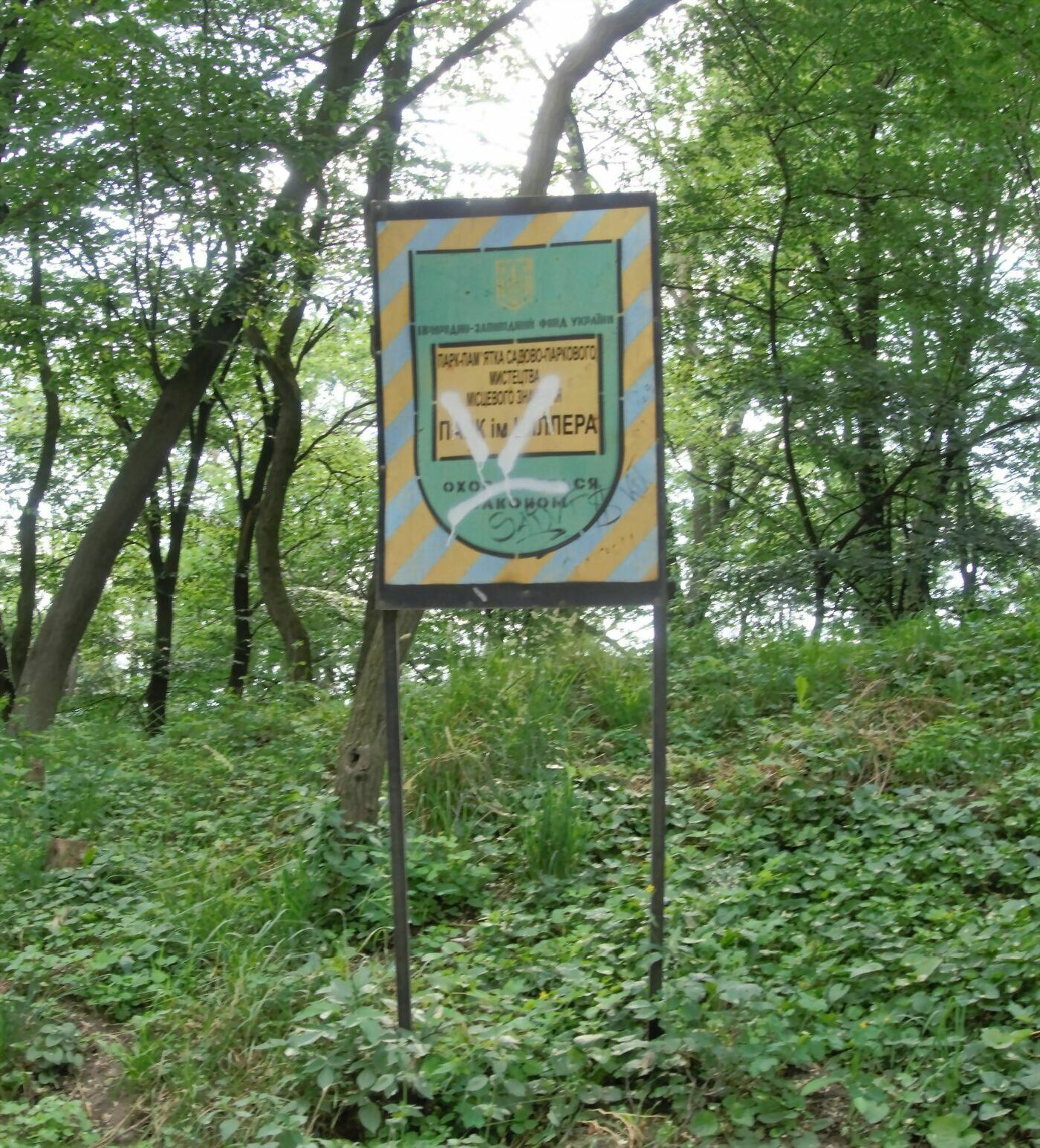
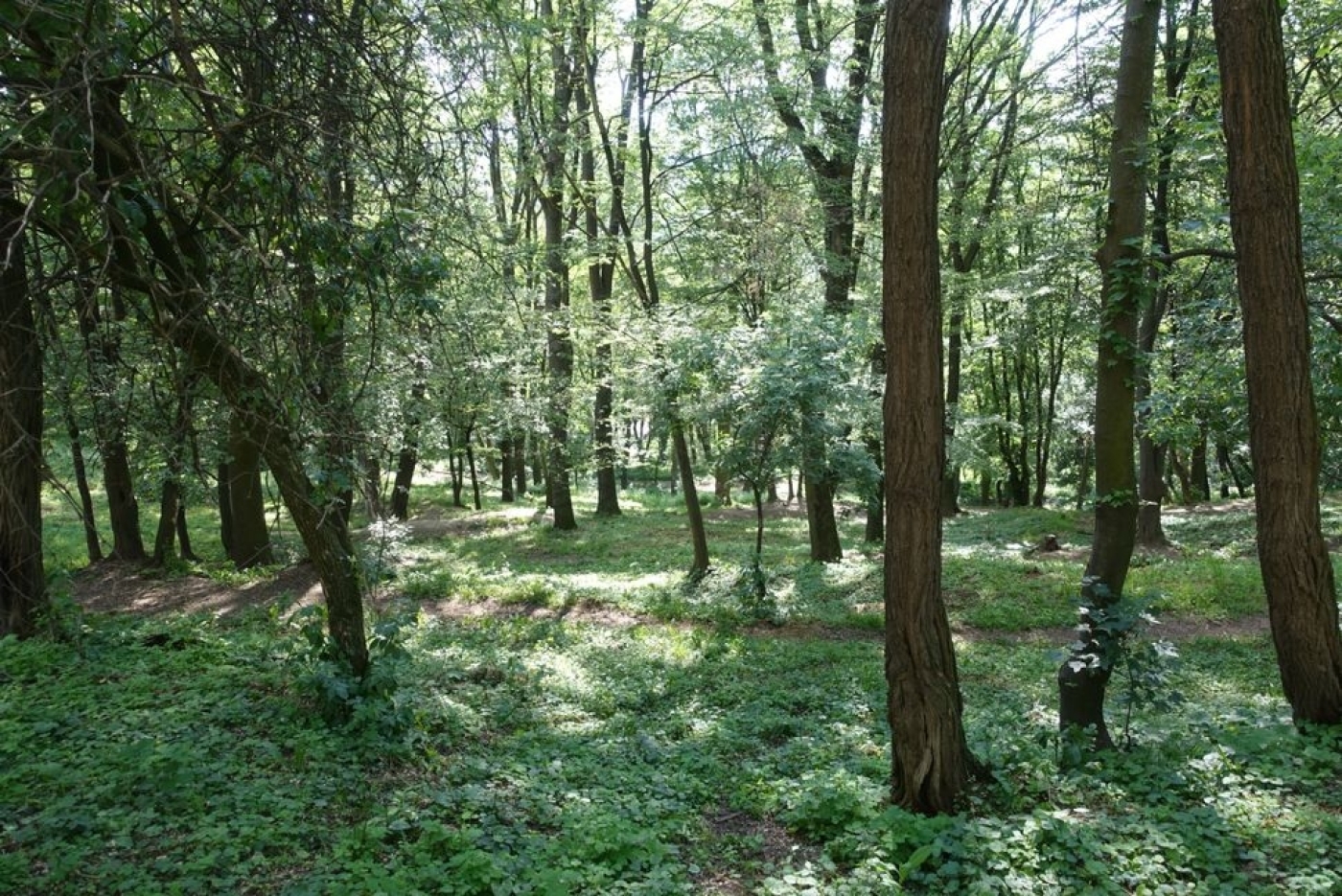
After 1905, several urban development projects in the following years created a new neighbourhood around the relatively steeply sloping park, including the construction of the road to Rosch (1912/13) and the development of the plots along this road. In a series of articles on the city's gardens, the Bukowinaer Rundschau reported on the new Schiller Park in 1906, noting both positive and negative aspects: “The Schiller Park is also a hill that flattens out in steps and has many circular paths that wind around the entire park. In a few years, the park will be a very popular place for the people of Chernivtsi to spend time. At the moment it is not very popular. And strangely enough, the people who come here to relax and are drawn to this Schiller Park belong to the circles that are probably least familiar with the name of Mr von Schiller. For there one usually sees figures from the realm from which our Porubsky draws his figures [...] The park is [...] not yet developed, although its location offers interesting views of the surrounding area. Unfortunately, the lack of protection and lighting is also very noticeable here. You won't even find the usual garden guards here [...]” (Bukowinaer Rundschau, 21 June 1906, p. 3).
In view of this situation, the Chernivtsi City Council decided at its meeting on 3 July 1906 to redesign the Schiller Park with the abandoned old Roman Catholic cemetery, a tree nursery and the land behind the university institutes into a single park, which would also include an open-air museum (Bukovinaer Rundschau, 5 July 1906, p. 2). Hugo Pauschek, the city gardener, oversaw designing and developing the park. The cost of the planned gardens was 55,000 crowns. To promote the project, Pauschek “had the plan of the Schiller Park framed in a large glass case” and presented it to the mayor (Bukowinaer Rundschau, 24 October 1906). In 1910, however, the local press criticised the “by no means pleasant condition” (i.e. the delay in construction) of the park, which was nevertheless “preferred by many people in need of recreation to the Habsburg Heights because of its scenic beauty” (Czernowitzer Allgemeine Zeitung, 11 June 1910, p. 4). Two years later, the Association for the Beautification of the City of Chernivtsi complained that the development of the park had not progressed at the desired pace and described Schiller Park in its 1912 annual report as a “child of pain” (Czernowitzer Allgemeine Zeitung, 14 April 1912).
Text: Markus Winkler