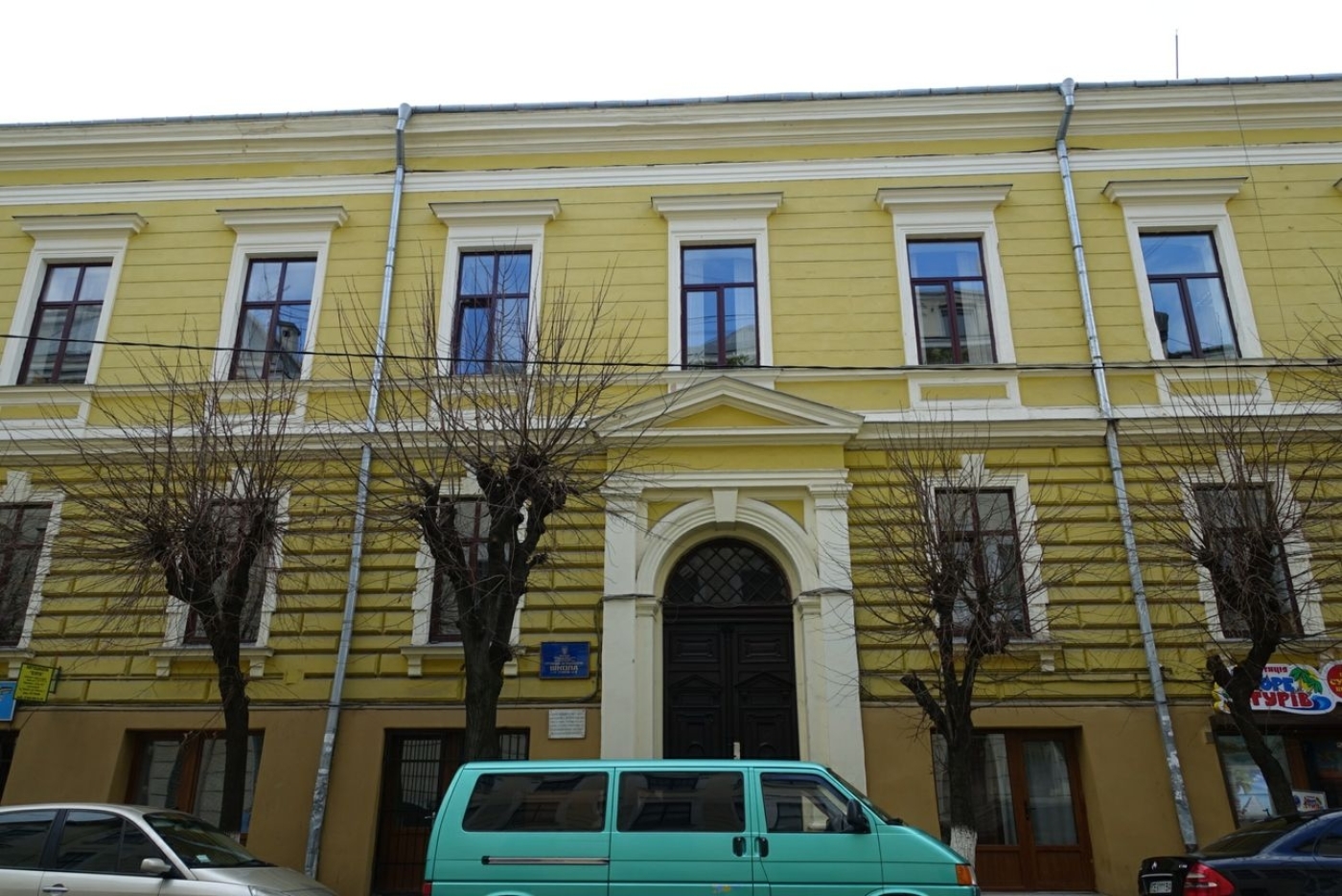
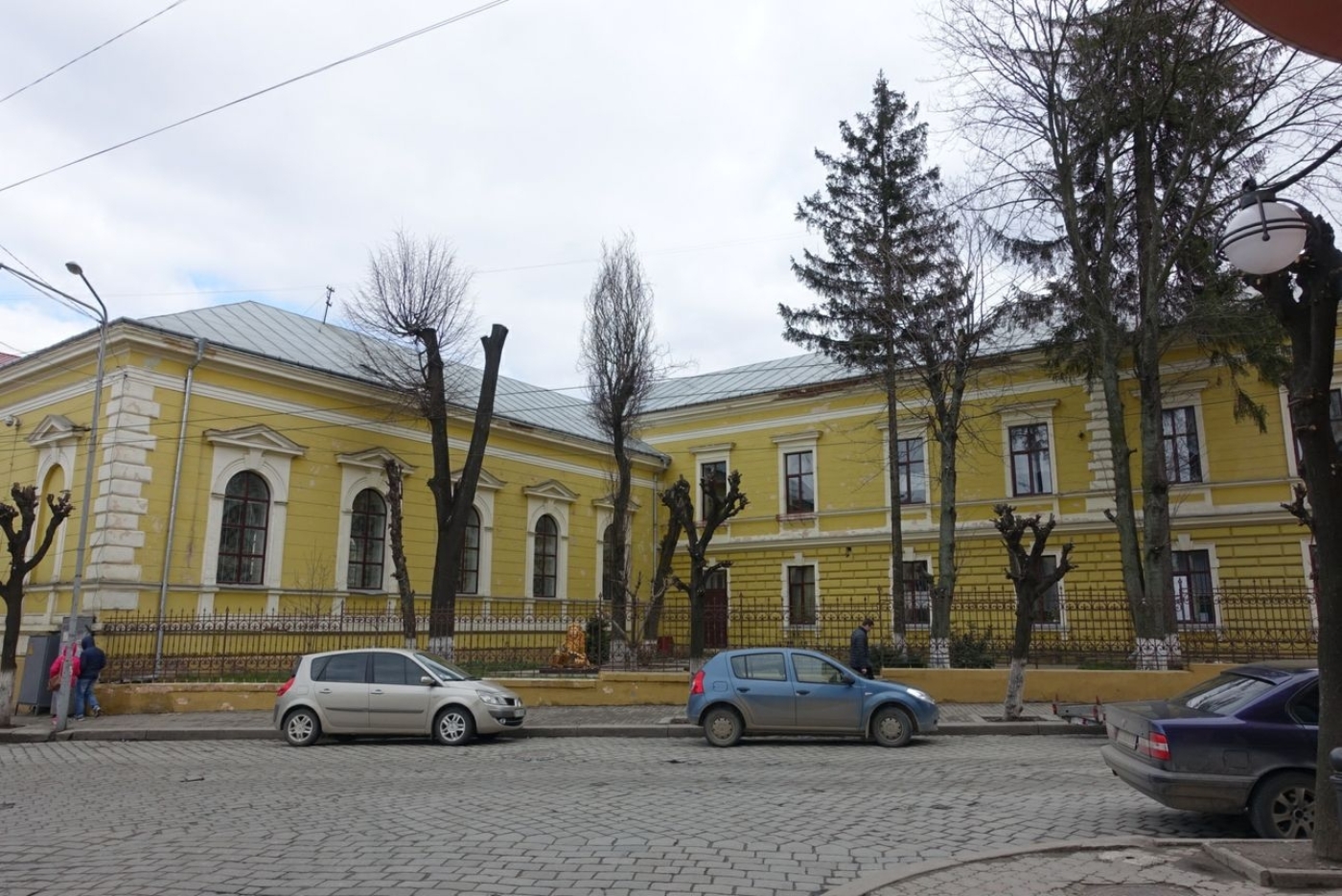
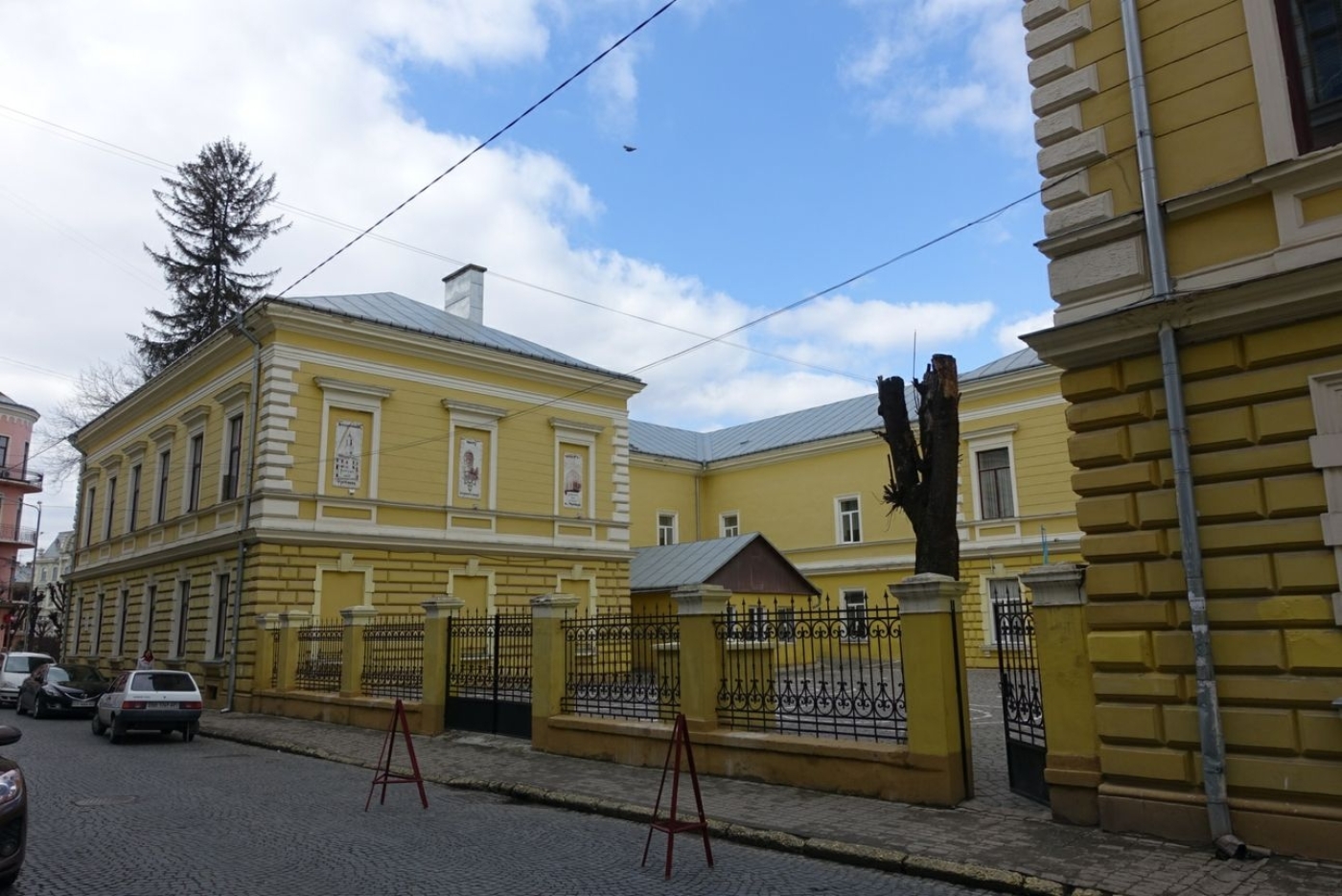
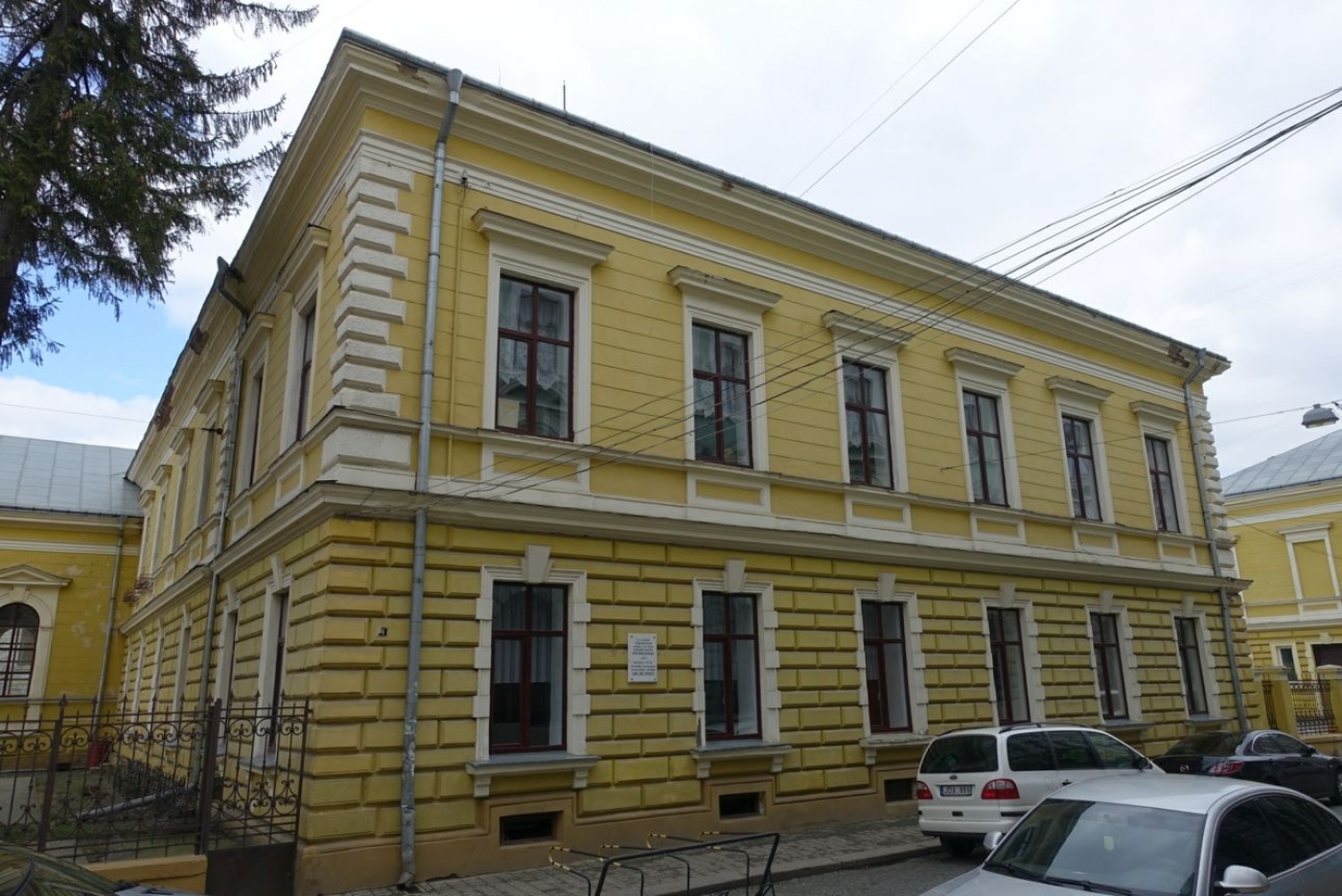
The boundaries with university teaching were fluid, and the teaching staff also came from the fields of culture and science. Several Romanian professors also taught Romanian and Orthodox religion, history, geography and Latin at the Chernivtsi Gymnasium. In the second half of the 19th century, the number of pupils at the Gymnasium increased considerably and, even though the language of instruction was German, students of other nationalities and confessions also attended the school. By 1900 there were almost 1,000 students, the majority of whom were German-speaking and of the Mosaic faith. In 1898/99, the first Romanian parallel class was established at the state grammar school (by 1900/01, there were already three Romanian parallel groups). A ministerial decision of 1 April 1901 then provided for the establishment of a German-Romanian section in Chernivtsi, which existed at the I. Staatsgymnasium between 1901 and 1906. However, the number of Romanian and Ukrainian pupils decreased, as two new grammar schools with (partial) Romanian and Ukrainian teaching were established in Chernivtsi. The First State Gymnasium became the most important secondary school in the entire Crown Lands: From 1808 to 1908, 11,191 students attended this institution, of whom 3,824 (approx. 34%) were able to pass the baccalaureate. Between 1849 and 1908, 2,536 graduates passed the Matura, of whom 40% studied law, 18% medicine, 15% theology, 14% philosophy and 4% technical subjects. After the incorporation of Bukovina into Romania in 1918-19, the grammar school system in Chernivtsi was modified and Romanians, Germans, Jews, Ukrainians and Poles were given national lyceums. The First State Gymnasium was divided and education for Jews and Germans continued in independent lyceums. In 1919, the Aron Pumnul lyceum was opened in the building of the former First State Gymnasium, with Romanian as the language of instruction.
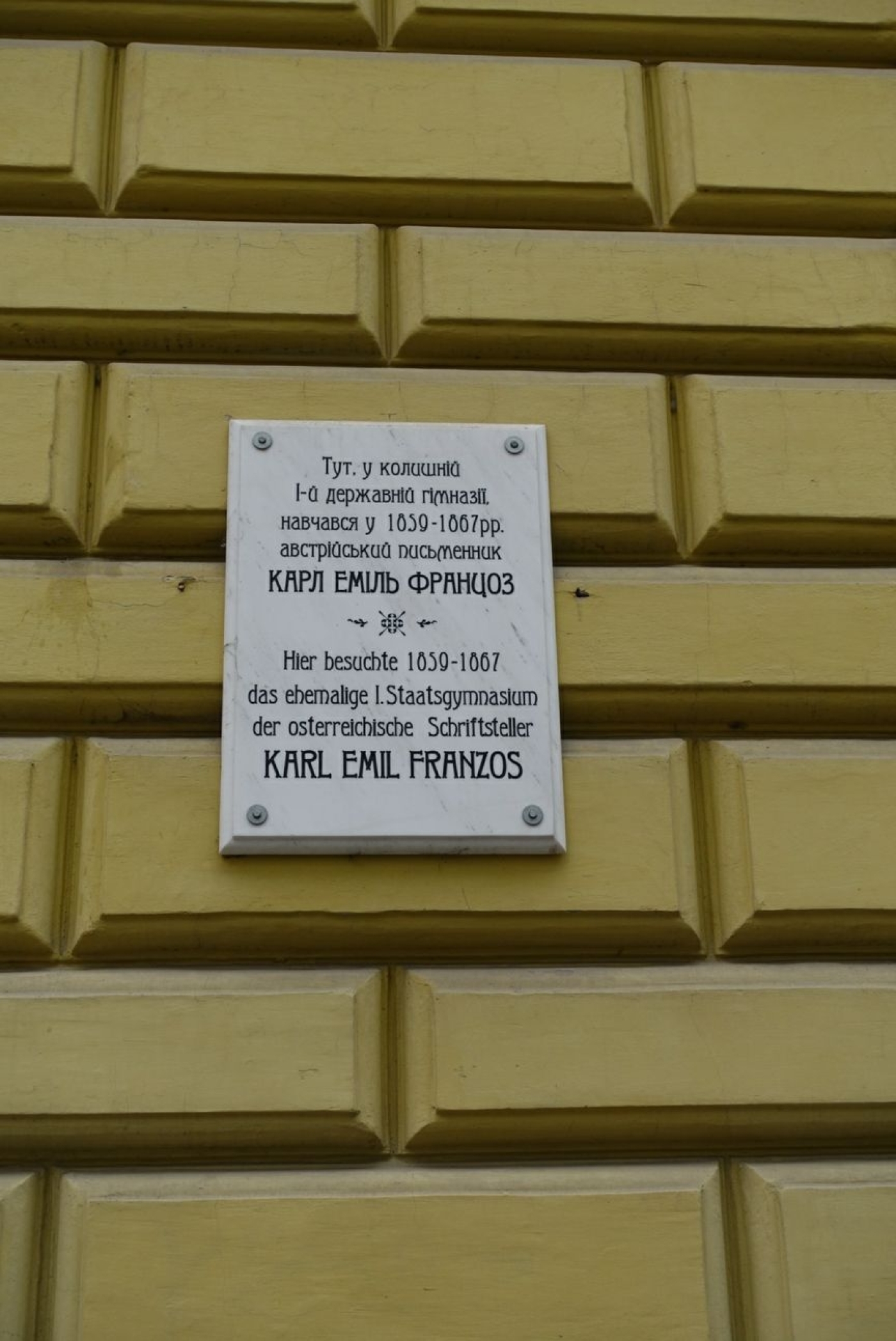
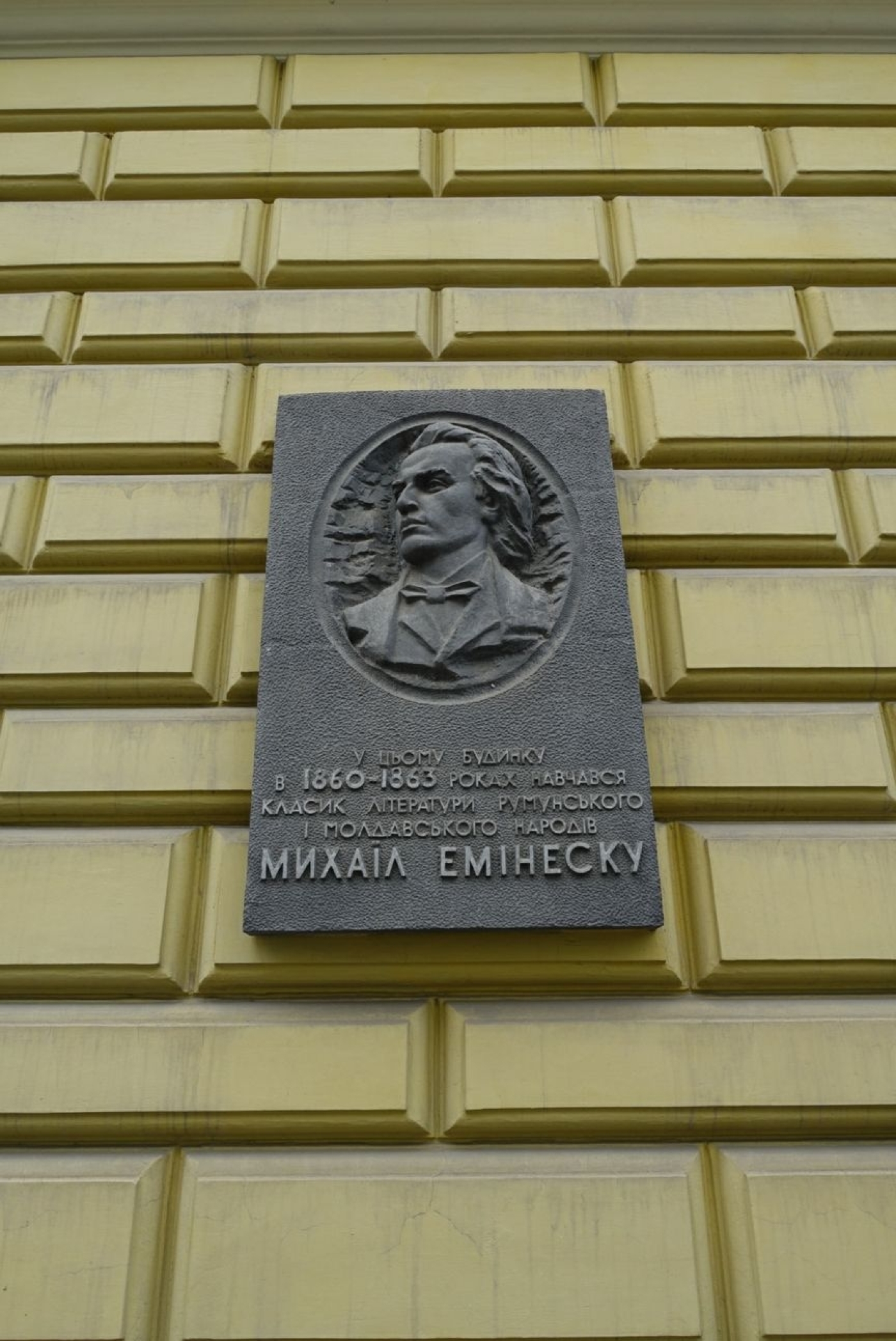
One of the school's most famous graduates was the writer Karl Emil Franzos in 1867. The Romanian national poet Mihai Eminesu also attended the school from 1860 to 1863. Both are commemorated by plaques on the building. The natural scientist Constantin Hormuzaki also graduated with distinction from the school in 1881.
Text: Constantin Ungureanu und Markus Winkler
Materials:
- Constantin Ungureanu: Mittelschulen und höhere Lehranstalten in der Bukowina vor 1918. In: Markus Winkler (Hg.): Partizipation und Exklusion. Zur Habsburger Prägung von Sprache und Bildung in der Bukowina 1848 – 1918 – 1940 (Veröffentlichungen des Instituts für deutsche Kultur und Geschichte Südosteuropas e. V. an der Ludwig-Maximilians-Universität München (IKGS), 132). Regensburg 2015, S. 115–128.