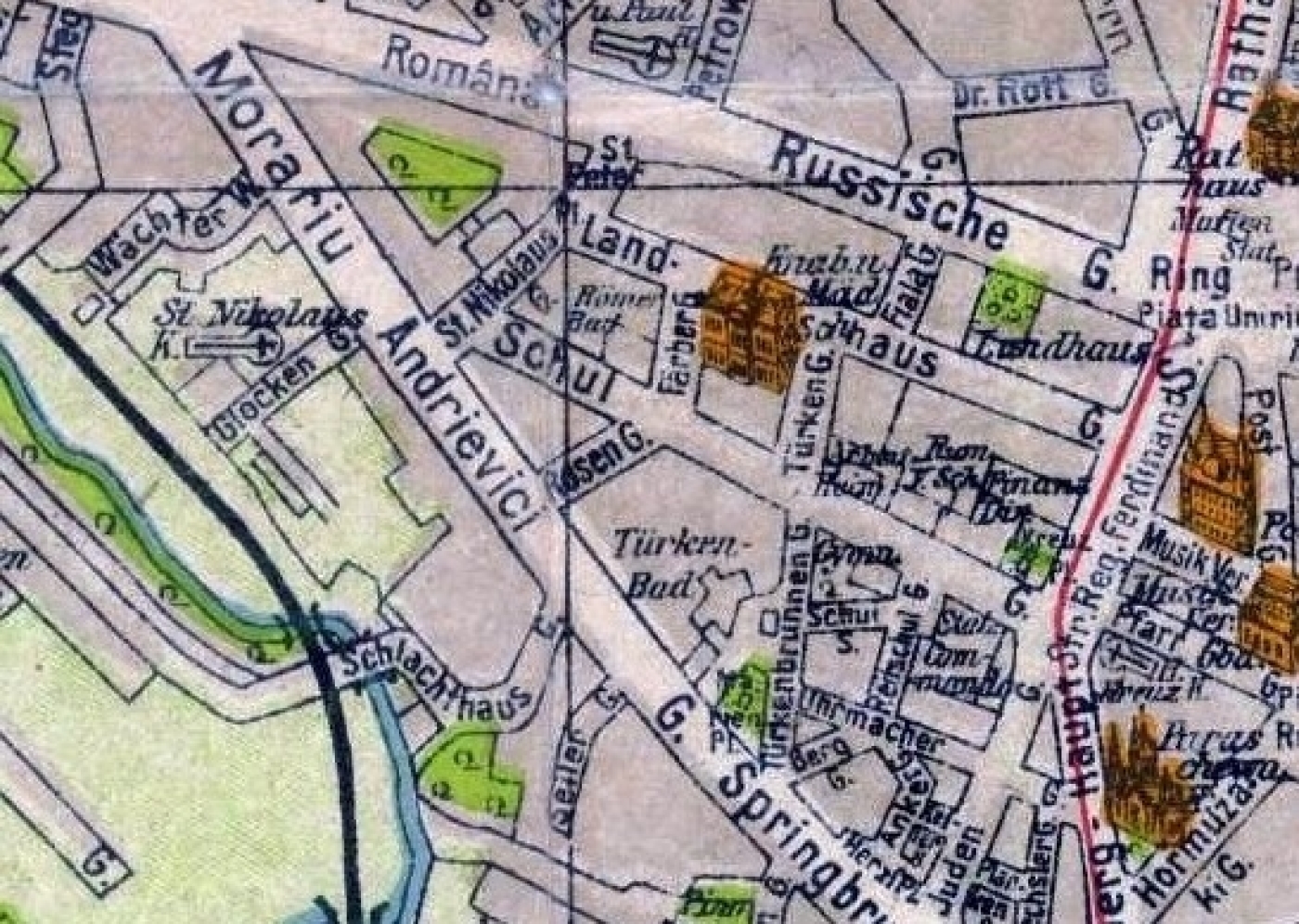
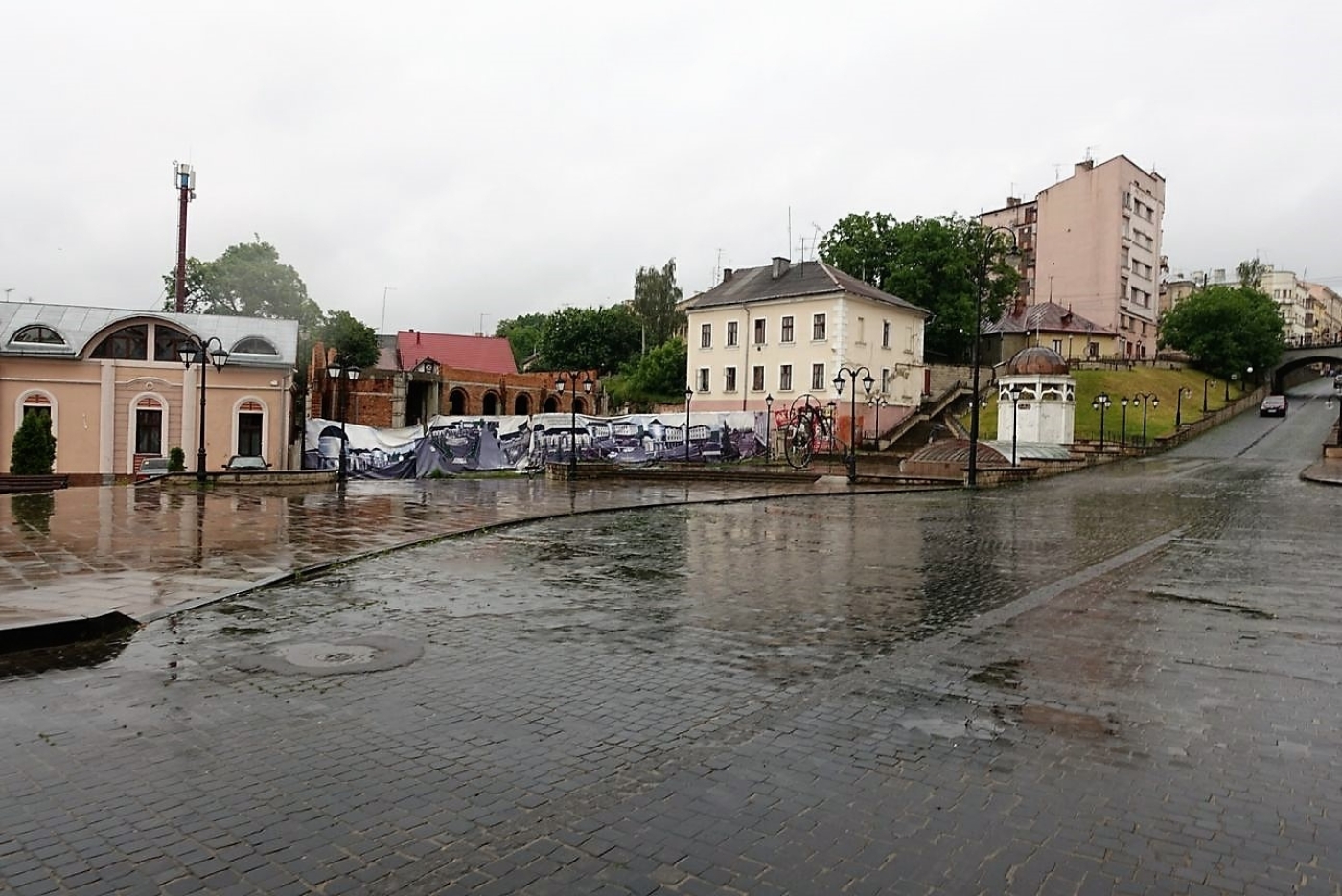
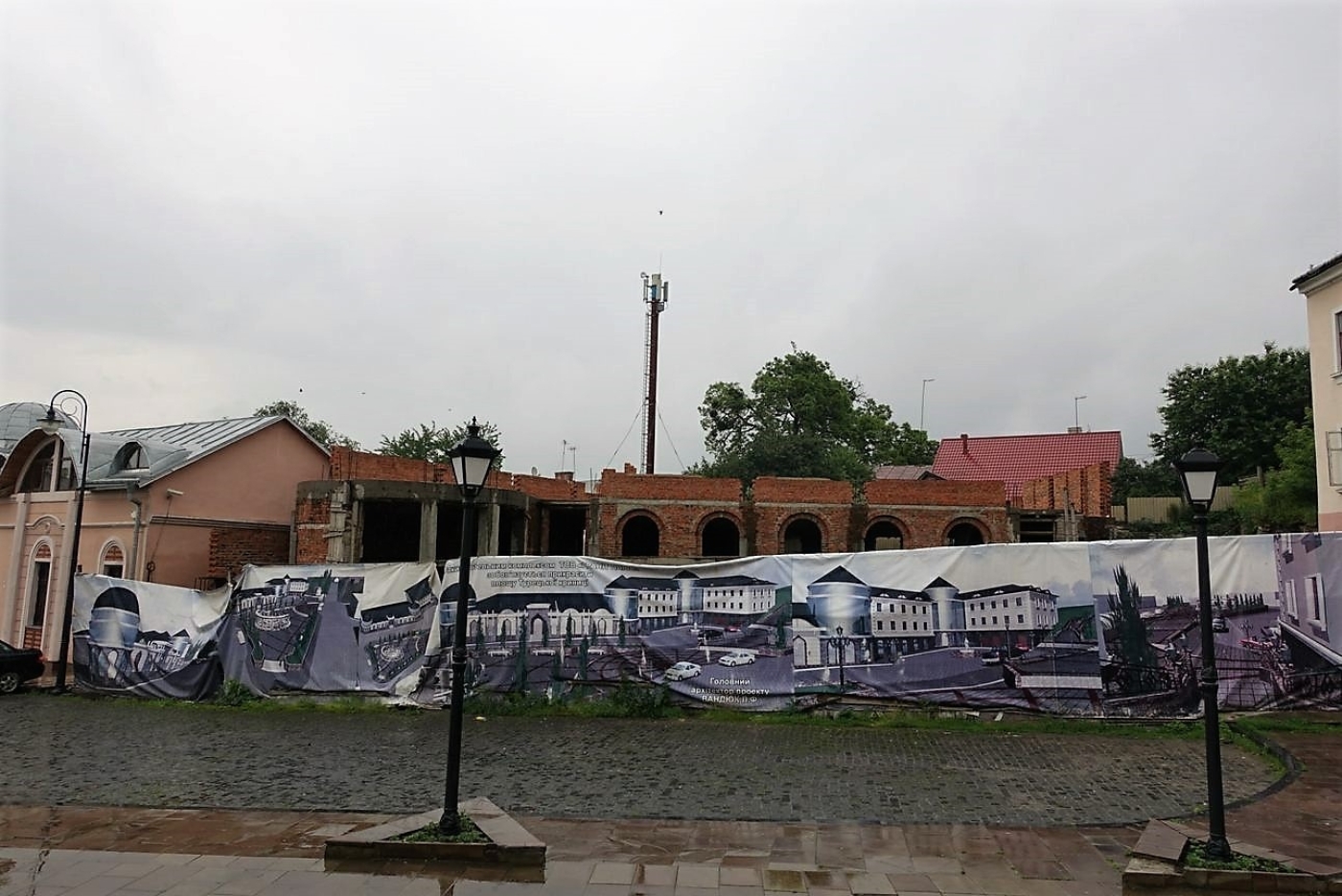
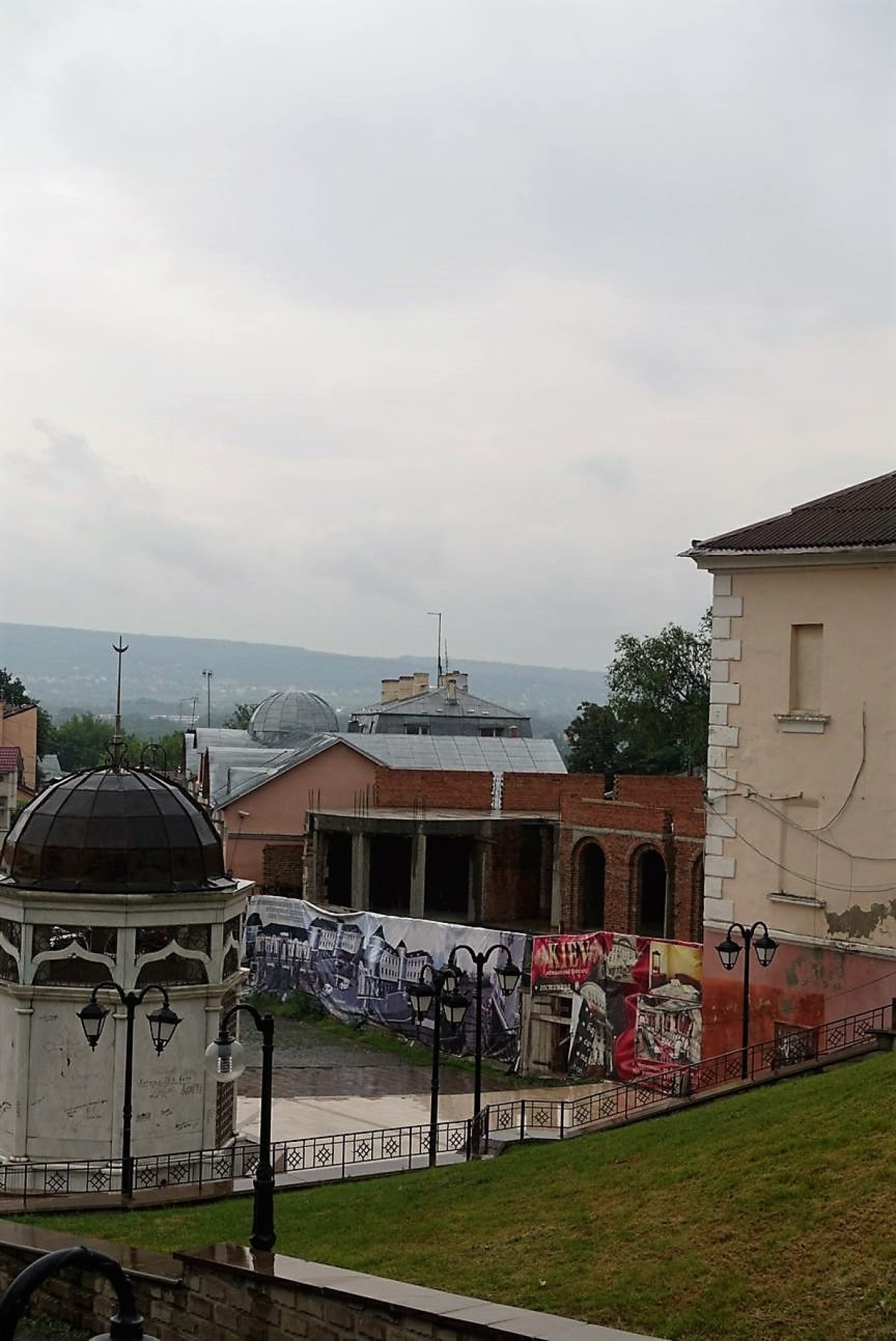
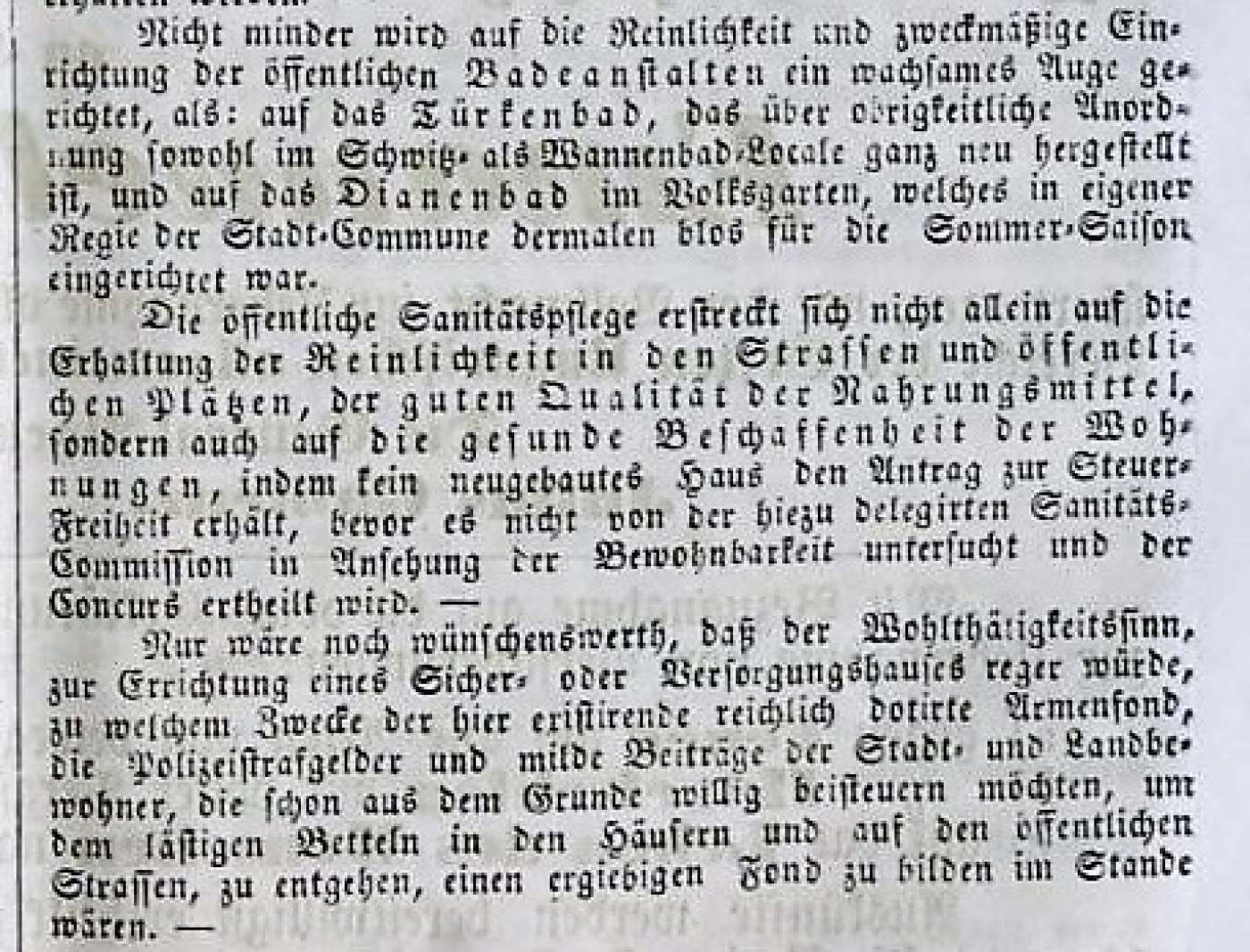
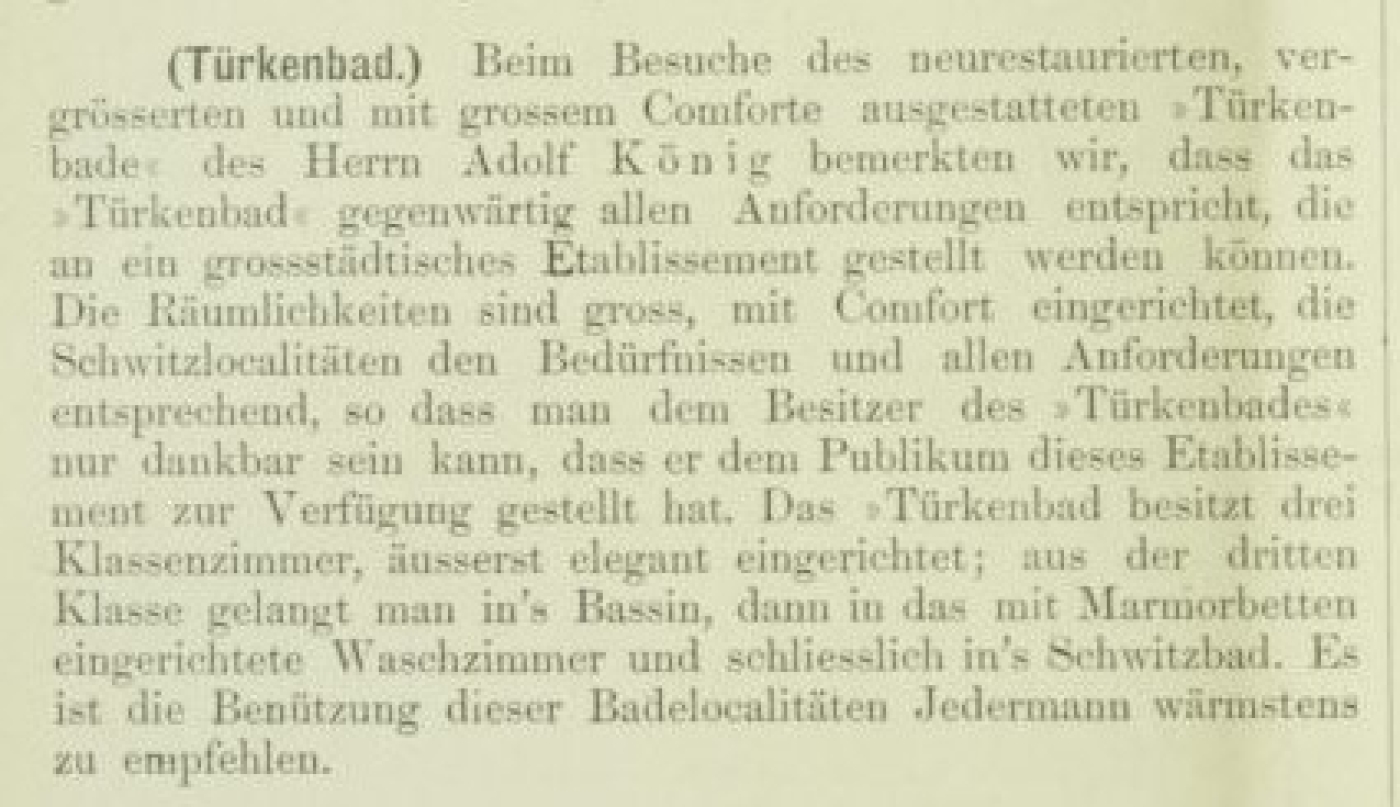
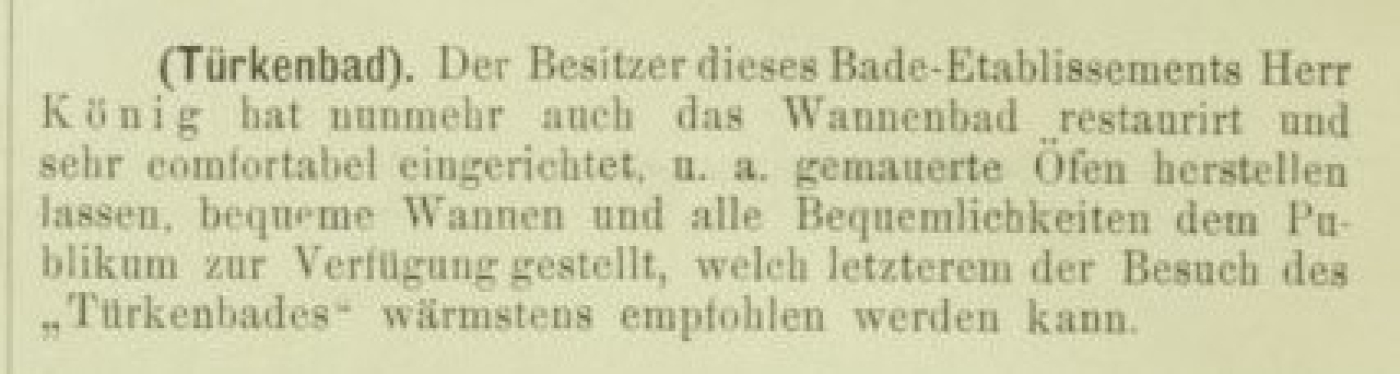
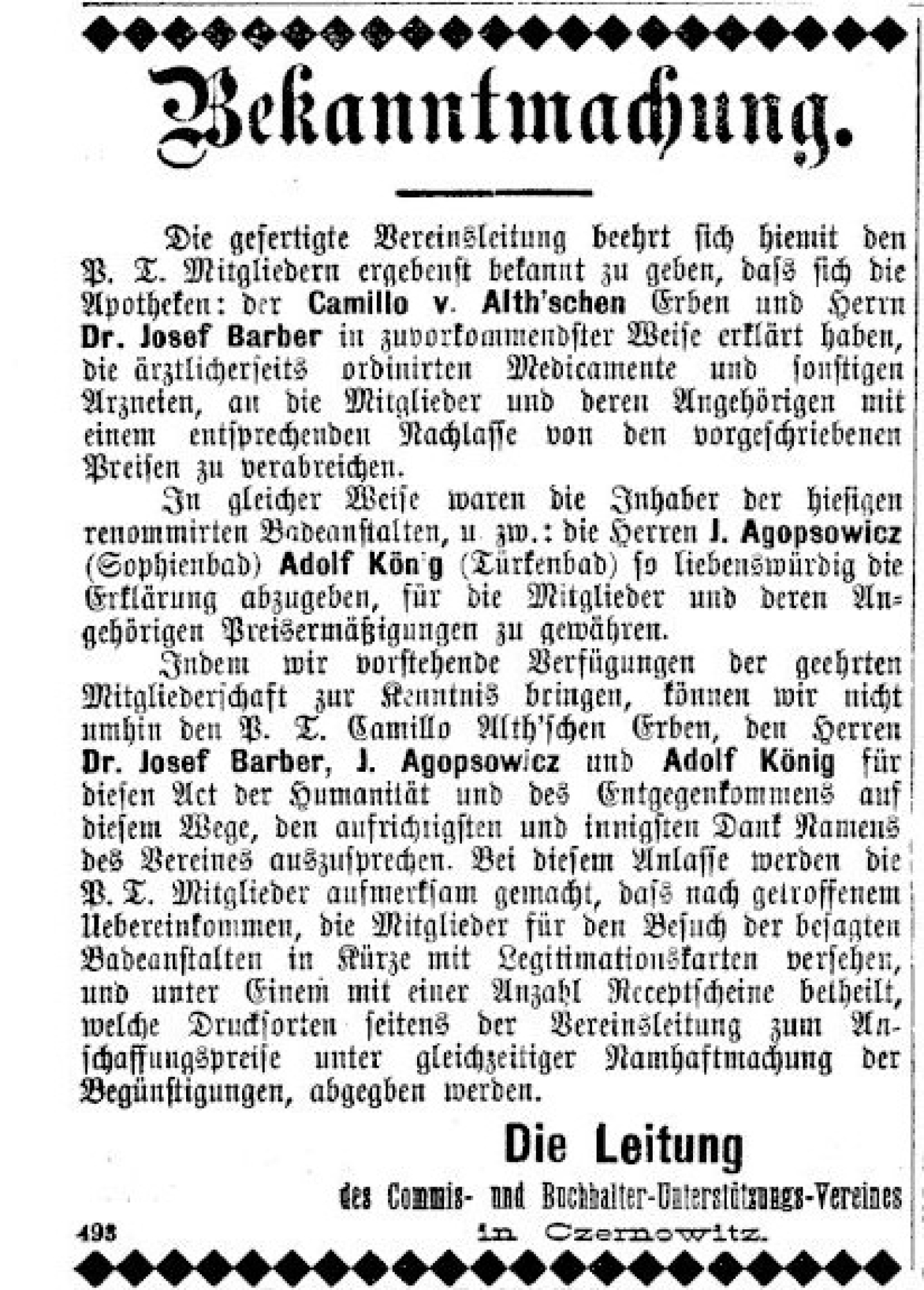
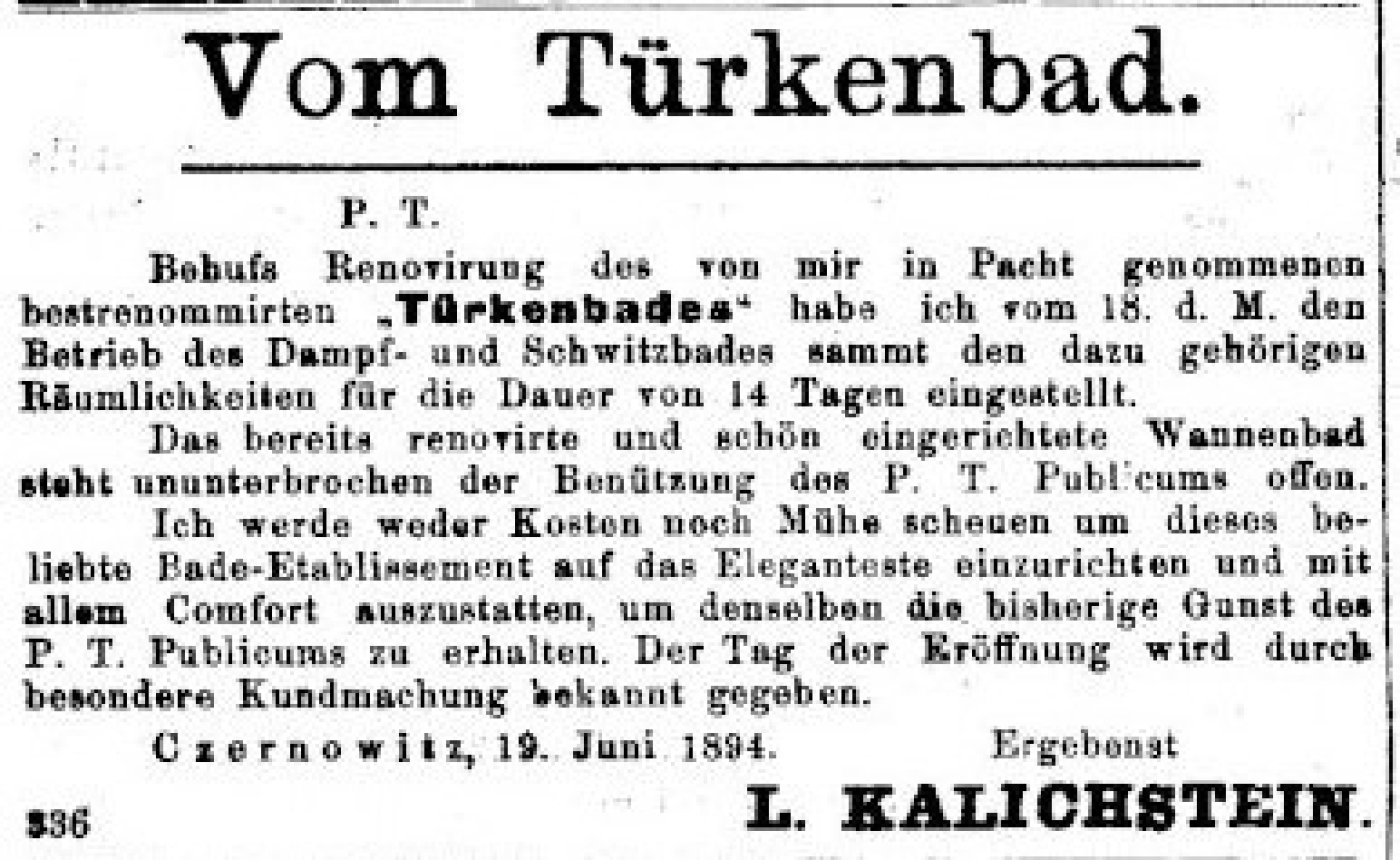
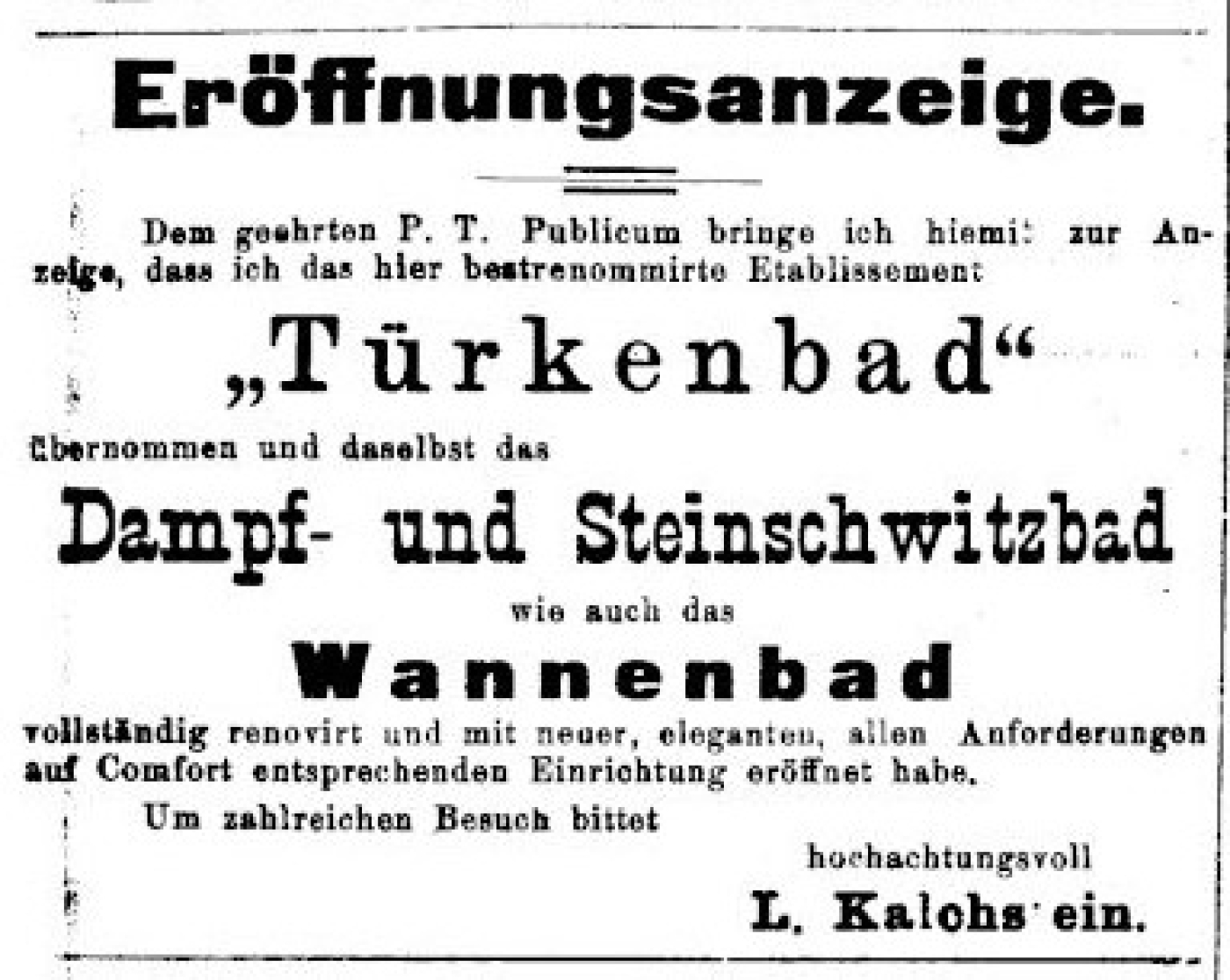
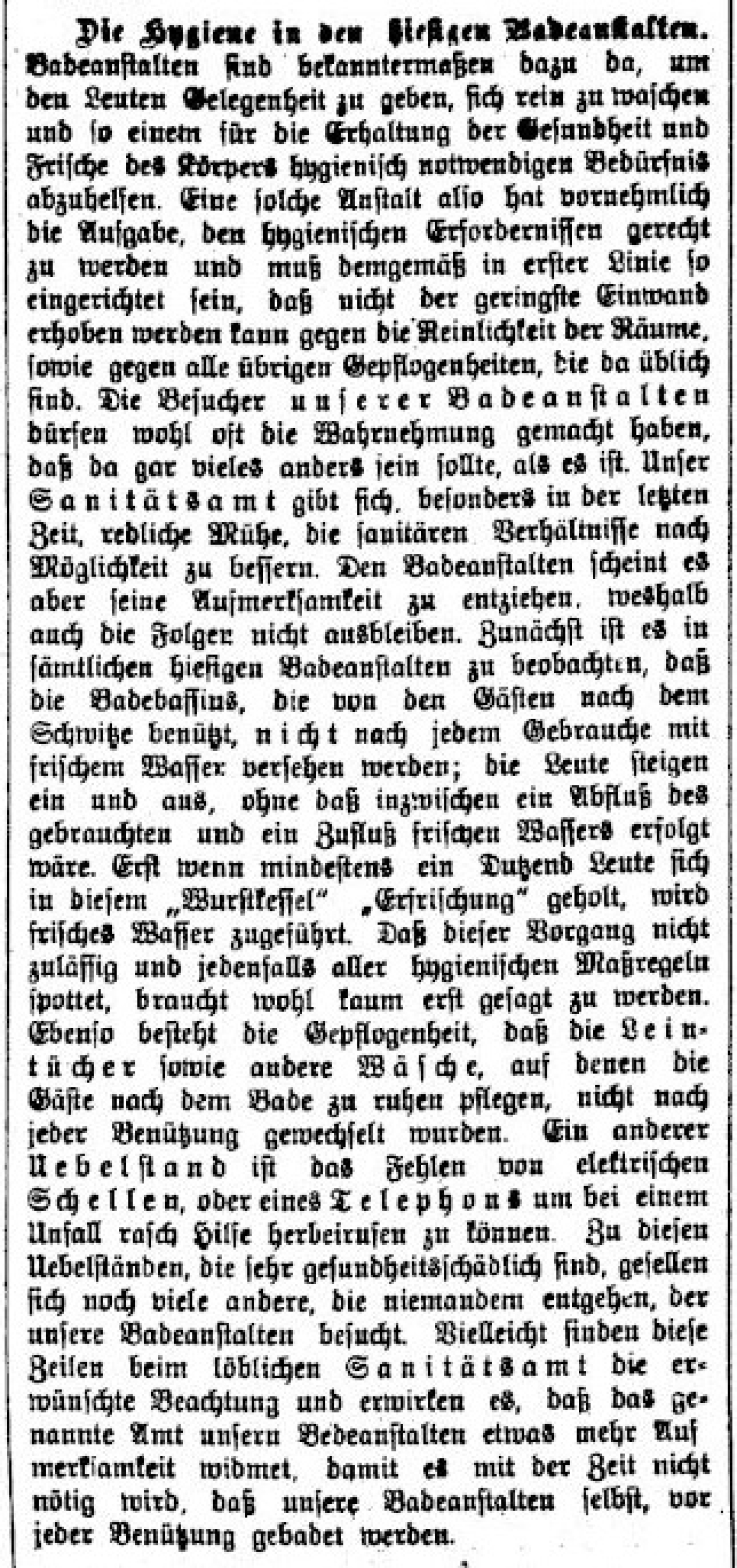
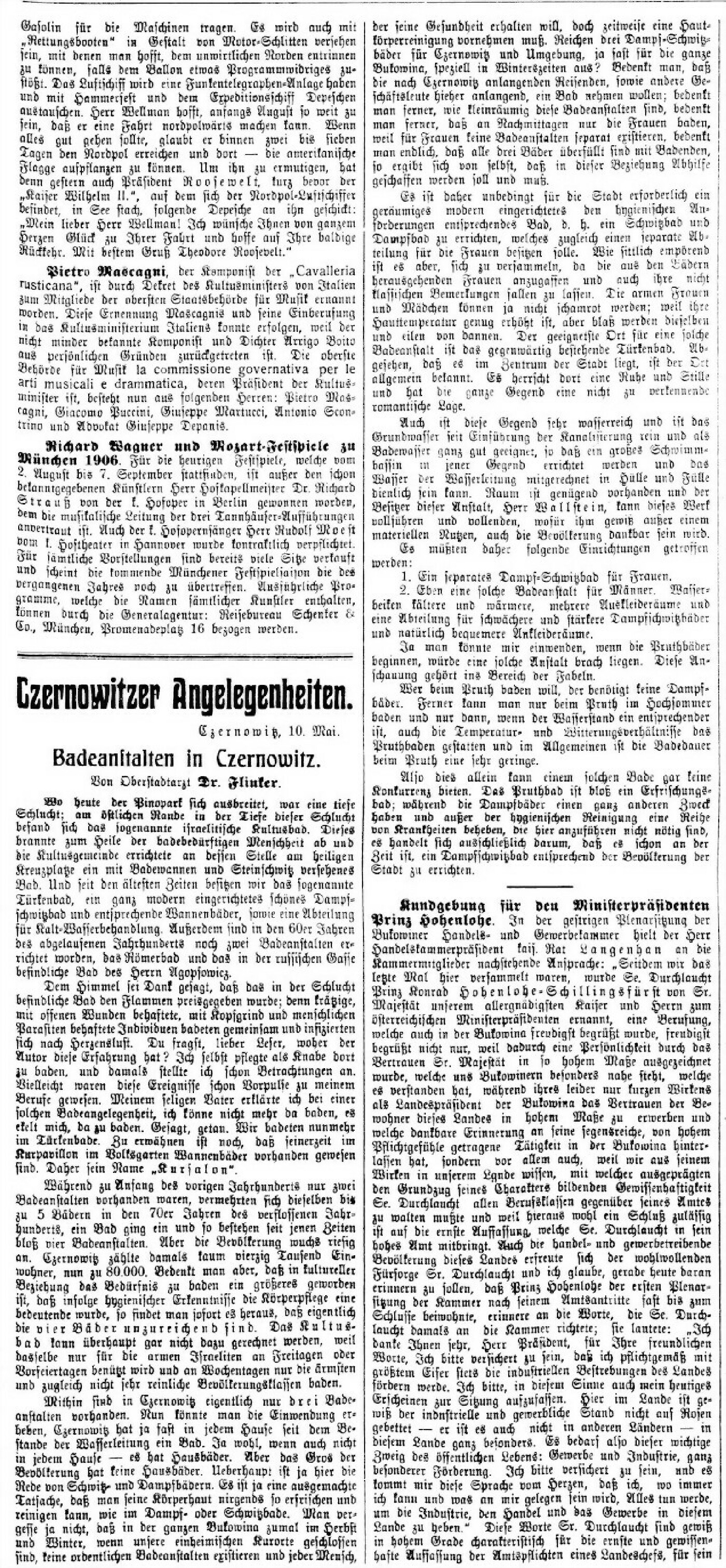
The Turkish bath belonged to the Wallstein family, to which the journalist Adolf Wallstein (editor-in-chief of the Bukowinaer Nachrichten) also belonged. The contemporary press was full of praise for the establishment after its renovation in 1888: “On visiting Mr Adolf König's newly restored, enlarged and very comfortable Türkenbad, we found that they now meet all the requirements that can be placed on a metropolitan establishment. The rooms are large and comfortably furnished, the sweating facilities meet all needs and requirements, so that one can only be grateful to the owner of the Türkenbad for making this establishment available to the public. The Türkenbad has three classrooms, very elegantly furnished; from the third class you enter the swimming pool, then the washroom with marble beds and finally the sweat bath”. (Czernowitzer Presse, 1 September 1888, p. 4). In 1897 the sweat and steam bath was equipped with an inhalation device and electric light (Bukowinaer Rundschau, 15 September 1897, p. 4).
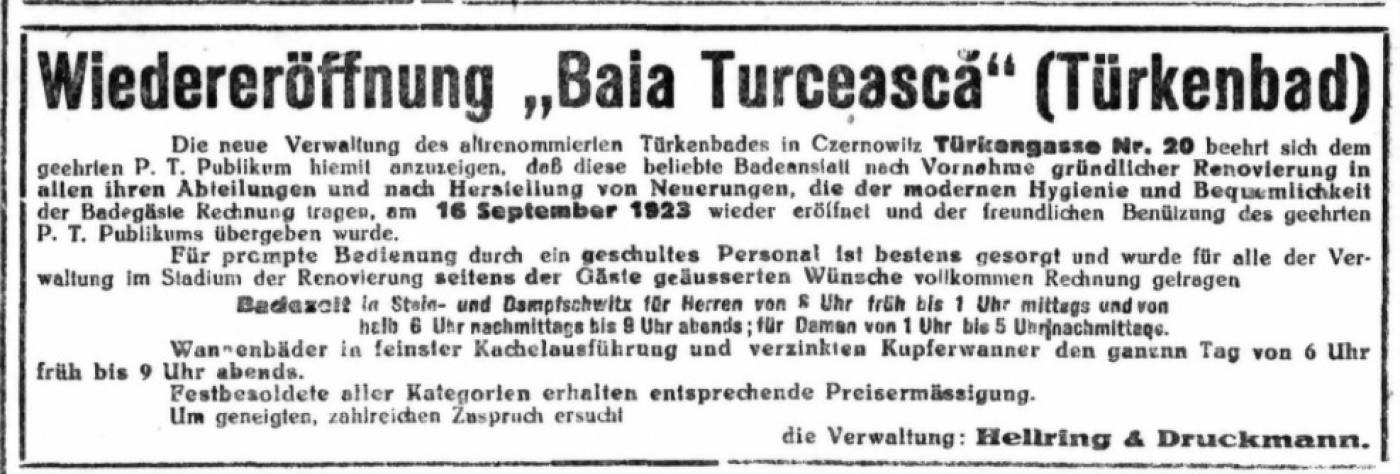
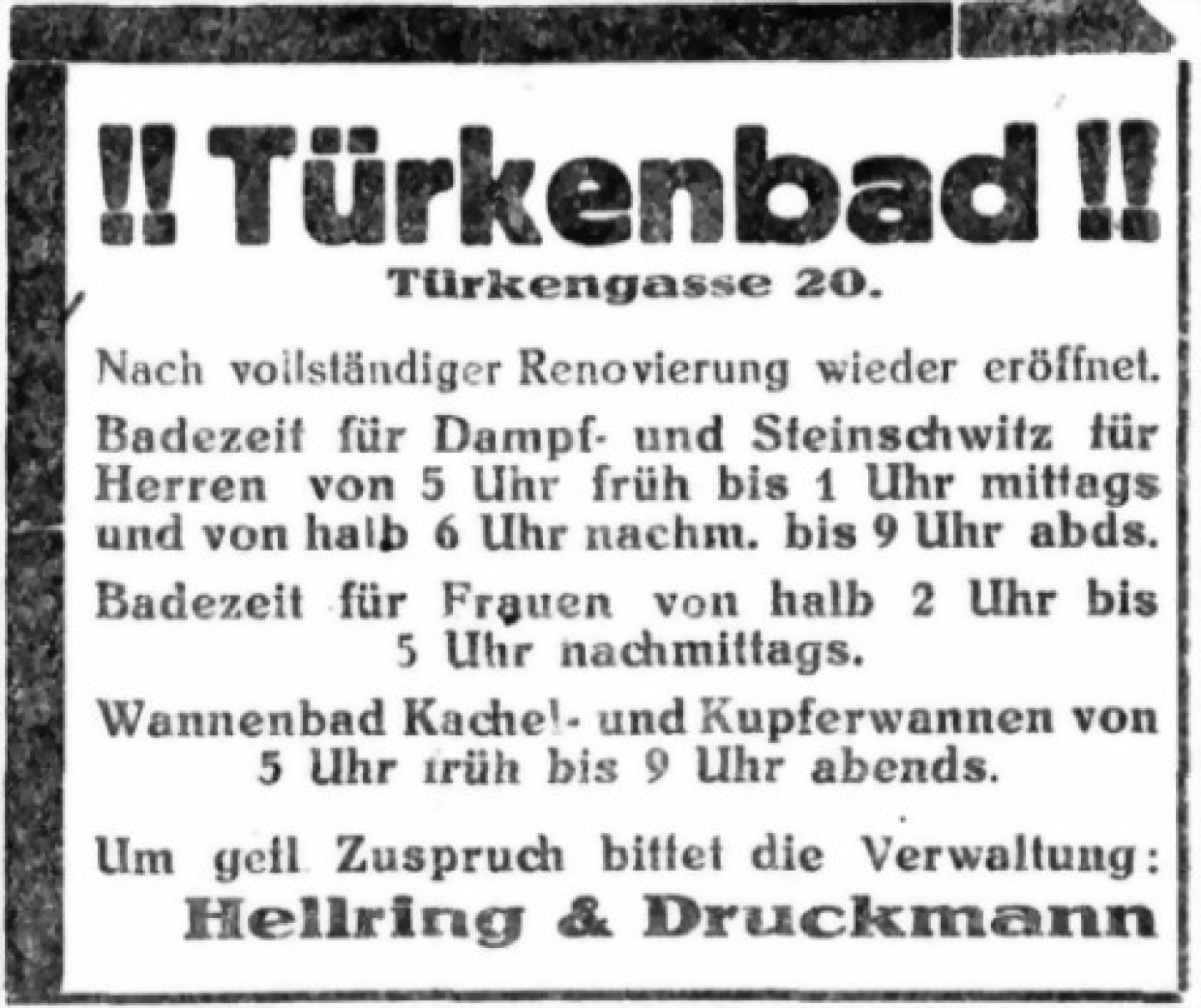
It remained closed for some time after the First World War and was reopened as Baia Turcească (Turkish Bath) on 16 September 1923, after being completely renovated, under the management of Hellring & Druckmann. The baths were open daily from 5am to 9pm. Bathing hours for the steam and stone baths were from 5 am to 1 pm and from 5.30 pm to 9 pm for men and from 1.30 pm to 5 pm for women.
The bathing times for the tub bath (tiled and copper tubs) were not gender-specific (Ostjüdische Zeitung, 28 September 1923, p. 4). The Turkish bath remained in operation until the early 1940s. A contemporary witness remembers her bathing rituals in the Türkenbad during the Romanian period and also the social aspect inherent in visiting the steam bath: „I remember being taken along by my mother to the Türkenbad. It was quite an adventure. Actually it was a "must" because at that time bathing circumstances at home were quite difficult. Either there was no warm water, or the pipes were frozen completely. So whether we liked it or not, we had to go to the Schwitzbad. It was a pleasant social event because we were usually joined by friends and neighbors. I hated the "Heißluftkammer" as well as the "Dampfbad" being too hot for a little girl, but I loved lying there on a large wooden plank and being soaped from top to toe by one of the attendants.Somehow I believe that this was my beginning love-affair with every kind of sauna later in life“ (Lucca Ginsberg, geborene Rachel Koch), 11. November 2008 (URL: http://czernowitz.ehpes.com/czernowitz12/testfile2008-2/0263.html).
Text: Markus Winkler