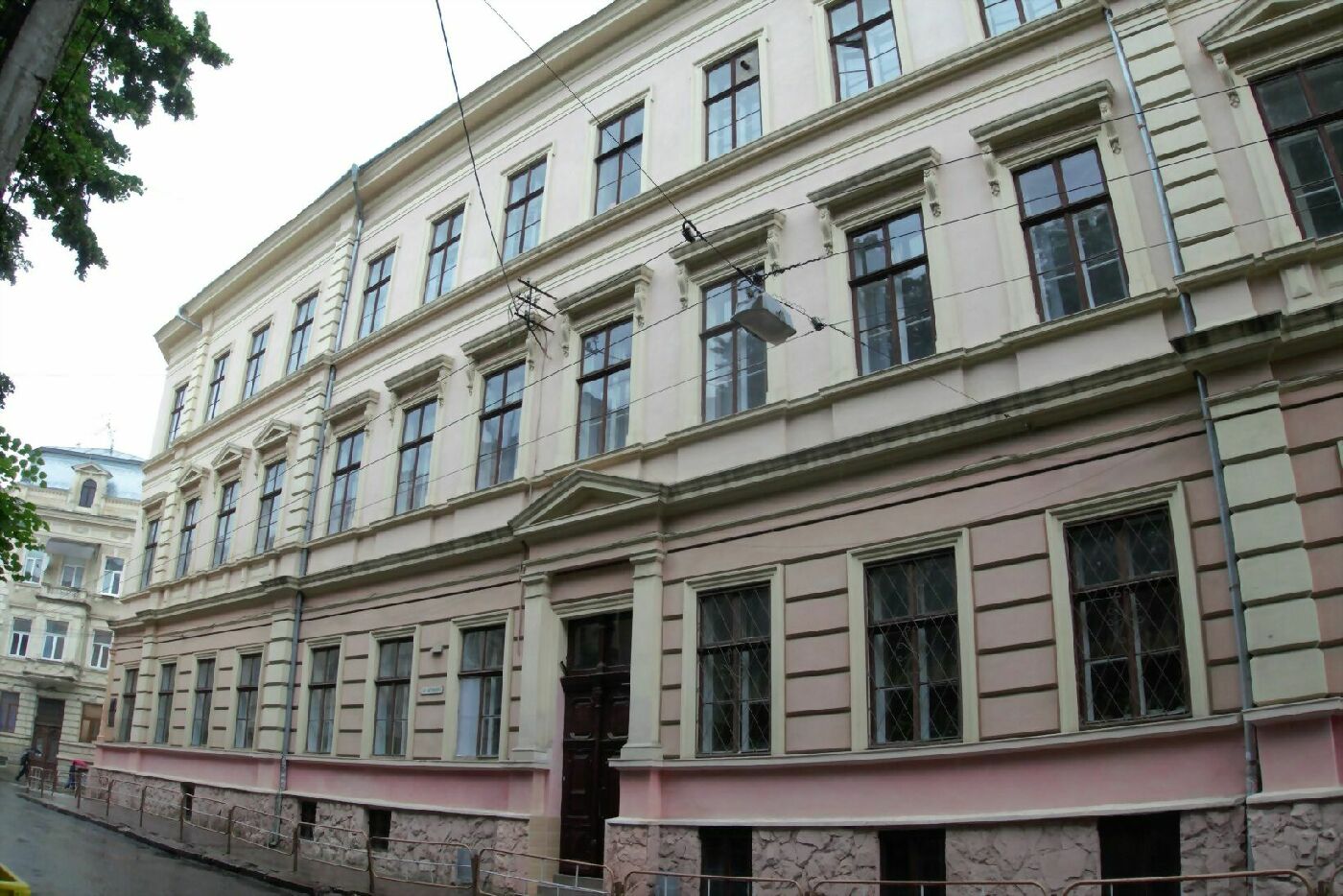
She then attended a commercial school for girls. There, too, she distinguished herself with an excellent leaving certificate. She also received proof that she had successfully completed an apprenticeship in a commercial trade. This training served her well in her later working life, whether in Chernivtsi, Bucharest or New York. As was customary at the time, she learnt Gabelsberg shorthand at the commercial college, which she used throughout her life.
After the First World War, the Austro-Hungarian Monarchy was dismantled. As a result, Bukovina was annexed to Romania with the agreement of the victorious powers and the Treaty of St Germain. Nevertheless, Sigmund Scherzer decided to return to Czernowitz with his family in 1919, after three years of trying in vain to build a life in Vienna. These early experiences of war and expulsion (and later of homelessness) shaped not only the nature and personality of Rose Ausländer, but also much of her poetry. She began to write during her time as a refugee in Vienna.
Rose Ausländer began studying philosophy and literature at the University of Czernowitz in 1919, and additionally attended the weekly ethics seminar run by secondary school teacher Dr. Friedrich Kettner. She studied the teachings of Plato, Spinoza and the Jewish philosopher Constantin Brunner. Especially Brunner's teachings made a deep impression on her and shaped her world view. Her university friend and future husband, Ignaz Ausländer, was among the many listeners who attended the seminar evenings. In 1921 they left Czernowitz and emigrated to the USA. Rose Ausländer first worked in Minnesota as an assistant editor for a German-language newspaper. Later, still accompanied by her boyfriend Ignaz, she moved to New York, where they married the following year. The marriage did not last three years.
In 1927, she returned to Czernowitz for more than a year because her mother was suffering from asthma. At the end of 1928, she emigrated to New York with her lover Helios Hecht. When her mother's health deteriorated again, Rose Ausländer moved back to Czernowitz after three years, where she lived until 1946. During this time, she published many of her poems in newspapers and magazines. From the mid-1930s, the political atmosphere for the Jewish population in Romania deteriorated. After the beginning of the Second World War and the collaboration between Romania and Nazi Germany, the existence of the Jews in Czernowitz and the region was extremely threatened. From 1940, Rose Ausländer lived with her mother in Dreifaltigkeitsgasse. Her brother Max and his wife also lived there. From October 1941, this part of the street was one of the districts in which over 50,000 Jews were ghettoised.
From the beginning of 1942, she recorded the conditions in the ghetto, her experiences and her feelings in poems. By changing hiding places, Rose Ausländer avoided deportation to Transnistria and, after 1944, deportation by Soviet troops.
Rose Ausländer's poetry describes, among other things, the fate of the homeless/stateless. Her own fate became that of the homeless through escape, expulsion and frequent relocation. When she finally made it to the United States in 1946, she worked as a translator and foreign language correspondent, moving from apartment to apartment and living out of a suitcase. However, her poetic work was not overshadowed by this everyday life. During this period, she published exclusively in English.
Then, on a trip to Europe, she met Paul Celan, who introduced her to new German poetry and to German modernism. The impressions she gained there were formative for her later poetry. The themes of her work remained the same, but she radically changed her form and style, making a connection with modern poetry. In her last creative period, she published at least one book a year, organised readings and took part in literary events.
Her health forced her to retire in 1961. From 1972 she lived in the Nelly-Sachs-Haus in Düsseldorf, where she died on 3 January 1988.
Text: Patricia Rodriguez
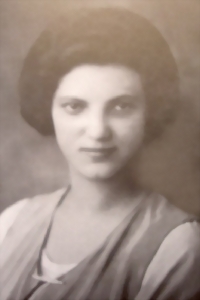
Picture: http://www.kronenhaus.de/assets/images/rose_1914.jpg (Fotograph unknown, public domain)
Materials:
- Helmut Braun: Rose Ausländer: Materialien zu Leben und Werk. Frankfurt/M. 1992, S. 7-68.
- Helmut Braun: „Ich bin fünftausend Jahre jung“: Rose Ausländer; zu ihrer Biographie. Stuttgart 1999, S. 7-44.
- Raimund Lang: Czernowitzer Köpfe: Kurzbiographien bedeutender Bukowiner. Traditionsverband „Katholische Czernowitzer Pennäler“. Innsbruck, Wien 2006, S. 10f.