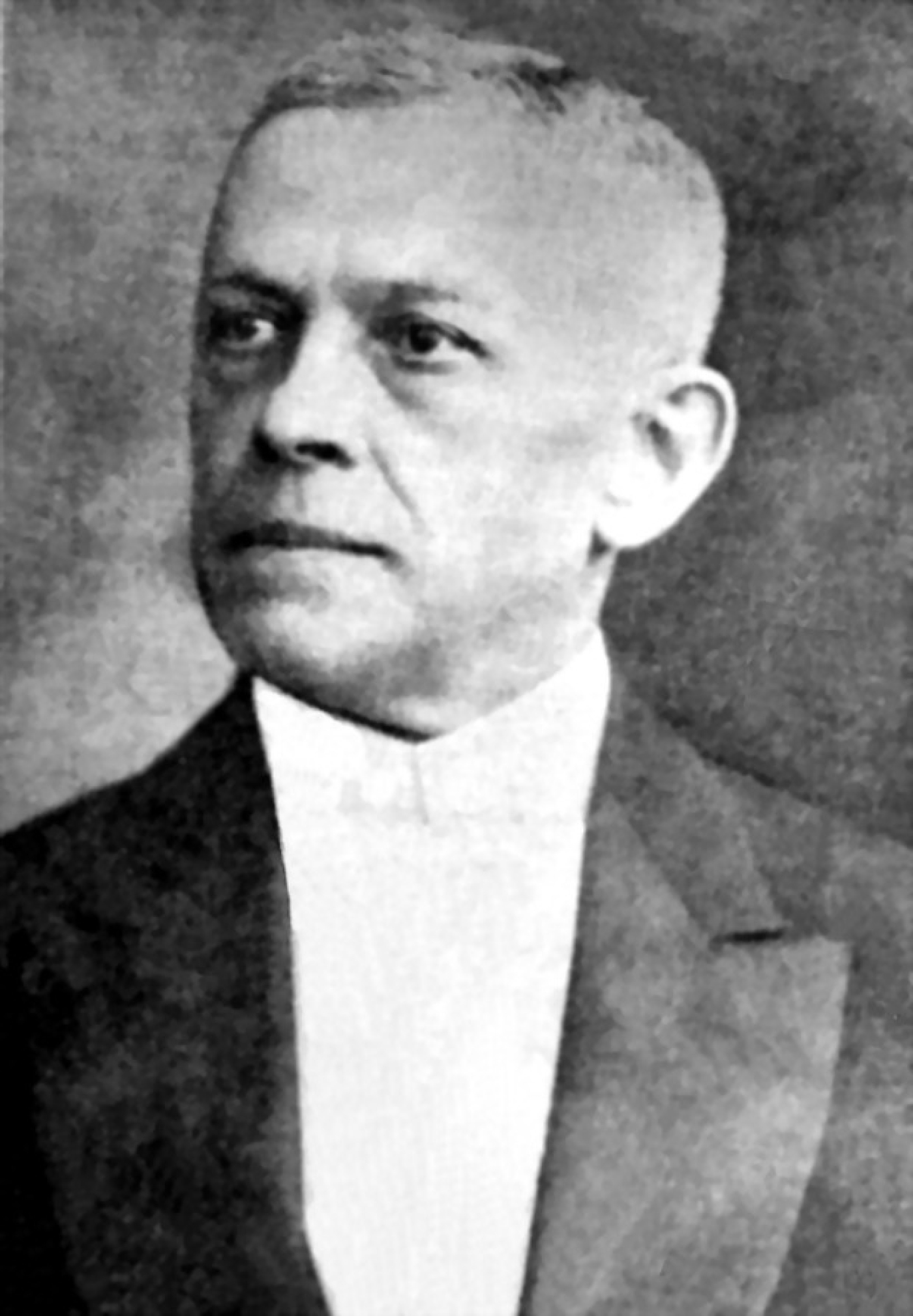
Till August 1916, the Romanian government negotiated over the Habsburg territories, which it wanted to acquire as compensation for entering the war (Turczynski, p. 214). As Russia had already occupied Bukovina and claimed it as its territory, Ion Nistor wrote writings denying the large Slavic population (Raportul numeric între Români şi Ruteni pe vremea ocupării, 1914 [The numerical ratio between Romanians and Ruthenians at the time of the occupation]; Românii şi rutenii. Studiu istoric şi statistici, 1915 [Romanians and Ruthenians. Historical and Statistical Study]).
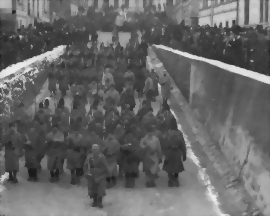
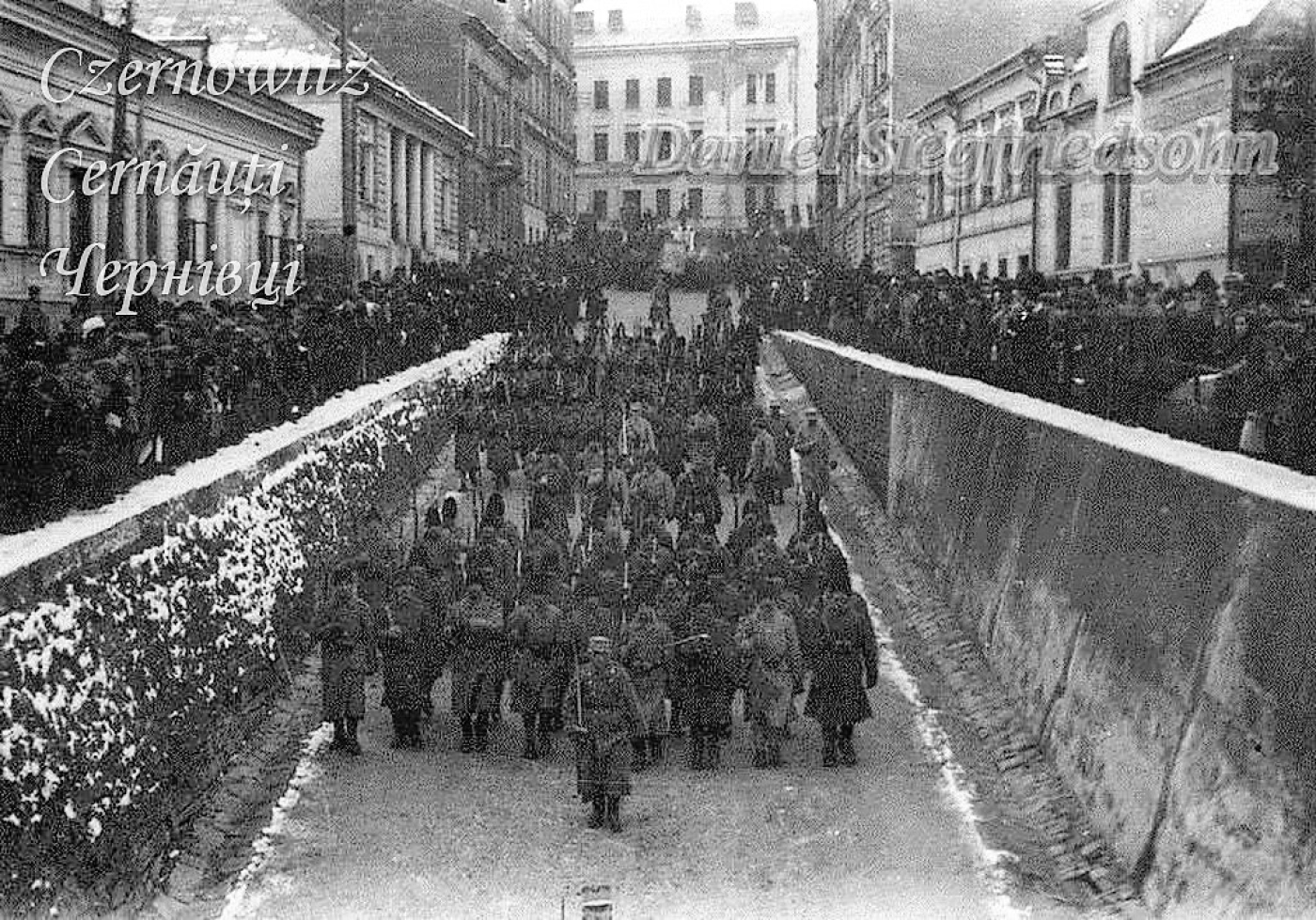
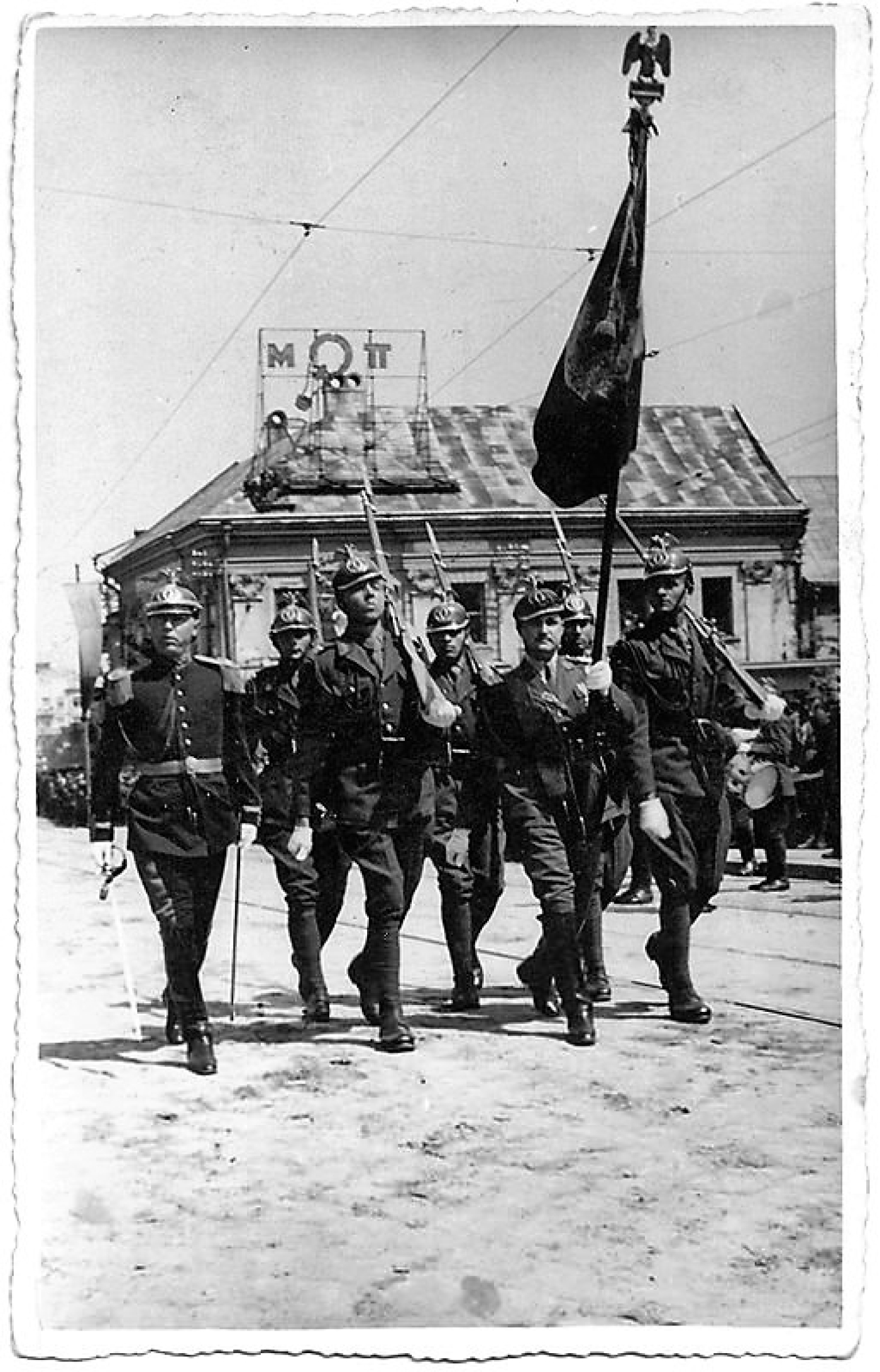
When the Austrian army began to disintegrate at the beginning of November 1918, the question of the affiliation of the Bukovinian territories became very real. A military unit of the Ukrainian National Council (Rada) from Lviv took Chernivtsi on 6 November 1918. Its leader negotiated with the Romanian member of the Imperial Council, Aurel von Onciul, on the division of Bukovina into two parts. As a result, some unelected Romanians, together with Iancu von Flondor (1865-1924), appealed to the Romanian government for support against alleged Bolshevik gangs. The Romanian army marched into Chernivtsi on 11 November 1918 and interned Aurel von Onciul. The Rada's military unit retreated without a fight in the face of superior forces. Flondor now took over the leadership of the Romanians, while Nistor was still in distant Bucharest. Nevertheless, he managed to outmanoeuvre Flondor in 1919 (Bălan: Bodnărescu, pp. 3-44; Hausleitner, pp. 93-101).
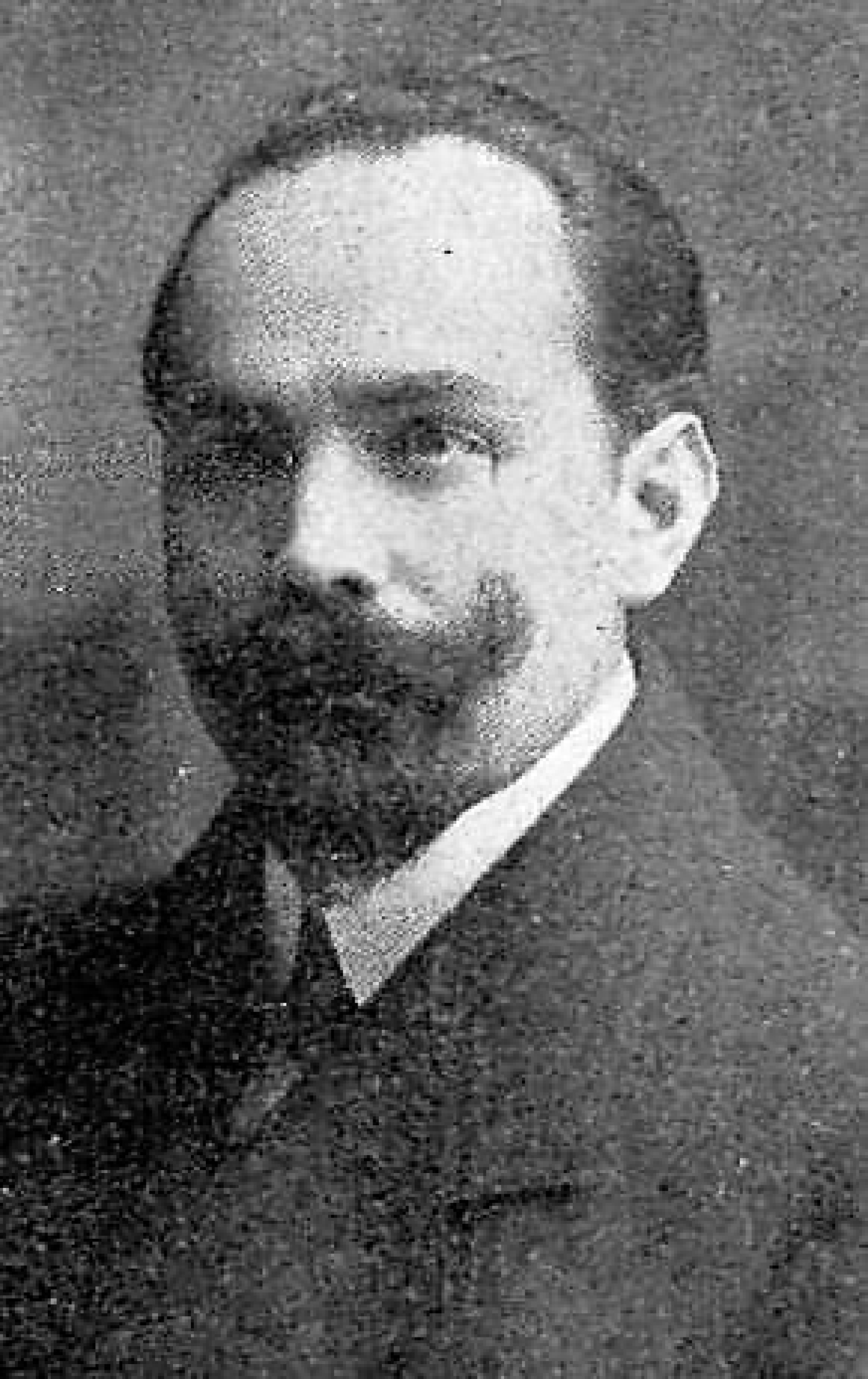
Flondor organised a meeting with a few selected Romanians on 15-28 November 1918 (two different calendars were still in use), at which the unconditional annexation to the Kingdom of Romania was proclaimed. No representatives of the Ukrainians or the Jews took part in this so-called 'constituent assembly'. The Germans made their participation dependent on certain conditions, such as the preservation of the German-language university (Osatschuk, p. 39). Nistor had travelled from Bucharest to this meeting with about 100 Bukovinian volunteers from the Romanian army (Bogzan, p. 346). Many of them ended up in the new leadership positions. Nistor was part of the delegation that presented the annexation request to King Ferdinand I in December 1918 (Căpreanu, p. 315f.). At the Paris Peace Conference in early 1919, Ukrainian representatives laid claim to northern Bukovina, where the majority of the population was Ukrainian. Nistor vehemently opposed them. In Bukovina, the military administration arrested those Ukrainians who called for demonstrations. In June 1919, the whole of Bukovina was ceded to Romania. However, Nistor criticised the Minority Protection Treaty initiated by the Great Powers, which was intended to ensure equal rights for the 30% non-Romanians in Greater Romania (Dobrinescu, p. 57).
As the representative of Bukovina in the Crown Council, Nistor influenced which associations were banned and how newspapers were censored (Winkler: Jüdische Identitäten, pp. 117f.). In this way he was able to undermine the position of Flondor, who was prepared to compromise with the representatives of the non-Romanians, who made up 60% of the Bukovina population. In April 1919, Flondor resigned from the provisional government after being bitterly attacked in Glasul Bucovinei [Voice of Bucovina], the newspaper of Nistor's supporters. Flondor founded his own paper, Bucovina, which criticised the Romanian army's use of martial law to prevent the activities of all political associations except Nistor's party. The censors soon suppressed criticism of Nistor's politics (Winkler: Bucovina, p. 93). Because of the attacks, Flondor's party, the German National Council and the then strong Social Democrats abstained from participating in the first all-Romanian elections in November 1919 (Glass, p. 76). Nistor's 'Democratic Party of Unity' thus won the majority of votes in Bukovina. In January 1923, this party merged with the National Liberals, who had been in power since 1922.
Text: Mariana Hausleitner
Sources:
- Teodor Bălan: Bucovina şi războiul mondial [Die Bukowina und der Weltkrieg]. Cernăuţi 1929
- Teodor Bălan: Rolul lui Vasile Bodnărescu în preajma Unirii [Die Rolle von Vasile Bodnărescu im Umfeld der Vereinigung]. Cernăuţi 1938
- Ovidiu Bogzan: Ion I. Nistor. Preliminarii monografice (2) [Ion I. Nistor. Monographische Präliminarien]. In: Revista istorică 5 (1994), H. 3–4, S. 345-357
- Ioan Căpreanu: Mişcarea culturală a românilor din Bucovina pentru unitate naţională şi statală (1848–1918) [Die kulturelle Bewegung der Rumänen in der Bukowina für nationale und staatliche Einheit (1848–1918)]. Iaşi 1999
- V. Fl. Dobrinescu: România şi sistemul tratatelor de pace de la Paris (1919–1923) [Rumänien und das System der Friedensverträge von Paris (1919–1923)]. Iaşi 1993
- Hildrun Glass: Zerbrochene Nachbarschaft. Das deutsch-jüdische Verhältnis in Rumänien. München 1996
- Marianna Hausleitner: Die Rumänisierung der Bukowina. Die Durchsetzung des nationalstaatlichen Anspruchs Großrumäniens. München 2001
- Marianna Hausleitner: Historiker der Universität Czernowitz als Wissenschaftler und Politiker: Raimund Friedrich Kaindl und Ion Nistor. In: Markus Winkler (Hg.): Partizipation und Exklusion. Zur Habsburger Prägung von Sprache und Bildung in der Bukowina. 1848 – 1918 – 1940, S. 55-76
- Stelian Neagoe: Istoria Unirii Românilor [Geschichte der Vereinigung der Rumänen]. Bucureşti 1993
- Ion Nistor: Der nationale Kampf in der Bukowina, mit besonderer Berücksichtigung der Rumänen und Ruthenen. Bucureşti 1918
- Sergij Osatschuk: Die soziale Dynamik und die politischen Orientierungen der Bukowina-Deutschen. In: Popovici, Dahmen, Kramer: Gelebte Multikulturalität, S. 39-53
- Victoria Popovici, Wolfgang Dahmen, Johannes Kramer (Hgg.): Gelebte Multikulturalität. Czernowitz und die Bukowina. Frankfurt/M. 2010, S. 67-86
- Emanuel Turczynski: Geschichte der Bukowina in der Neuzeit. Zur Sozial- und Kulturgeschichte einer mitteleuropäisch geprägten Landschaft. Wiesbaden 1993
- Markus Winkler: Jüdische Identitäten im kommunikativen Raum. Presse, Sprache und Theater in Czernowitz bis 1923. Bremen 2007
- Markus Winkler: Legea presei şi cenzura în Monarhia habsburgică şi în România. Studiu de caz: Bucovina [Das Pressegesetz und die Zensur in der Habsburgermonarchie und Rumänien: Fallbeispiel Bukowina]. In: Andrei Corbea-Hoisie, Ion Lihaciu, Markus Winkler (Hgg.): Prolegomene la un dicţionar al presei de limba germană din Bucovina istorică [Studien zu einem Lexikon der deutschsprachigen Presse in der Bukowina (1848–1940)]. Iaşi 2012, S. 79-105