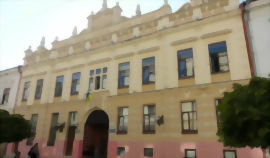
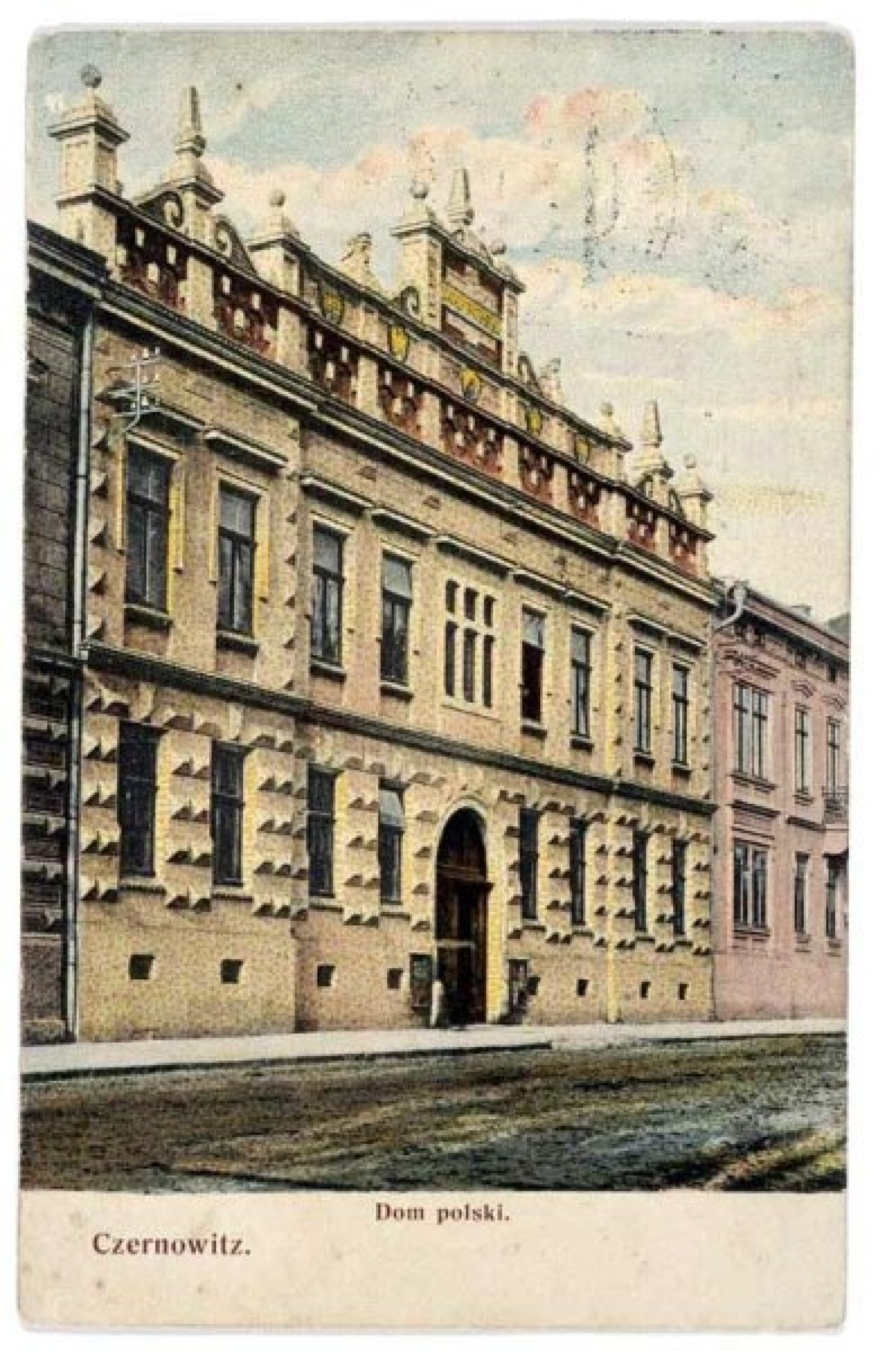
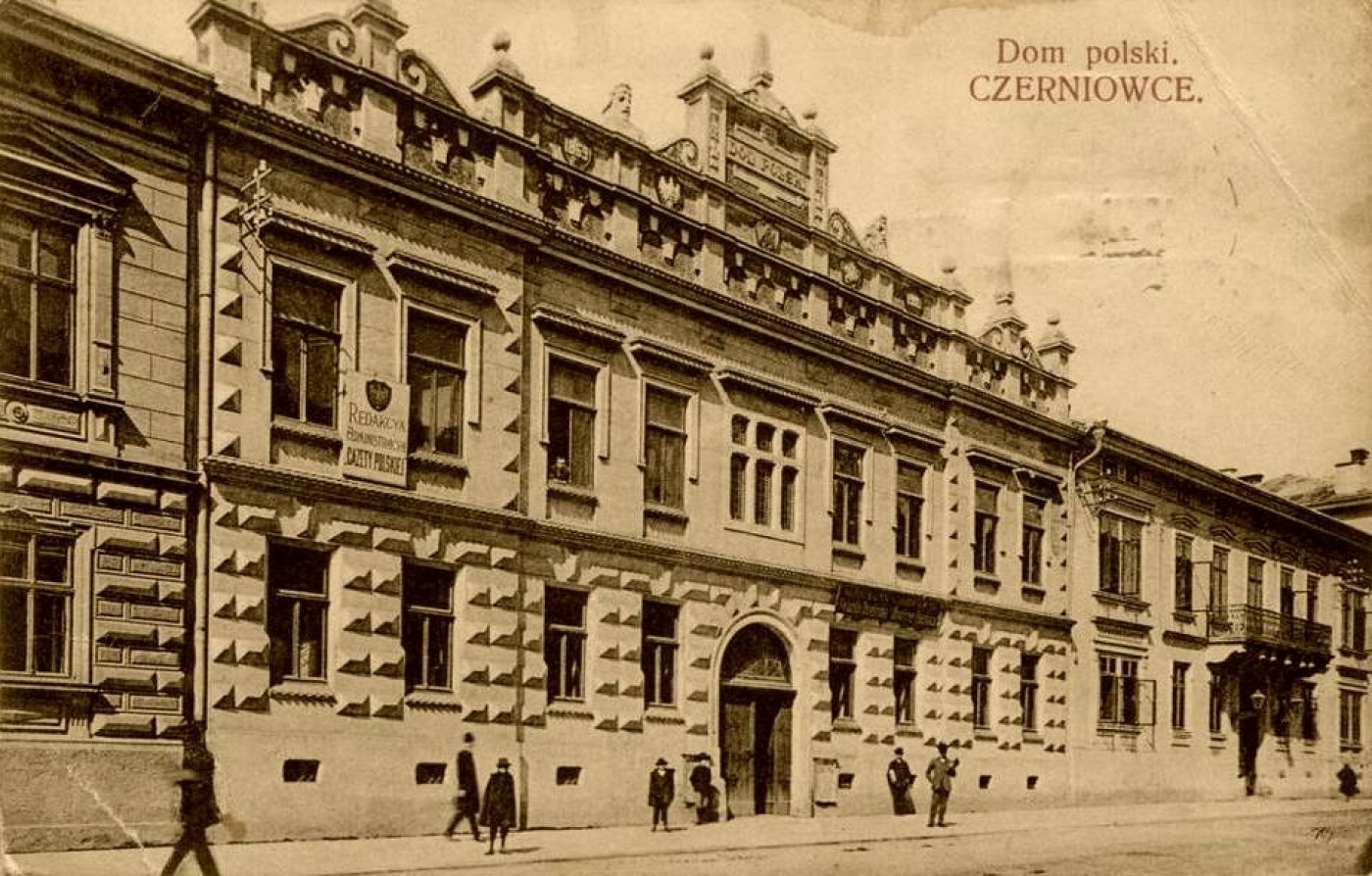
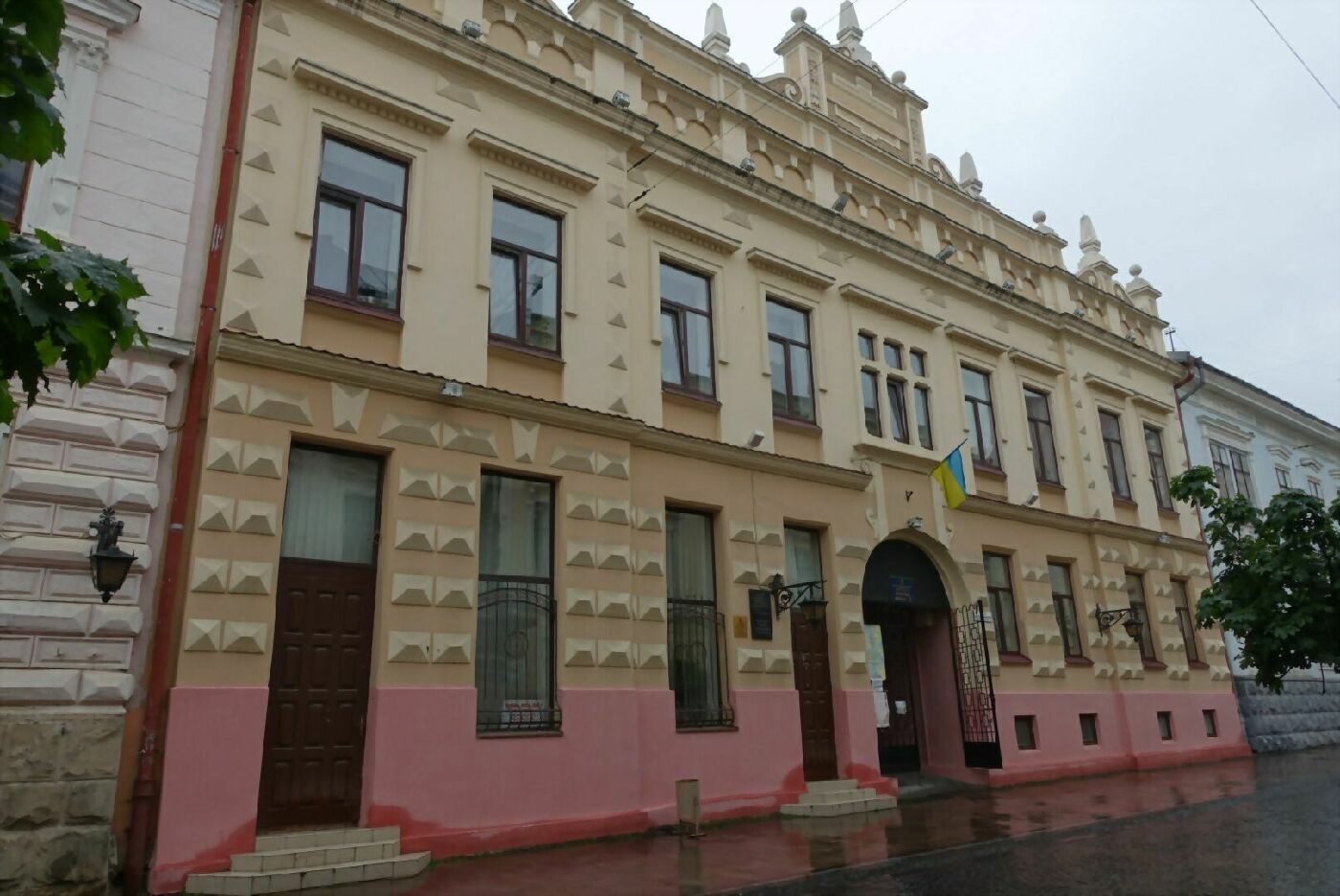
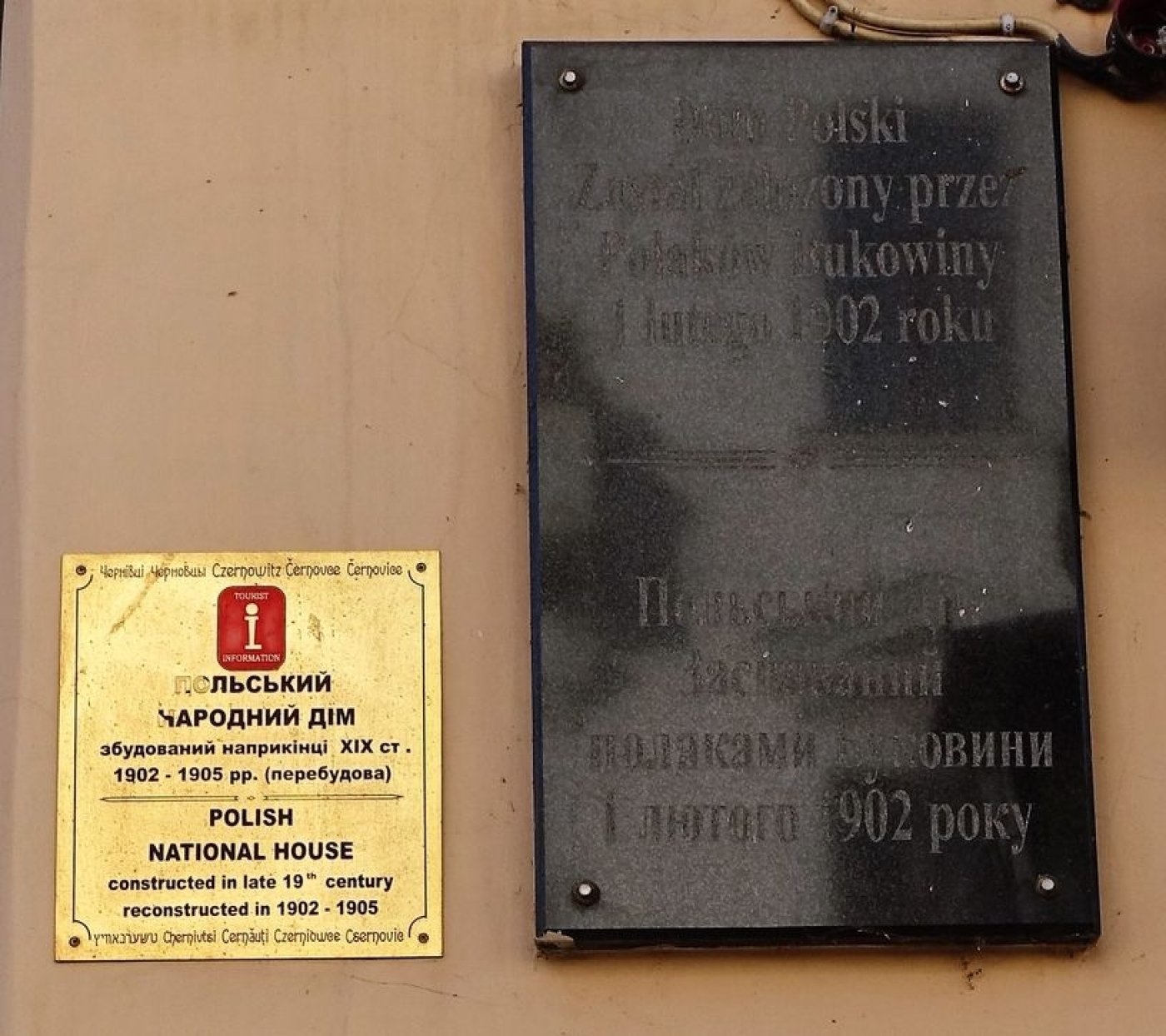
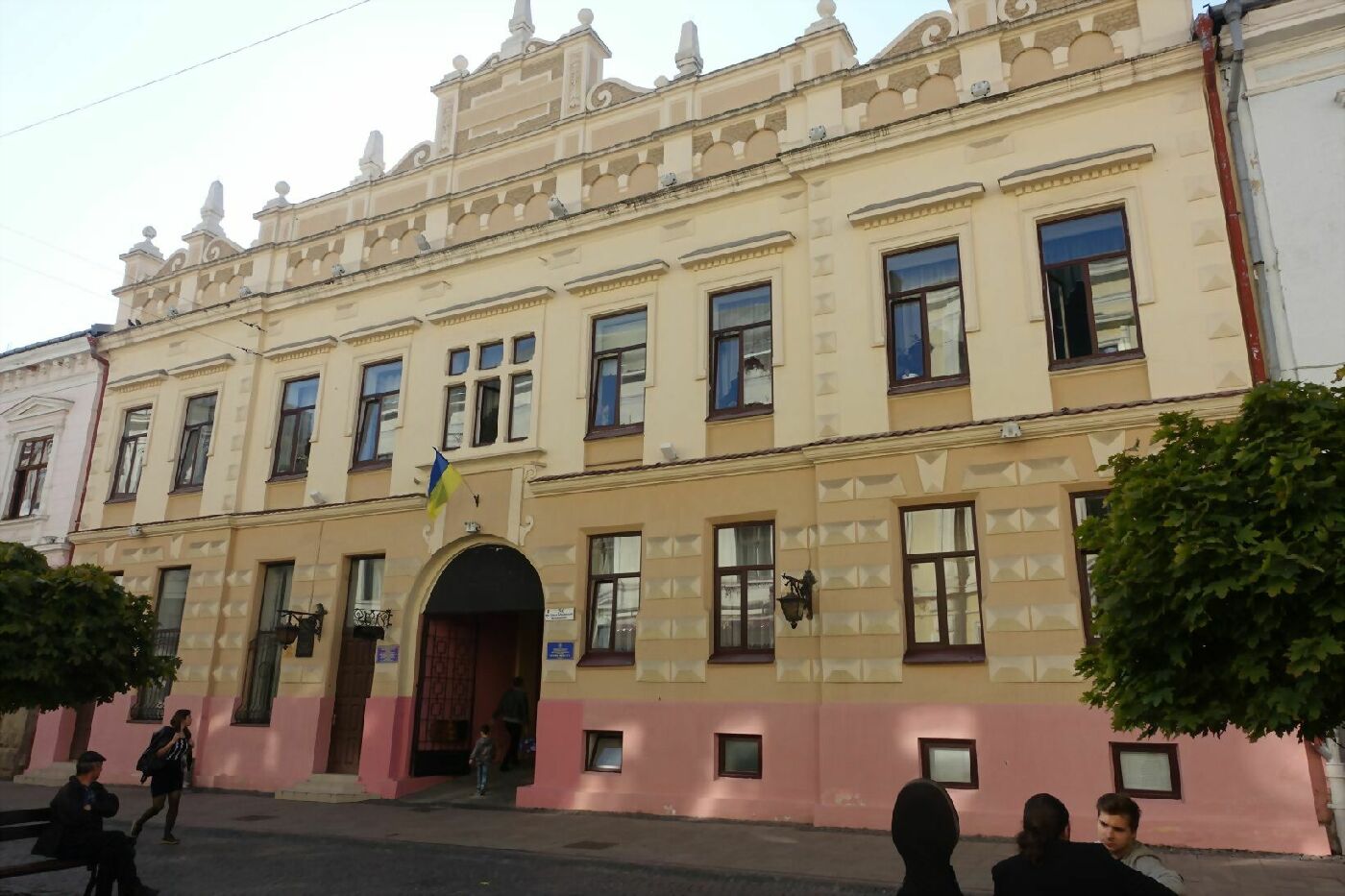
However, the building soon became too small for the large number of associations that were founded and the growing Polish community in Chernivtsi, so in 1904 the Society acquired a property at Herrenstraße 40 after receiving a donation in its will (Hausleitner, p. 101). Within a year, a representative main building 'in the Zakopan style' (Czernowitzer Allgemeine Zeitung, No. 573, 5 December 1905, p. 3) and an outbuilding in the backyard were erected (Feleszko, p. 134). In 1905 the new clubhouse was ceremonially opened in the presence of more than a thousand guests (Hausleitner, p. 101, and Czernowitzer Allgemeine Zeitung, no. 573, 5.12.1905, p. 3).
The main building housed a library with more than 8,000 volumes and issues of ten Polish periodicals, as well as various small and large rooms. In the rear building there were two halls for events and smaller club rooms (Feleszko, p. 134). From then on, the new Dom Polski provided all Polish associations with sufficient space for meetings and various activities. Meetings and courses on Polish literature and language, theatre and crafts were held regularly. Balls, theatre performances and celebrations of national holidays and anniversaries of Polish personalities, such as the Adam Mickiewicz celebrations, were also organised (Bukowinaer Post, no. 2001, 29.11.1906, p. 4).
The Dom Polski was not only used by members of the Polish minority. Announcements of events and reports published in the Czernowitzer Allgemeine Zeitung show that the National House was also frequently used by non-Polish associations and organisers. For example, the Romanian academic association Junimea and the Romanian singing association Armonia organised 'fun evenings' there, and the Jewish dance association Emunah invited people to 'dance parties' in the Dom Polski (Czernowitzer Allgemeine Zeitung, no. 868, 30.11.1906, p. 5, and: Czernowitzer Allgemeine Zeitung, No. 2368, 14.12.1911, p. 4, and Czernowitzer Allgemeine Zeitung, No. 1230, 15.02.1908, p. 4). At the beginning of 1912, a public cinema was opened in a hall of the Polish clubhouse, which was called "Modern" cinema from December 1912 (Czernowitzer Allgemeine Zeitung, No. 2421, 17.02.1912, p. 4, and Czernowitzer Allgemeine Zeitung, no. 2734, 07.12.1912, p. 4).
Despite the great wave of emigration of Poles from Bukovina to their new homeland in 1919, Dom Polski continued to exist after the First World War. Chernivtsi remained the centre of Polish life in Romania and was also the seat of the Association of Polish Associations in Romania, founded in 1932. The Dom Polski thus continued to be the place of foundation, venue and meeting place for many organisations and associations (Feleszko, p. 140).
After the Second World War, most of the Poles who had remained in Bukovina were forcibly resettled or emigrated, so that by 1959 there were only 1,280 Poles left in Chernivtsi, or 0.8 per cent of the city's population. The building of the Polish House and the Polish library in it were confiscated by the state during the Soviet era, all Polish associations were dissolved, and Polish lessons at the Dom Polski were discontinued (ibid., p. 143).
In 1991, the year of the proclamation of independent Ukraine, the Adam Mickiewicz Society of Polish Culture, founded in December 1989, once again moved into the premises of the front building at 40 Olga Kobyljanska Street (ibid., p. 144). Chernivtsi is one of six cities in Ukraine where the Adam Mickiewicz Society, which today has around 500 Ukrainian members, has a permanent base (interview with Władysław Strutyński on 11 May 2017 at Dom Polski).
The director of Dom Polski and president of the Adam Mickiewicz Society is the historian and expert on East Central Europe, Władysław Strutyński. Dom Polski's mission is still to provide a space for Polish culture and language in the city. However, its audience has changed considerably over the past few decades: Today, Dom Polski is mainly frequented by young Ukrainians, as it offers a wide range of Polish language courses to prepare them for longer study and work stays in the neighbouring country. Cultural events, meetings of Polish associations and receptions for guests from Poland continue to be organised at Dom Polski (interview with Władysław Strutyński).
Text: Tabea Schleinitz
Sources:
- Kazimierz Feleszko: Die Polen in Czernowitz. In: Harald Heppner (Hrsg.): Czernowitz. Die Geschichte einer ungewöhnlichen Stadt. Köln 2000, S. 129-144
- Mariana Hausleitner: Fünf verschiedene Vereinshäuser in Czernowitz und ihre Entwicklung bis 1914. In: Peter Haslinger, Heidi Hein-Kirchner, Rudolf Jaworski (Hrsg.): Heimstätten der Nation. Ostmitteleuropäische Vereins- und Gesellschaftshäuser im transnationalen Vergleich. Marburg 2013, S. 89-111
Newspaper sources and Interviews:
- Bukowinaer Post, Nr. 2001, 29.11.1906, S. 4
- Czernowitzer Allgemeine Zeitung, Nr. 573, 05.12.1905, S. 3
- Czernowitzer Allgemeine Zeitung, Nr. 868, 30.11.1906 S. 5
- Czernowitzer Allgemeine Zeitung, Nr. 1230, 15.02.1908, S. 4
- Czernowitzer Allgemeine Zeitung, Nr. 2368, 14.12.1911, S. 4
- Czernowitzer Allgemeine Zeitung, Nr. 2421, 17.02.1912, S. 4
- Czernowitzer Allgemeine Zeitung, Nr. 2734, 07.12.1912, S. 4
- Prager Tagblatt, Nr. 263, 22.09.1886, S. 6
- Interview mit Władysław Strutyński am 11.05.2017 im Dom Polski