Among the newcomers were noble landowners, members of the urban middle class and craftsmen (Hausleitner, p. 99). The importance of the Polish minority grew rapidly, especially in the provincial capital of Chernivtsi and its suburbs, where more than forty per cent of all Bukowina Poles settled. The first two mayors of the city, which became autonomous in 1864, were also of Polish origin: the Armenopole Jakob von Petrowicz (1864-66) and the Pole Antoni Kochanowski (1866-74, 1887-1907), who grew up in Chernivtsi. In 1880 there were already 6,707 Poles living in the city (15.03% of the city“s population), in 1890 7,610 (14.34%) and in 1910 14,892 (17.42%) (Feleszko, p. 132.) After German and Ruthenian, Polish was the third most spoken language in Chernivtsi at the beginning of the 20th century. Although it did not achieve the status of an official national language, it was introduced as an optional subject in some grammar and secondary schools from 1870 (Feleszko, p. 132 and Hausleitner, p. 99).
In 1863, in order to promote Polish language and culture, a circle of Poles from Chernivtsi around Aleksander Morgenbesser founded the so-called “Polish Reading Hall” (Czytelnia Polska), which organised Sunday reading courses for Polish craftsmen and domestic servants, among others (Hausleitner, p. 100). In 1876, 28 students founded the Polish Fraternity Ognisko (hearth, here in the sense of “spiritual fire”). The Bukowin Polish Circle (Bukowinskie Koło Polskie) existed from 1890 as an umbrella organisation for all Polish clubs. The Sokół („Falcon“) gymnastics club was founded in 1894 and the Gwiazda („Star“) craftsmen“s society three years later. Students also founded a primary school society (Towarzystwo Szkoły Ludowej), which raised money for private Polish primary schools (Feleszko, p. 133 and: Hausleitner, p. 100).
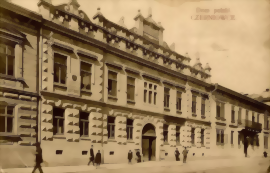
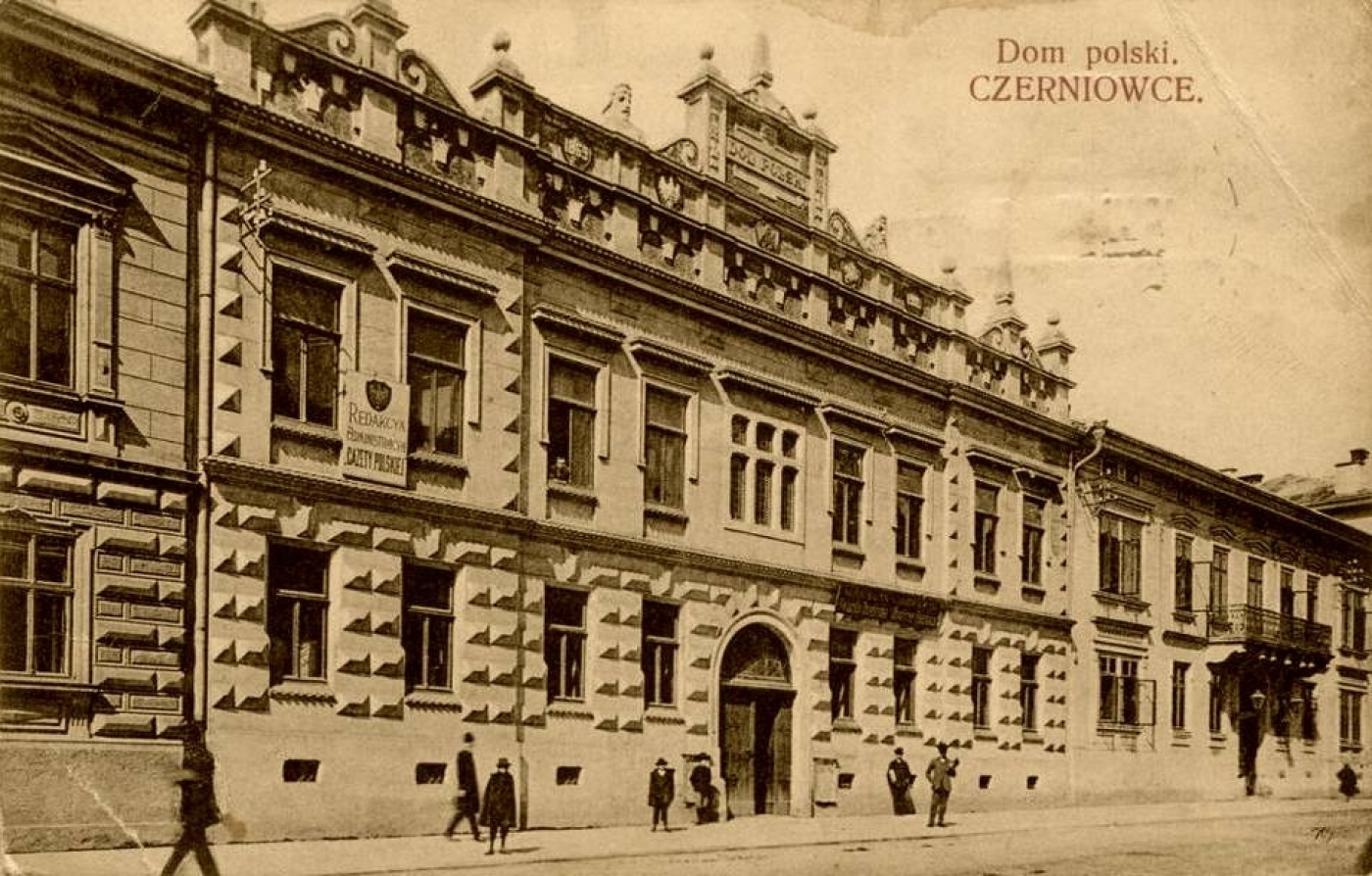
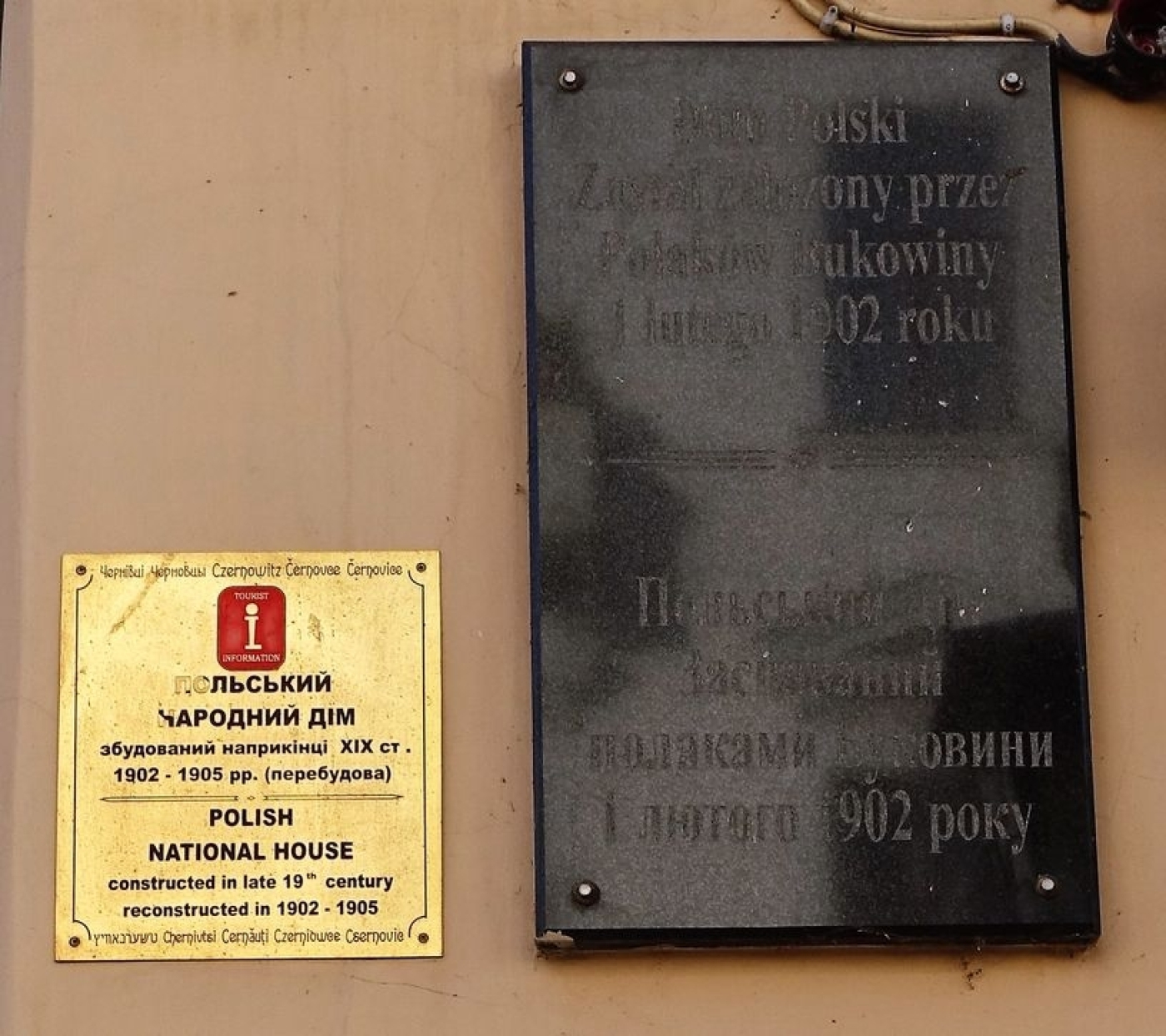
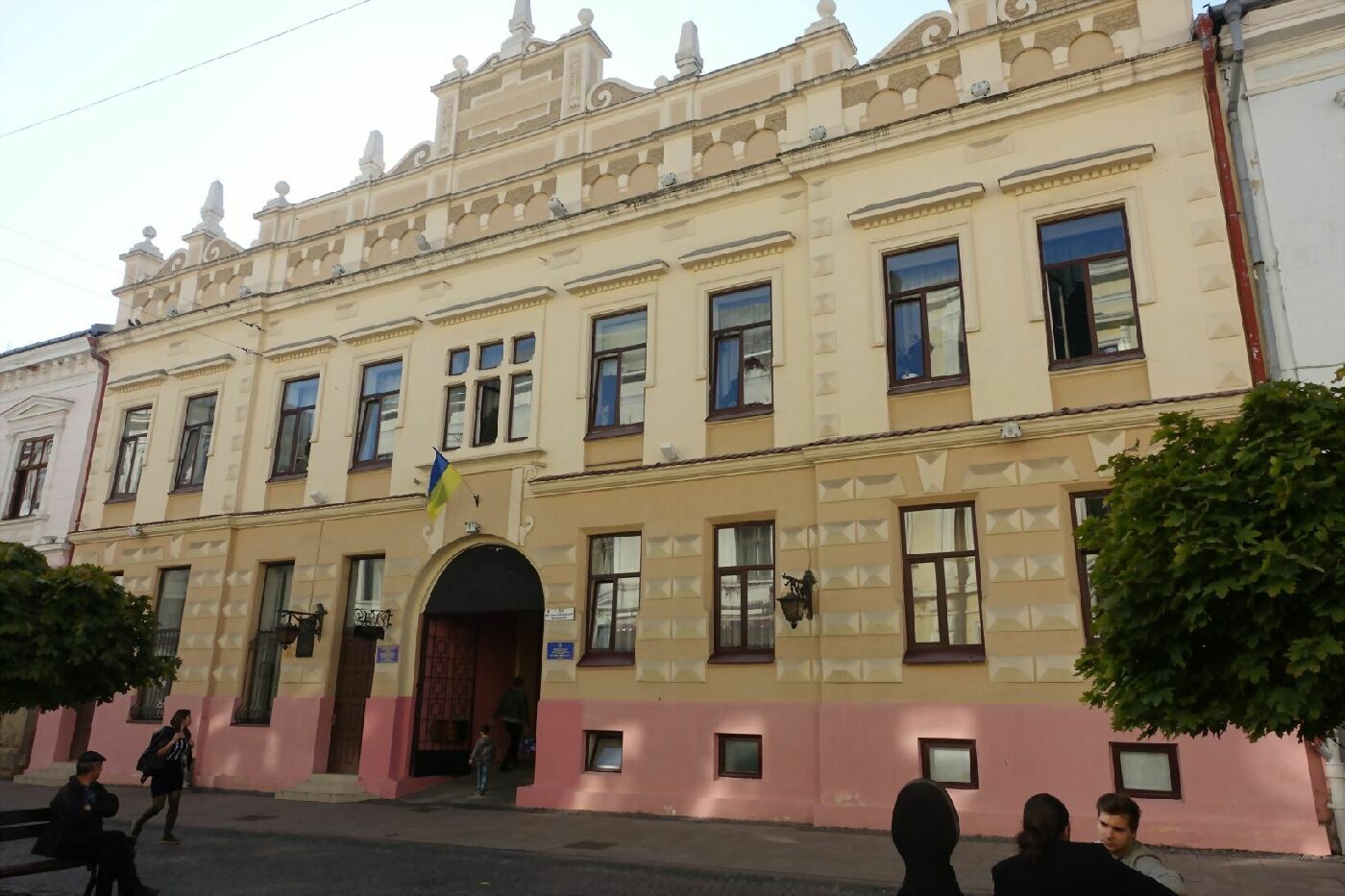
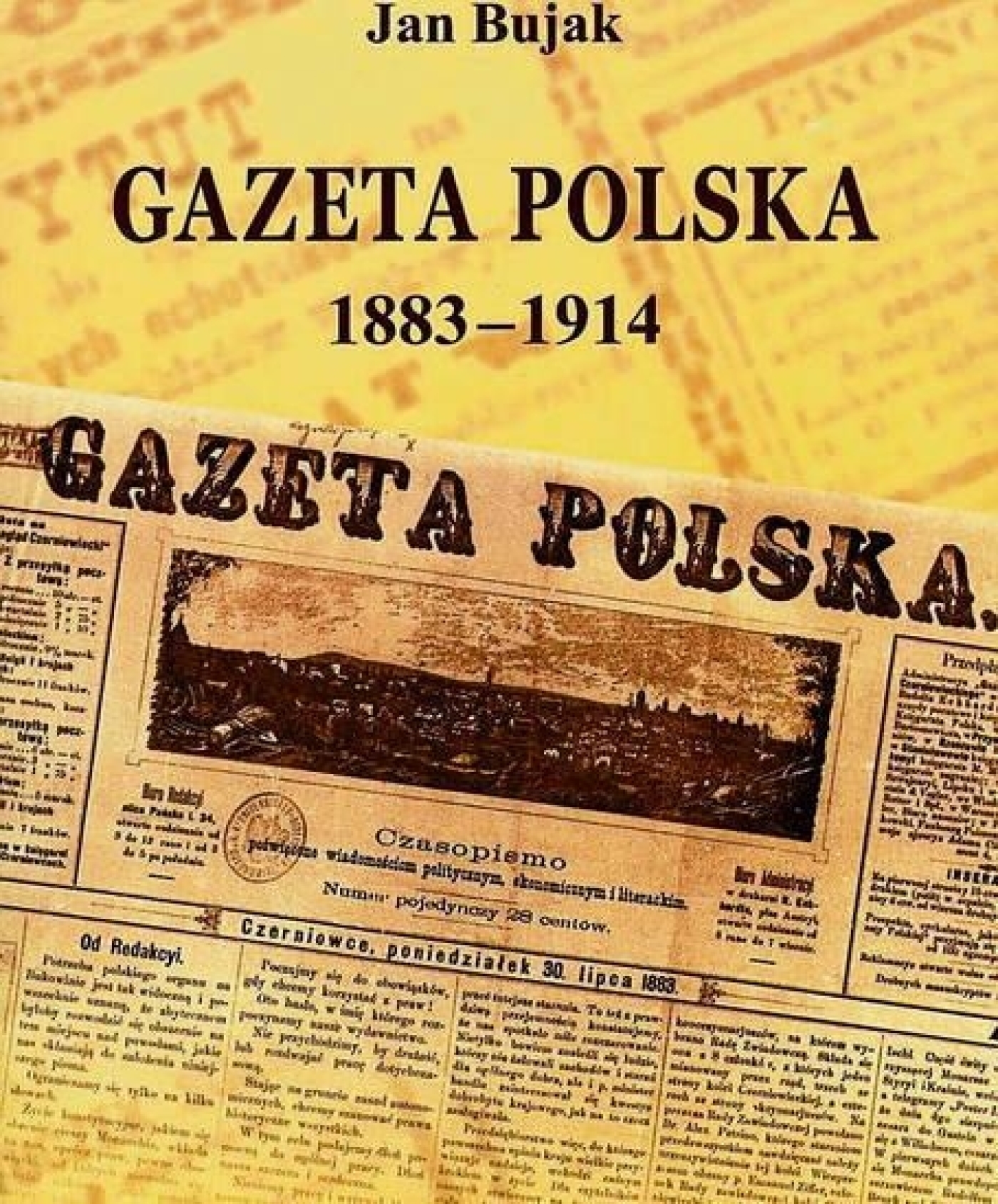
Besides various Polish monthly magazines, the most important press organ of the Polish minority in Bukovina was the Gazeta Polska, the first issue of which appeared on 30 July 1883 and reported on the activities of the Czytelnia Polska and other Polish associations. The Poles were the first of the minorities living in Chernivtsi to acquire their own clubhouse, the Dom Polski, in 1886. Due to the large number of clubs, this was replaced in 1905 by a larger and more representative clubhouse at Herrenstraße 40 (Feleszko, p. 134 and Hausleitner, p. 100). The Dom Polski contained a library and numerous meeting rooms, where regular meetings of the associations, courses on Polish literature and language, as well as theatre and arts and crafts, took place. Balls, theatre performances and celebrations of national holidays and anniversaries of Polish personalities, such as the Adam Mickiewicz celebrations, were also organised there (Bukowinaer Post, no. 2001, 29.11.1906, p. 4.).
After 1919, most of the Poles from Bukovina emigrated to the newly established Polish state. The number of Poles in Chernivtsi fell by forty per cent (Feleszko, p. 139). However, most Polish organisations and associations continued to exist. In addition to the Polonia sports club, a Polish youth club was founded in 1924, with a theatre group that performed plays in Polish throughout Romania. Chernivtsi was the centre of Polish life in Romania and the seat of the Association of Polish Associations in Romania, founded in 1932 (Feleszko, p. 140).
After the Second World War, there were large-scale forced resettlements and the voluntary emigration of many Poles who had remained in Bukovina. The Polish clubhouse and library were confiscated by the state, Polish education was discontinued, and all Polish clubs were dissolved. In 1959 there were still 1,280 Poles in Chernivtsi, or 0.8 per cent of the city’s population. Although the Polish population continued to grow to 2,205 by 1989, in relative terms their numbers stagnated at 0.8 per cent (Feleszko, p. 143).
In 1991, the year independent Ukraine was proclaimed, the Adam Mickiewicz Society for Polish Culture (Towarzystwo Kultury Polskiej im. Adama Mickiewicza), founded in December 1989, moved back into the premises of the front building at 40 Olga Kobyljanska Street. Chernivtsi is now one of six Ukrainian cities where the Adam Mickiewicz Society, which currently has around 500 members in Ukraine, has a permanent base (the author“s interview with Władysław Strutyński on 11 May 2017 in Dom Polski). Gazeta Polska Bukowiny is still published every month as the newspaper of the Polish minority in Bukovina (Feleszko, p. 135, and interview).
Text: Tabea Schleinitz
Sources:
- Kazimierz Feleszko: Die Polen in Czernowitz. In: Harald Heppner (Hg.): Czernowitz. Die Geschichte einer ungewöhnlichen Stadt. Köln 2000, S. 129-144.
- Mariana Hausleitner: Fünf verschiedene Vereinshäuser in Czernowitz und ihre Entwicklung bis 1914“. In: Peter Haslinger, Heidi Hein-Kirchner, Rudolf Jaworski (Hg.): Heimstätten der Nation. Ostmitteleuropäische Vereins- und Gesellschaftshäuser im transnationalen Vergleich. Marburg 2013, S. 89-111.
- Interview der Autorin mit Władysław Strutyński am 11. Mai 2017 im Dom Polski