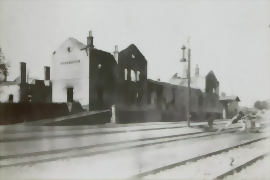
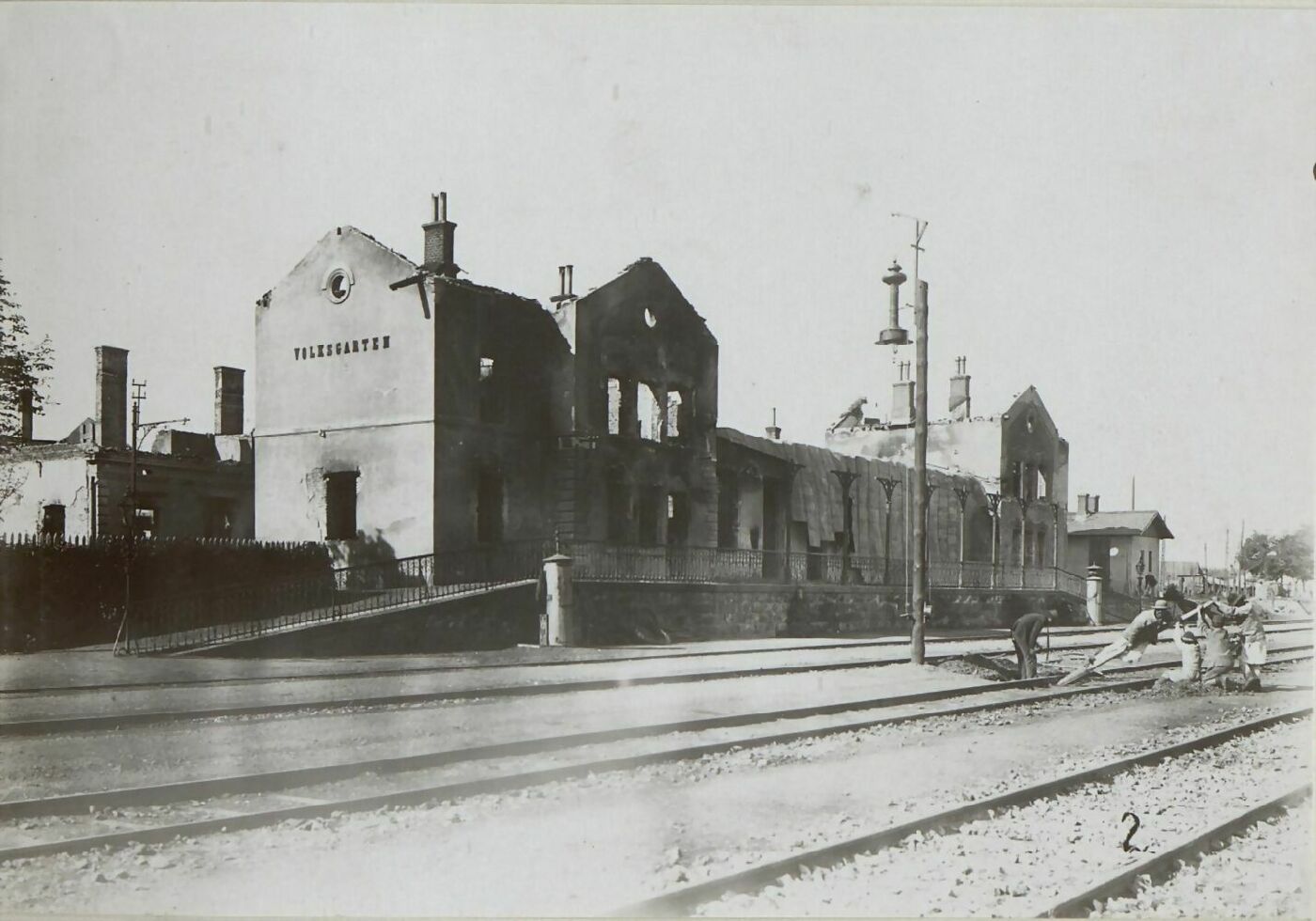
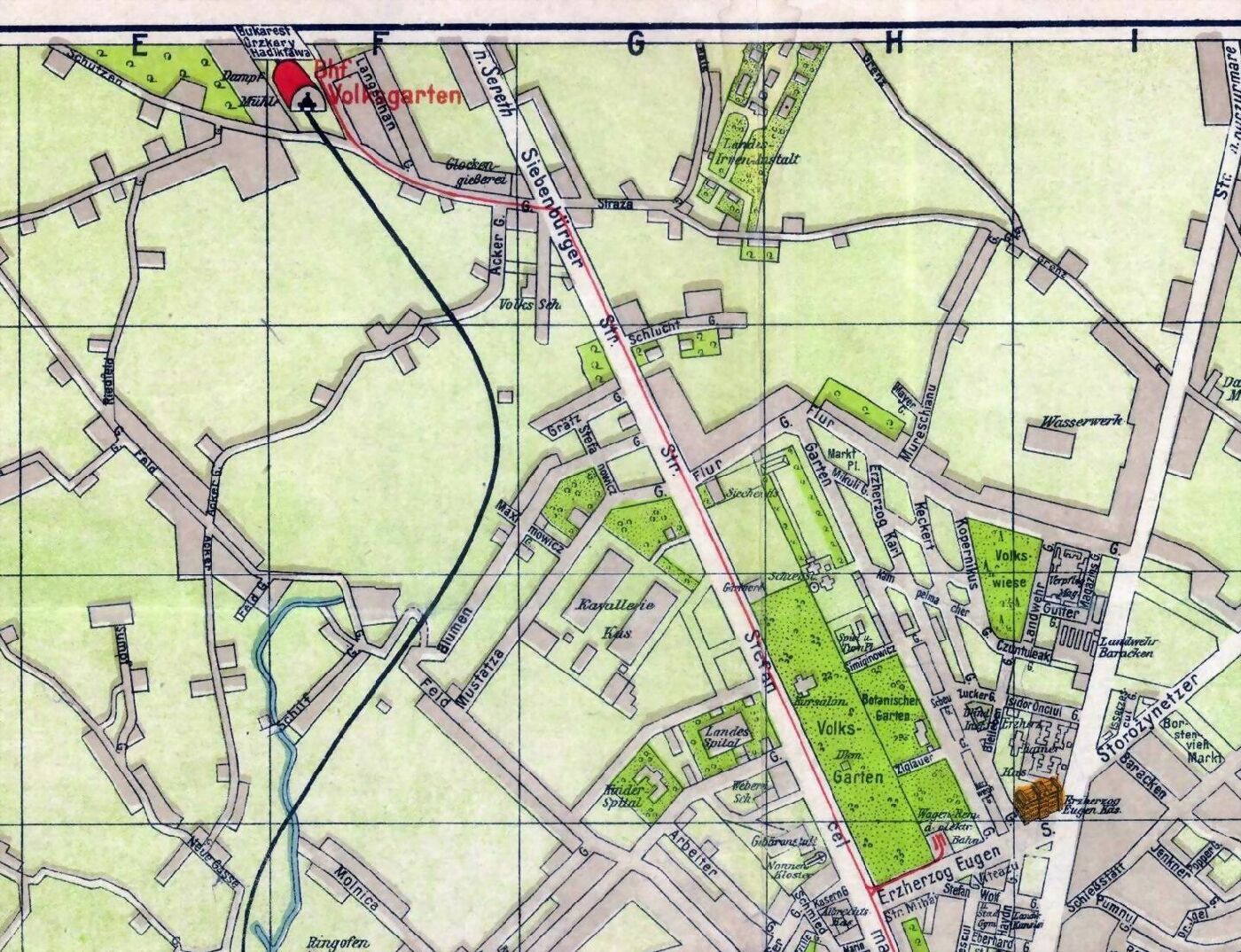
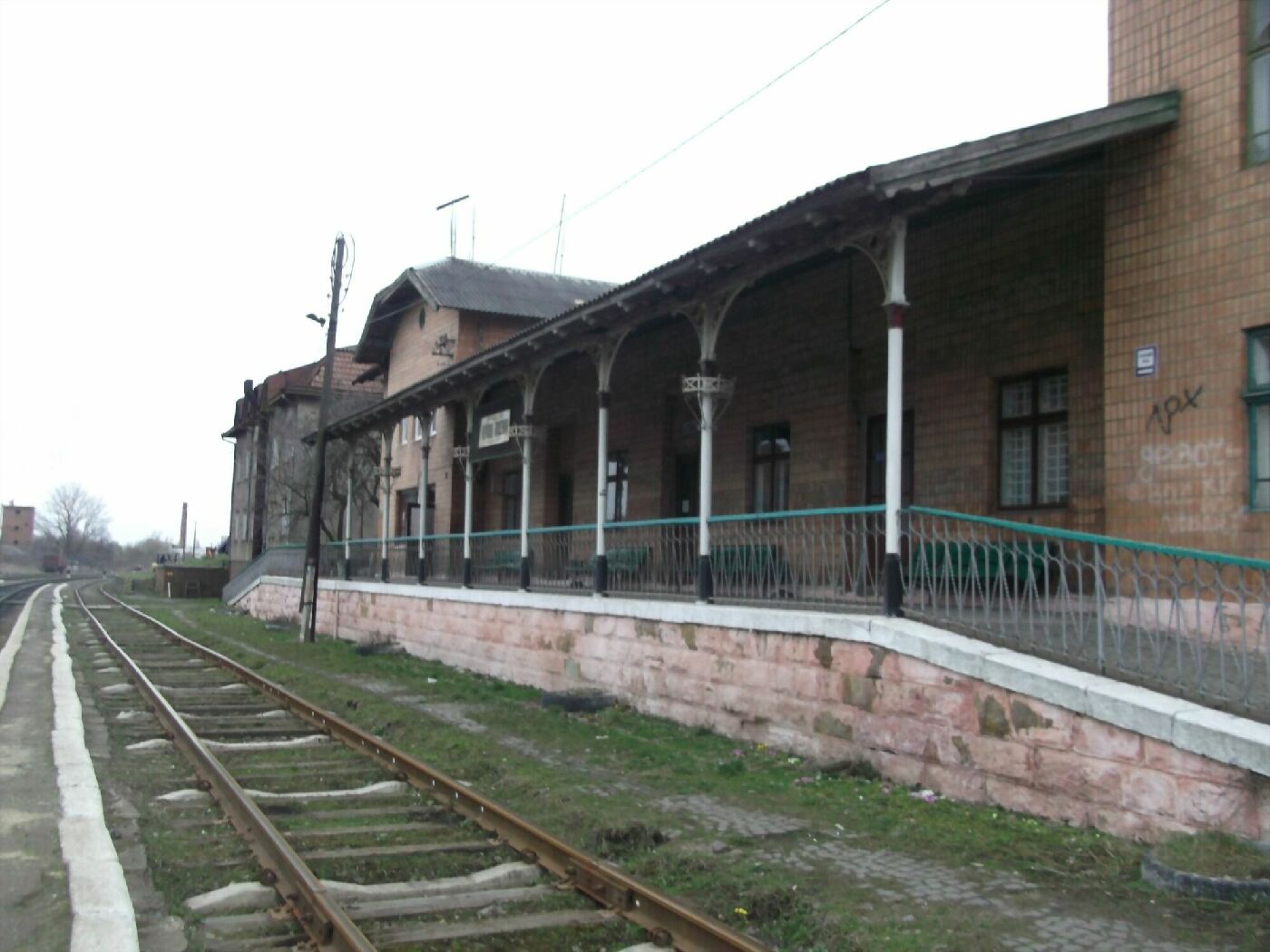
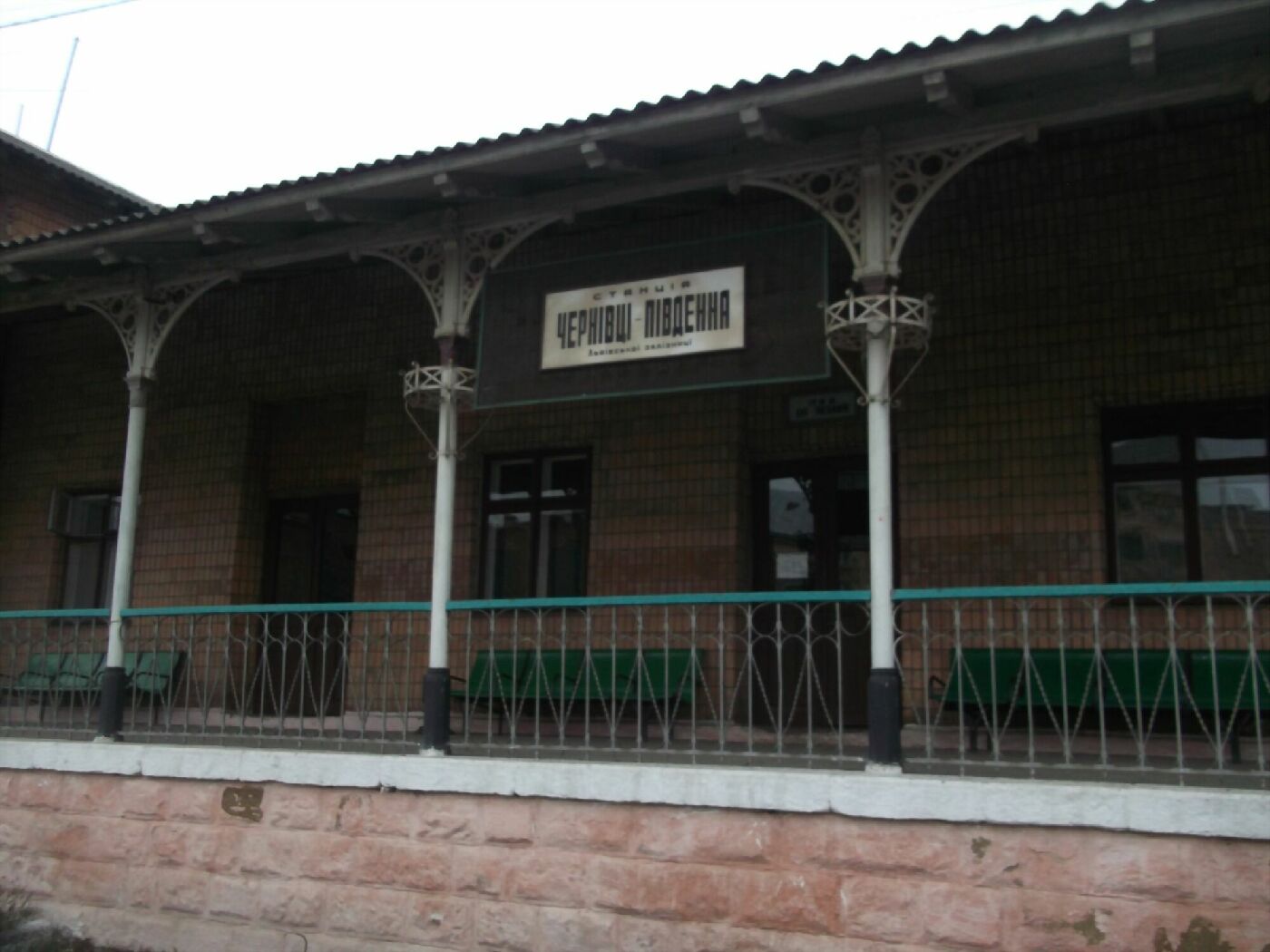
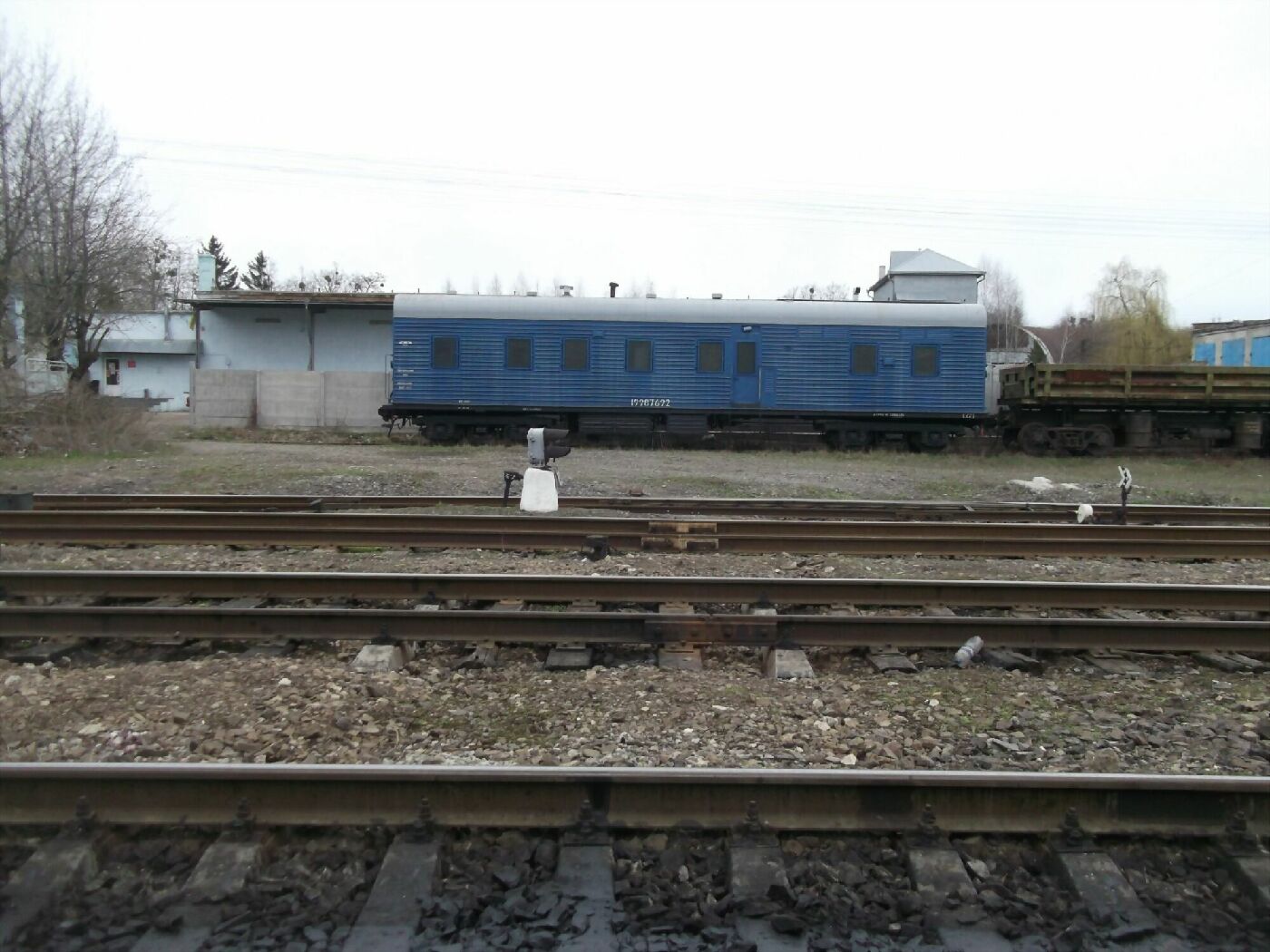
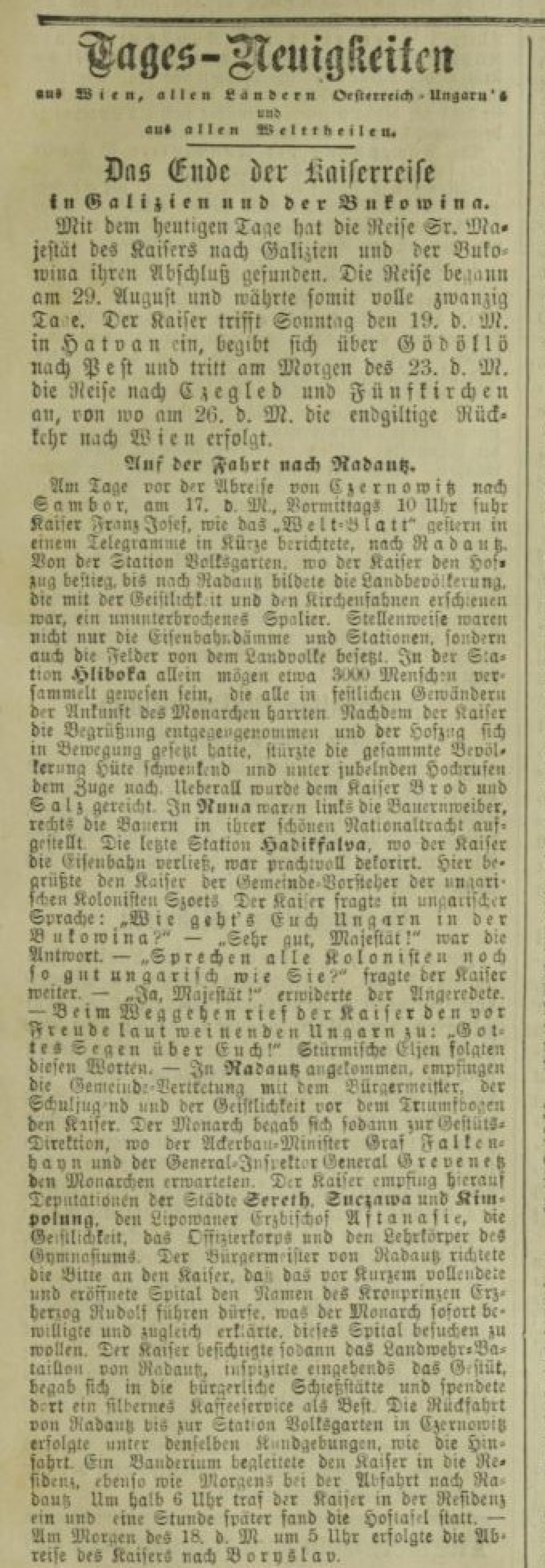
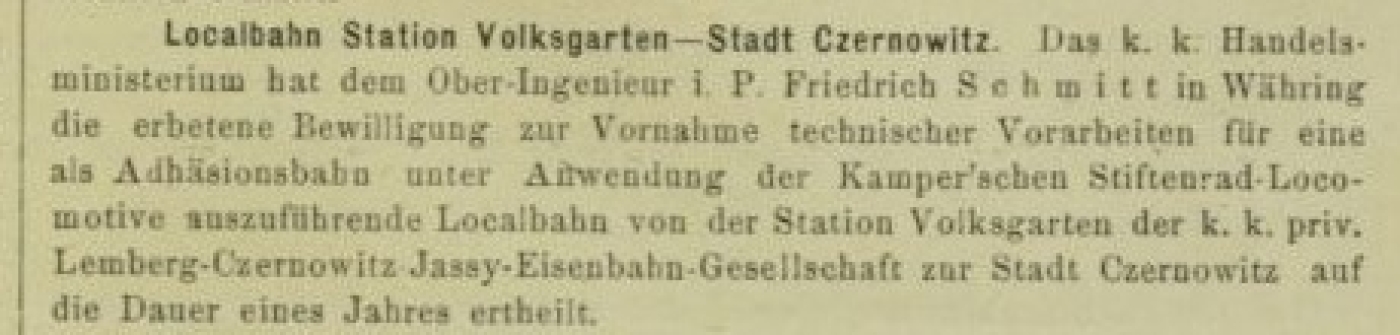
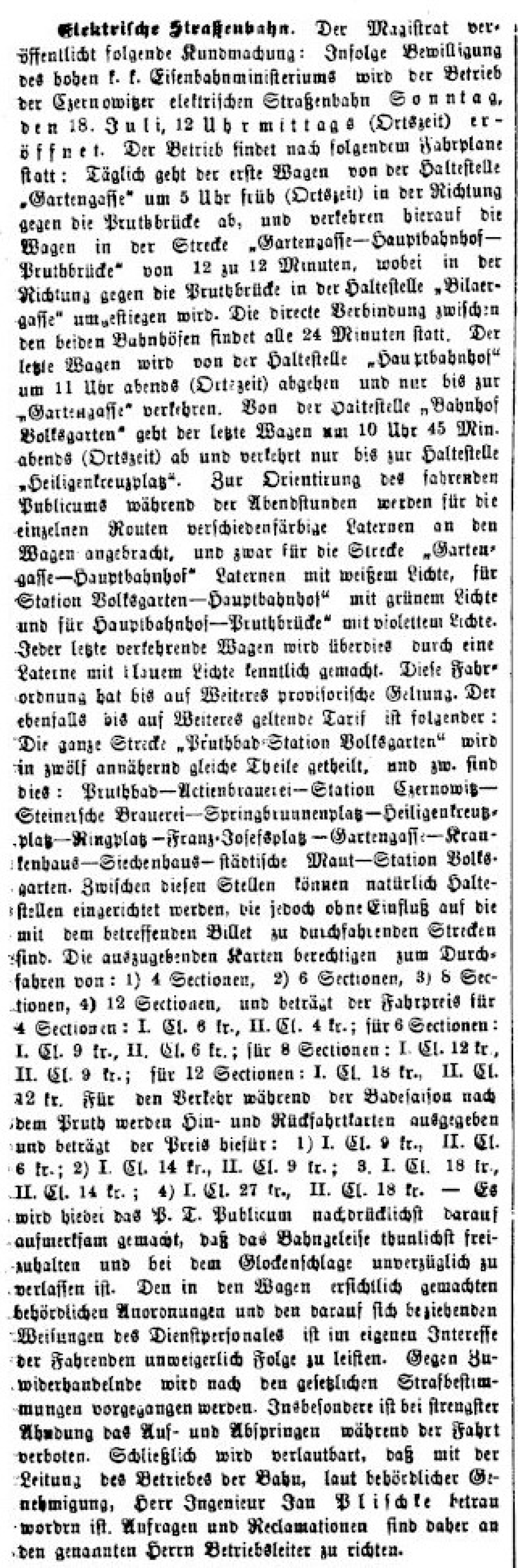
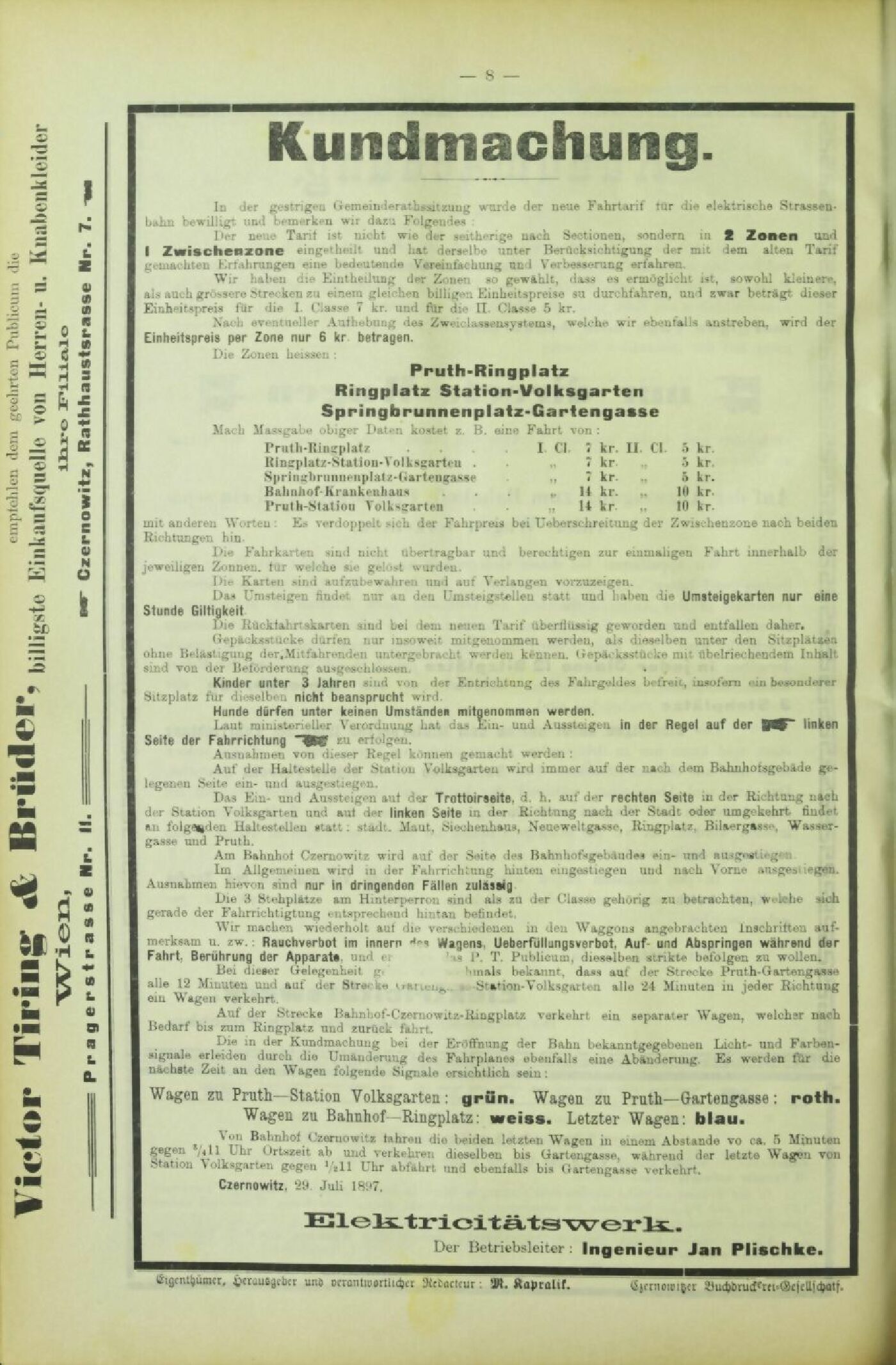
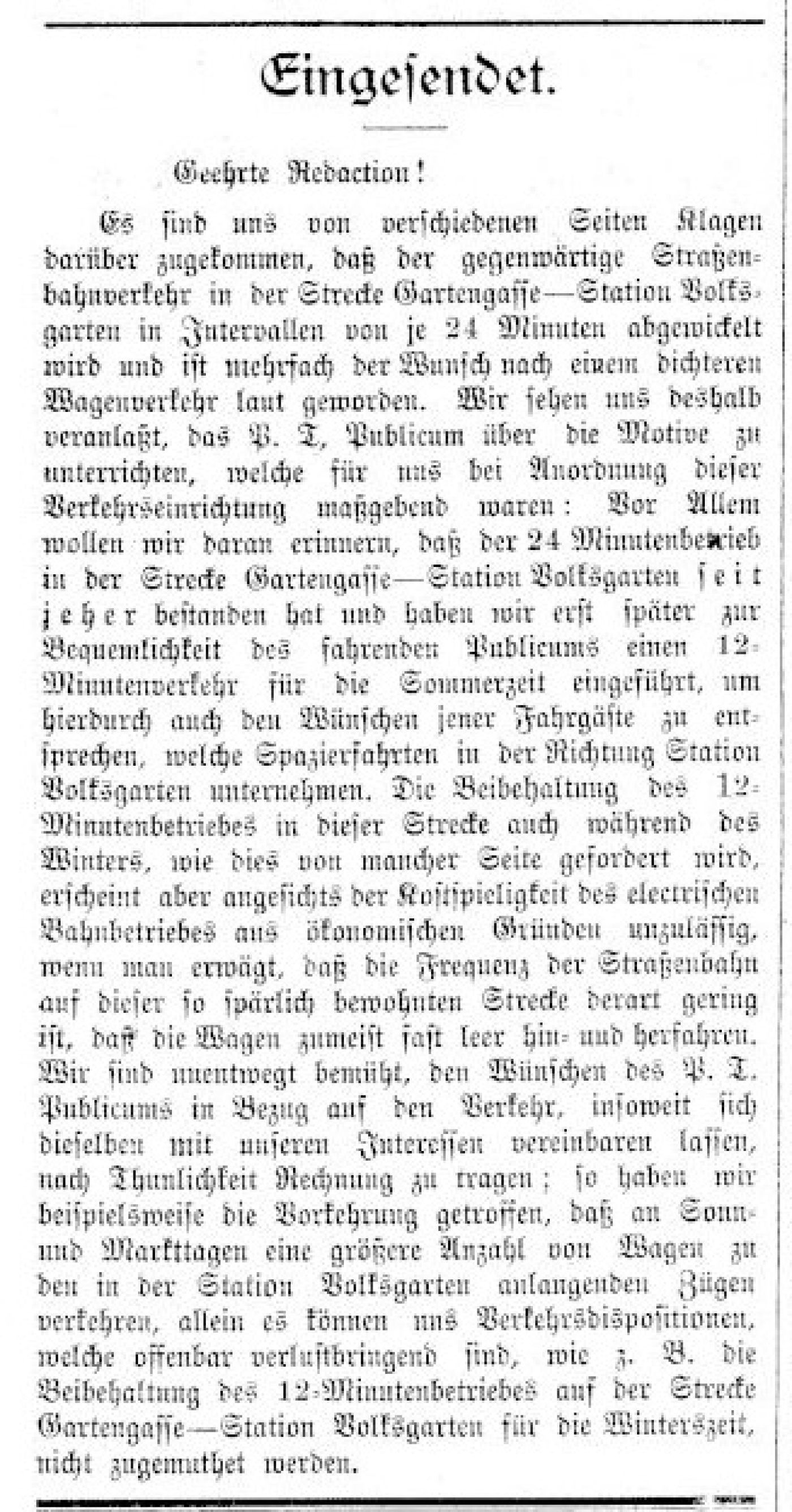
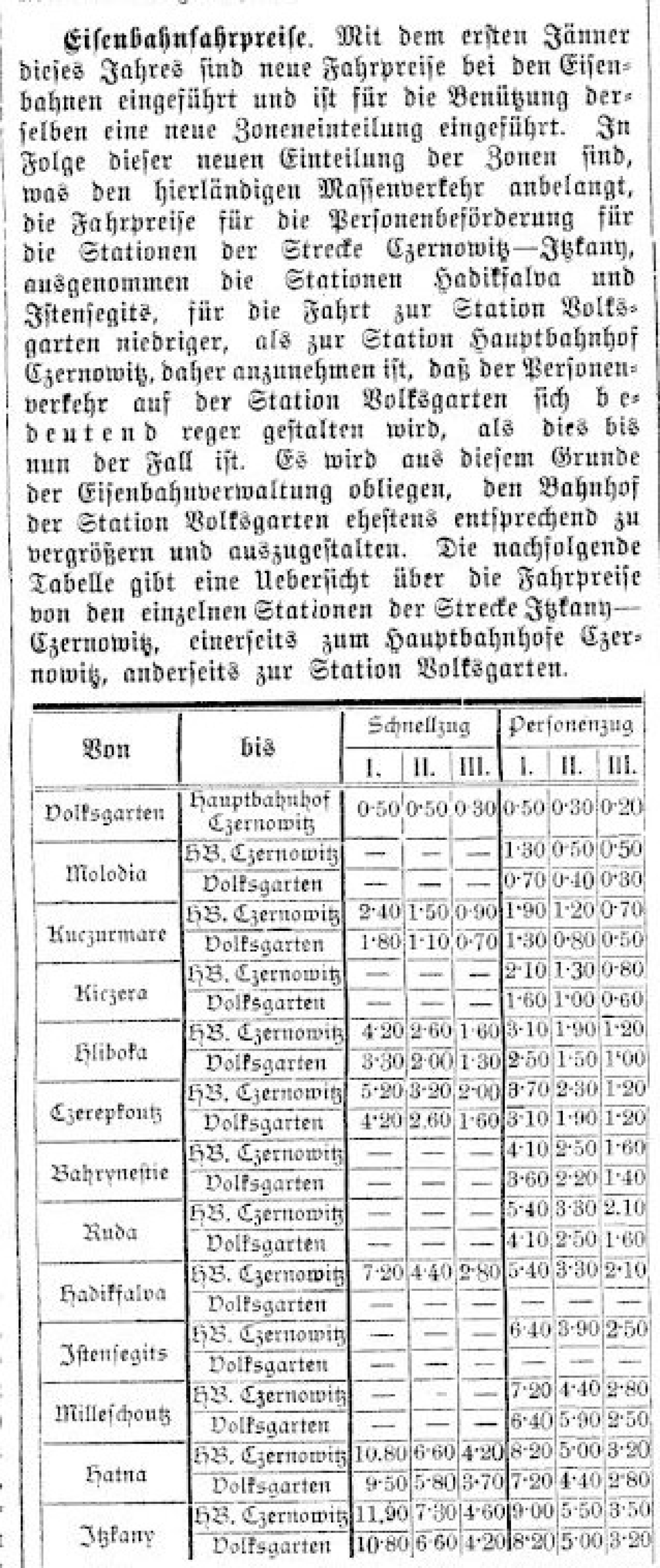
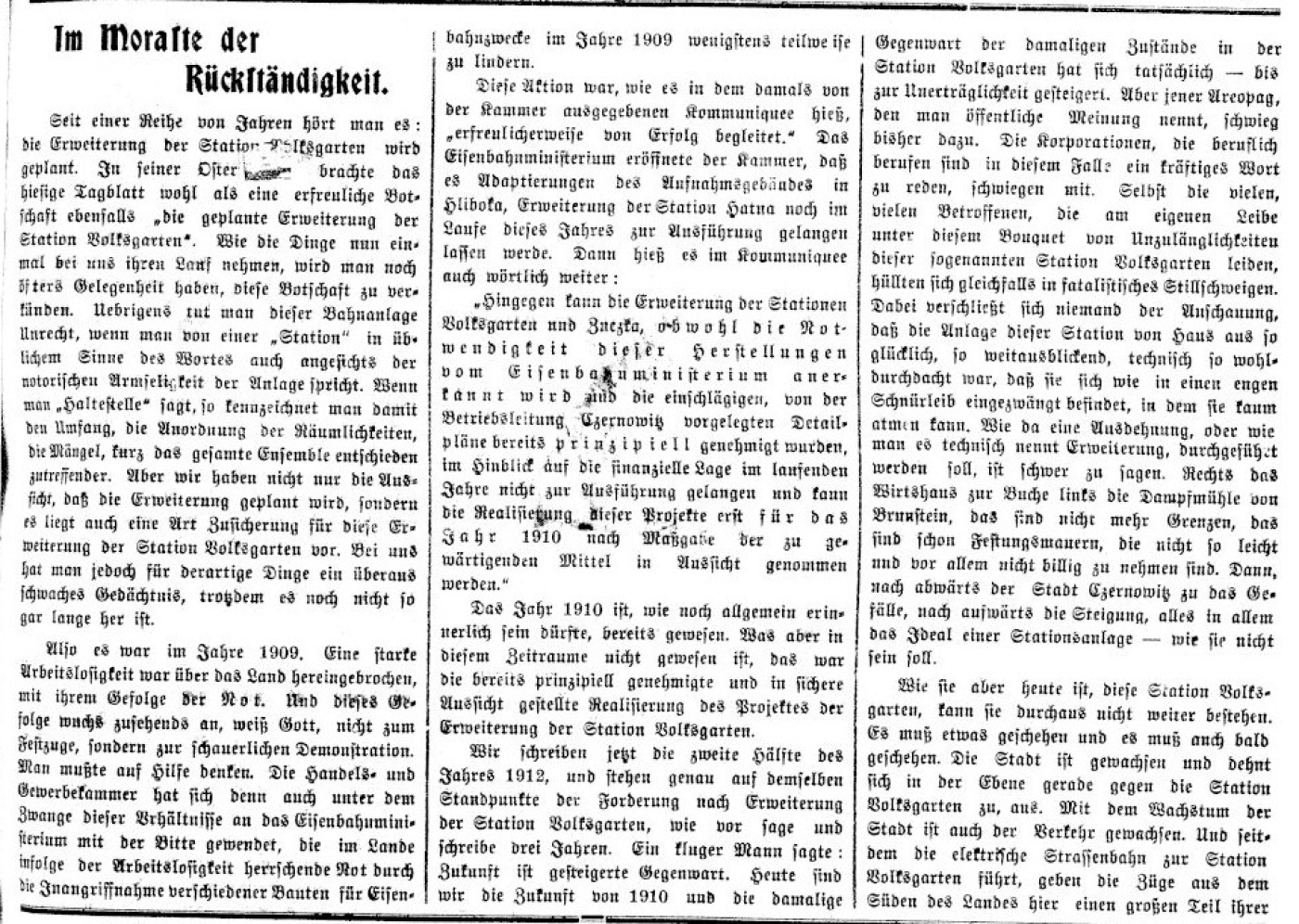
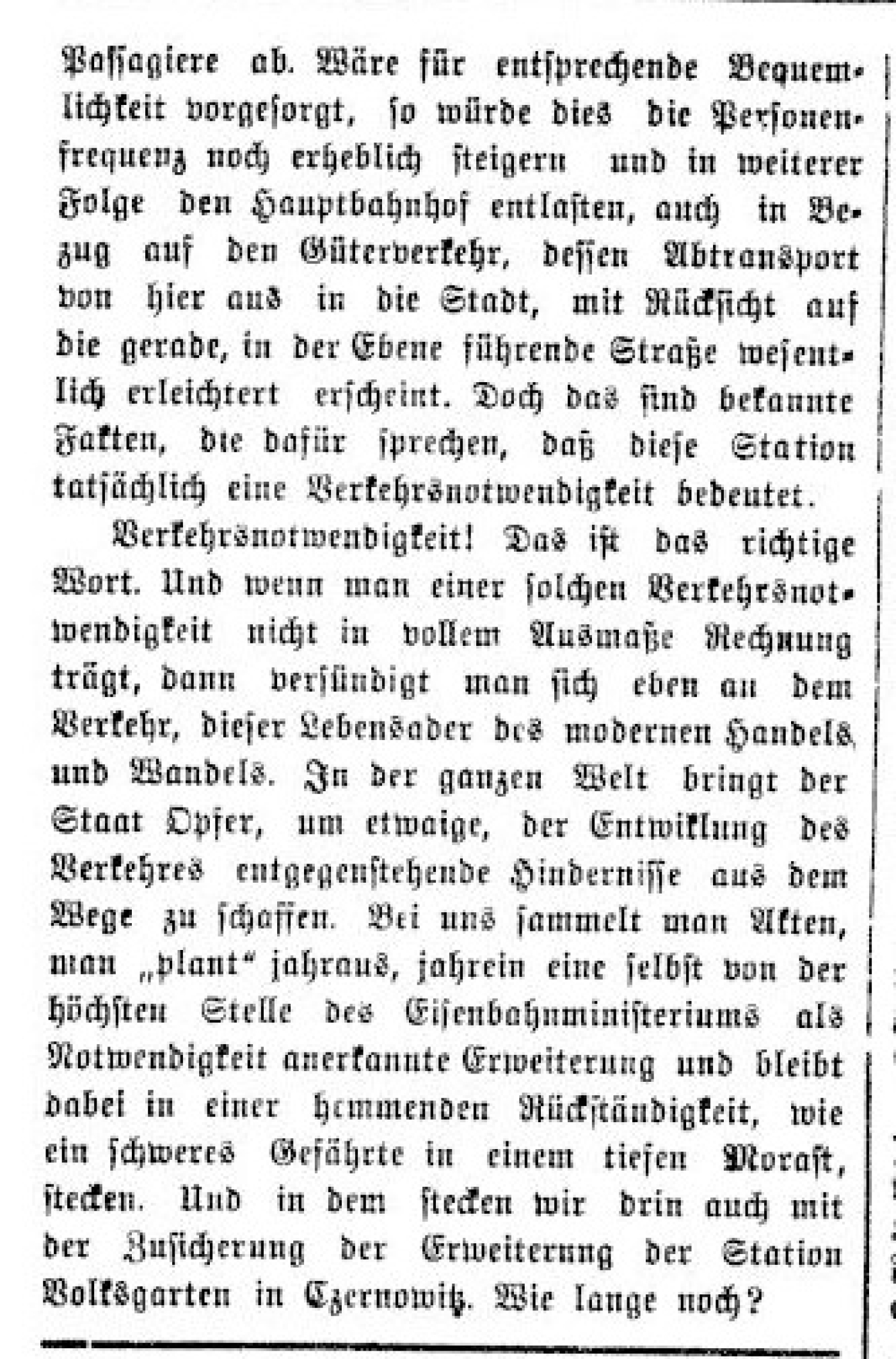
The population of Chernivtsi tripled within a few decades. This led to discussions in the city council and in the press about how to better manage the increased traffic. An extension to Volksgarten station was also considered: 'But this Volksgarten station cannot continue to exist as it is today. Something has to be done, and soon. The city has grown and is expanding towards Volksgarten station. As the city has grown, so has traffic. And since the electric tram has been running to Volksgarten station, trains from the south of the country have been dropping off many of their passengers here. If adequate comfort were provided, the number of passengers would increase considerably and the main railway station would be relieved, also regarding goods traffic [...]" ("Im morass der Zurückhaltung. In: Bukowinaer Post, 22 August 1912, p.1f.). However, it was not possible to extend the station area.
The station remained in operation during the interwar period. The last deportation trains to the Transnistrian camps departed from here in 1942. The Jewish deportees had originally received residence permits from the mayor, Traian Popovici. After his replacement, they were left defenceless and deported in June 1942. Among the deportees was the poet Selma Merbaum (Meerbaum-Eisinger) and her family (mother and stepfather).
Text Markus Winkler