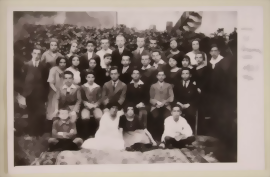
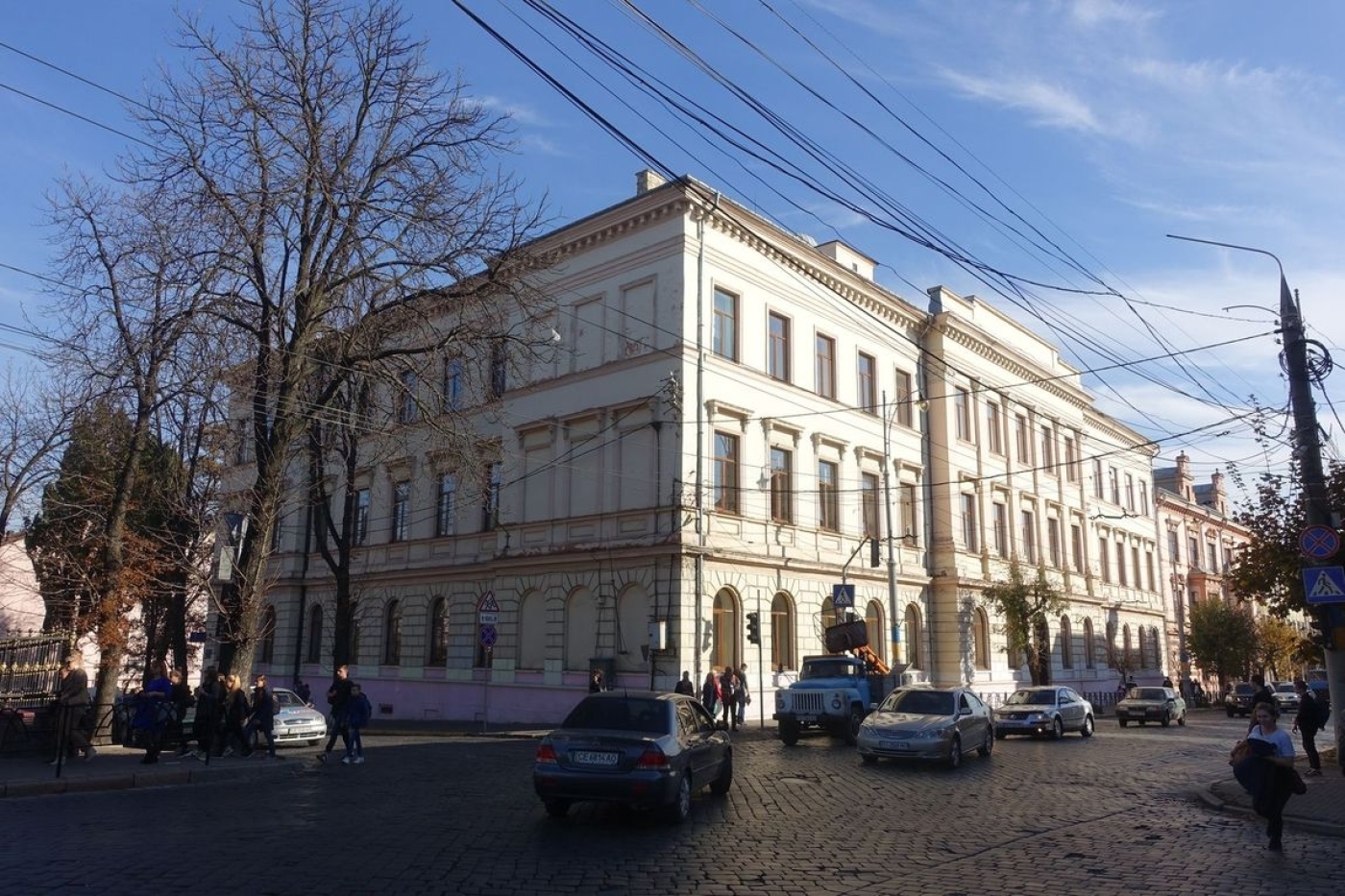
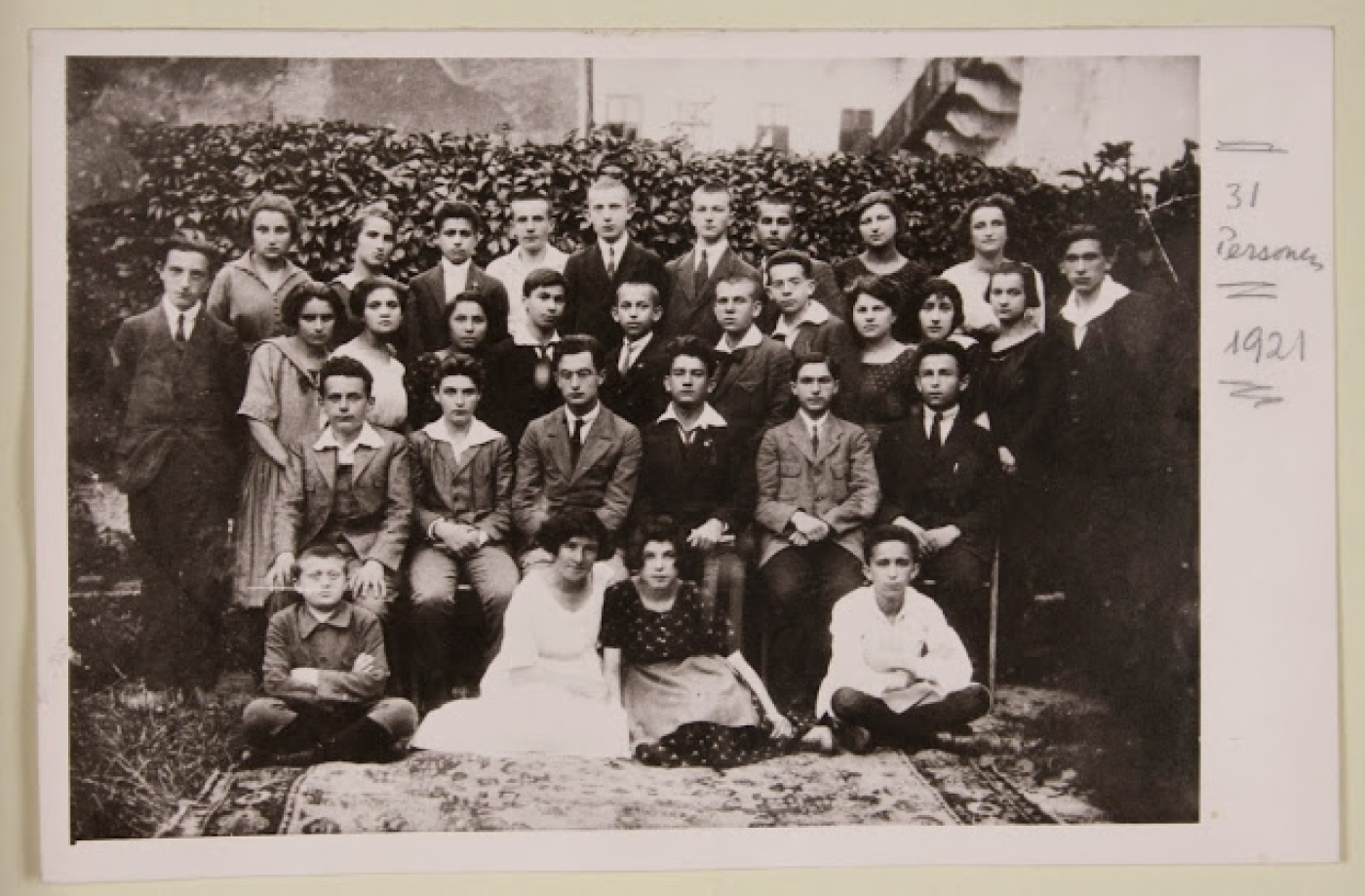
The memoirs of Eli Rottner (Eduard Rudnicki) are a major source on the history and members of the 'Ethical Seminar'. He came from Stryj (Galicia), went to Chernivtsi in 1919, participated in the youth organisation 'Hashomer Hazair' and later became a member of the seminar. Friedrich Kettner's first lecture, which Rottner attended at the Greek-Oriental grammar school in Czernowitz, was on Brunner's book 'The Theory of the Spirit and the People'. Rottner's lectures were increasingly well received, especially by young adults. A group of people formed who met regularly to read books by Spinoza ('Ethics') and Constantin Brunner (including 'Hatred of the Jews and the Jews'). The circle of the 'Ethical Seminar' comprised over 200 people in the three years of its existence. Among them was Eliezer (Lothar) Bickel, who became the administrator of Brunner's estate after his death. The poet Rosalie Scherzer (Rose Ausländer) and her future husband Ignaz Ausländer also attended Kettner's 'Ethical Seminar'. Spinoza's philosophy, which Rose Ausländer learned here, influenced her poetic work (Kłańska, pp. 111-119). Kettner became a 'revered and trusted teacher and master' (Rottner, p. 40). Several of Kettner's lectures were stenographed by his assistant, Dr Elias Zolkiewer, and are preserved in the Leo Baeck Archive.
In his memoirs, Eli Rottner describes the ambivalent figure of Kettner with his 'suggestive will to influence' the seminar participants, which contributed to Kettner becoming an almost mystical figure. After the suicide of Berta Hollinger, a young seminar participant, Kettner was transferred to Rosiori, a small village in southern Bukovina. The seminar was continued by Elias Zolkiewer, but no longer met with much enthusiasm. Disagreements between Kettner and Zolkiewer, which came to a head in 1923, also contributed to the disintegration of the seminar.
Some of the participants in the 'Ethical Seminar', who had left Chernivtsi for their studies, formed their own circles to continue discussing Constantin Brunner's philosophy in intellectual circles. Bickel went to Bucharest and founded a Brunner circle there. In Vienna, the Brunner group was led by Dagobert David Runes, the future philosopher and founder of the Philosophical Library. The philosophical society 'Platonica' was founded in Kolomea. In Krakow, Moses Hilsenrad initiated a Brunner group that lasted until the Second World War.
Material:
Constantin Brunner Collection (1932-1974, Leo Baeck Institute)
- Maria Kłańska: Spinoza und seine Philosophie im Schaffen der deutschsprachigen Dichterin Rose Ausländer. In: Forum Philosophicum 16 (2011), H. 2, S. 111-119.
- Eli Rottner: Das Ethische Seminar in Czernowitz. Die Wiege des Internationalen Constantin-Brunner-Kreises. Dortmund 1973.