Vyzhnytsia was a trading town - forestry, timber and cattle trading were the main activities. Some of the preserved villas still bear witness to the former relative prosperity of the town's upper class. During the Soviet era, these villas were nationalised and converted into schools or hostels.
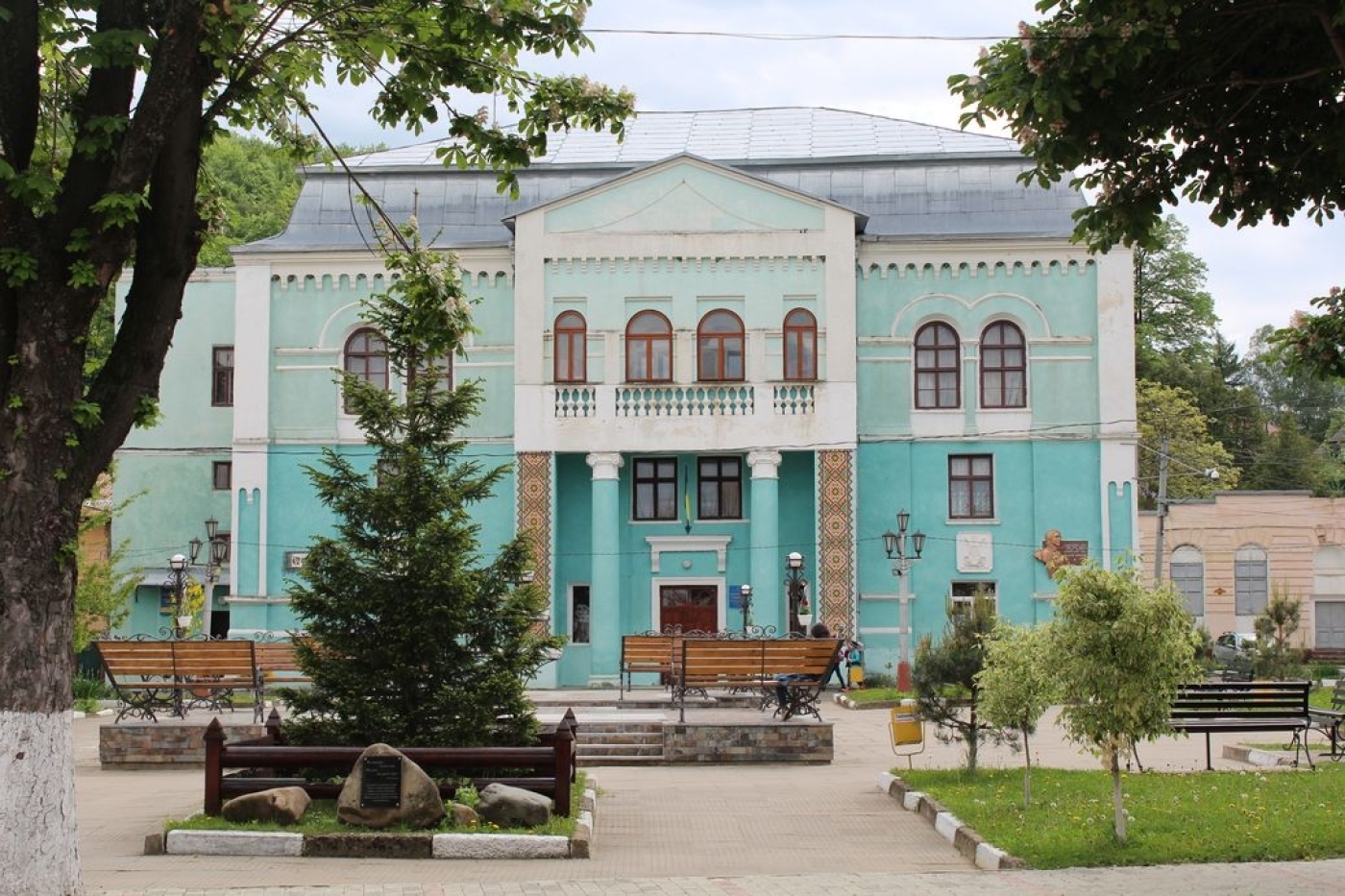
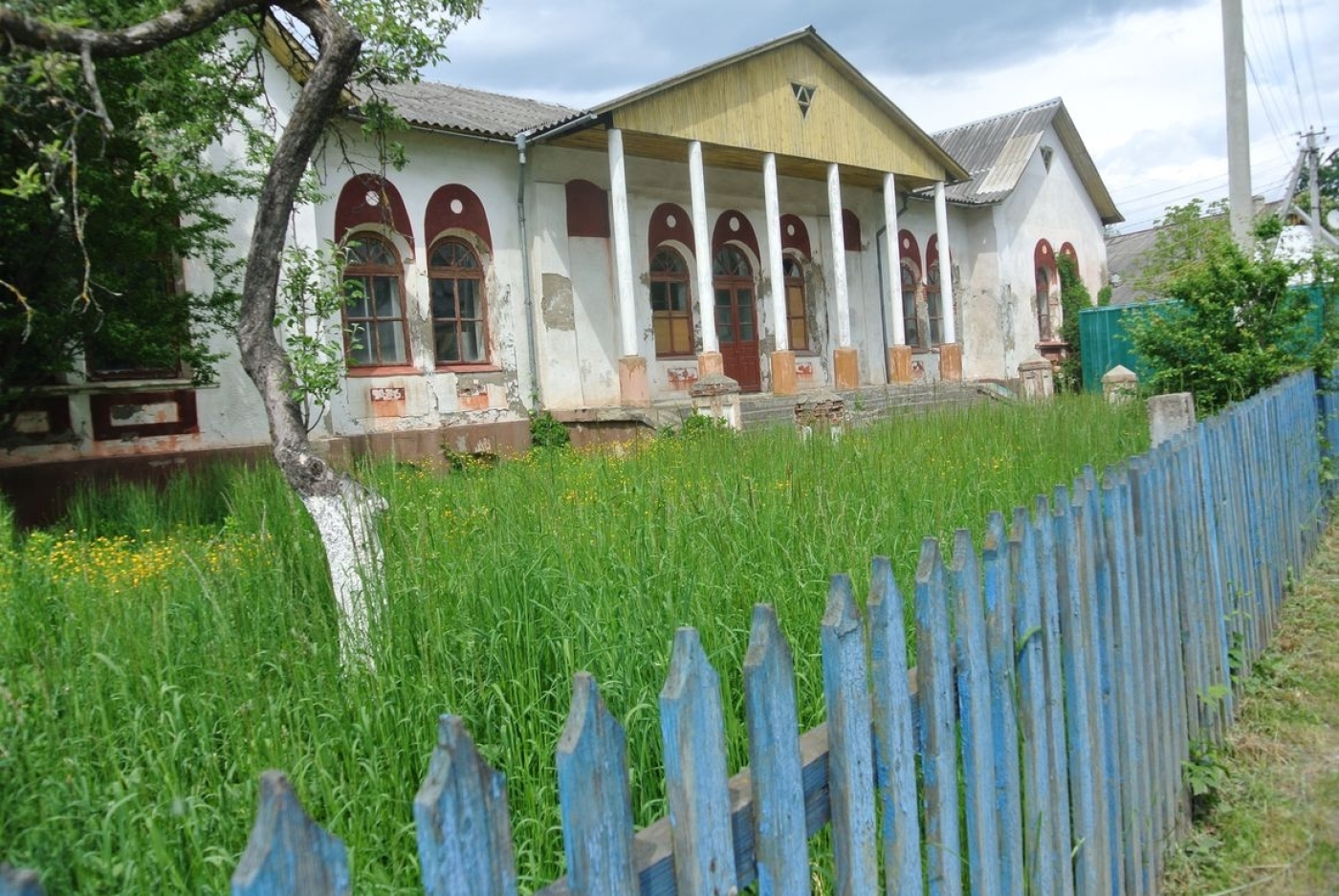
In 1910 the town had 5216 inhabitants, of whom 4317 were Jews (83% of the total population), 573 were of Ruthenian origin and 238 were of Polish origin. The Jewish population shaped the town, its history and its appearance. The Yiddish writer Josef Burg was born here (1912-2009). At one time there were 11 Jewish synagogues and prayer houses. In 1908 the Ukrainian gymnasium with Jewish classes was opened in Vyzhnytsia as a compromise in the struggle between Ukrainian and Jewish parties. Today, about 4,000 people live in Vyzhnytsia, including one person of Jewish origin (as of May 2017). Not only were the villas converted during the Soviet era, but so were all the Jewish institutions. The present cultural centre of the town is the former main synagogue of the Reformed Jews, the present cinema was a Jewish house of prayer, and another house of prayer was used as a milk processing factory. The large Jewish cemetery gave way to a football field during the Soviet era.
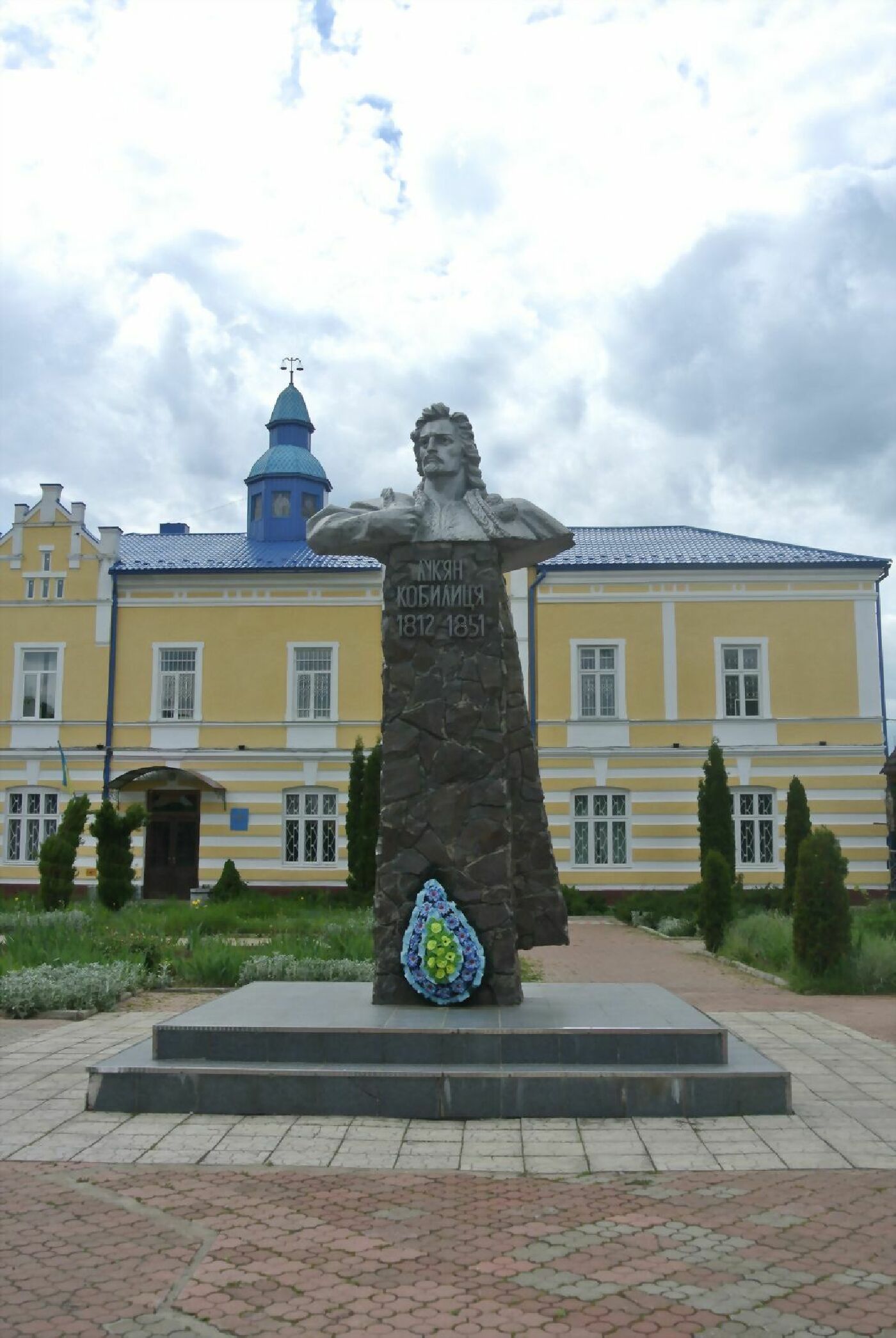
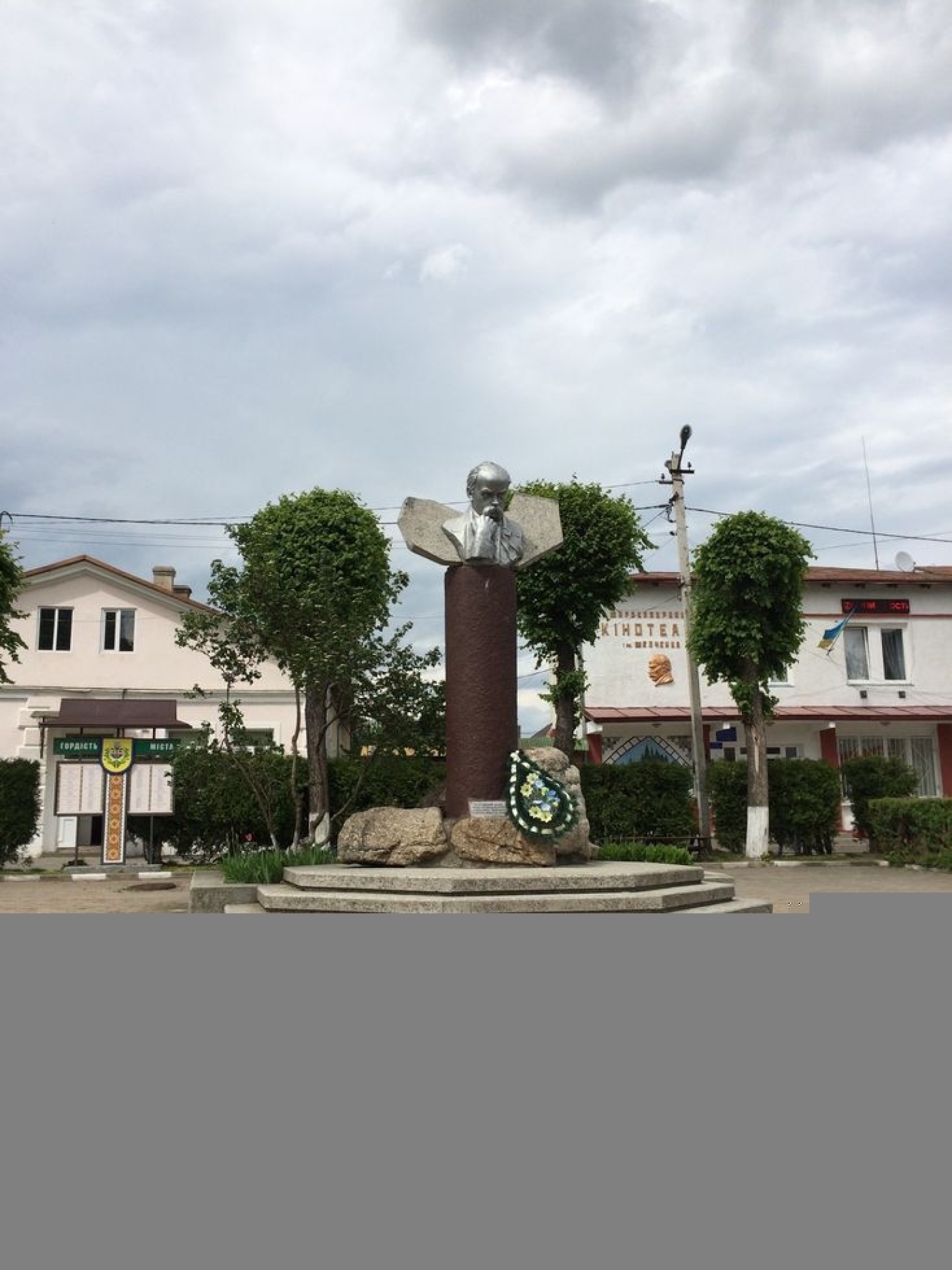
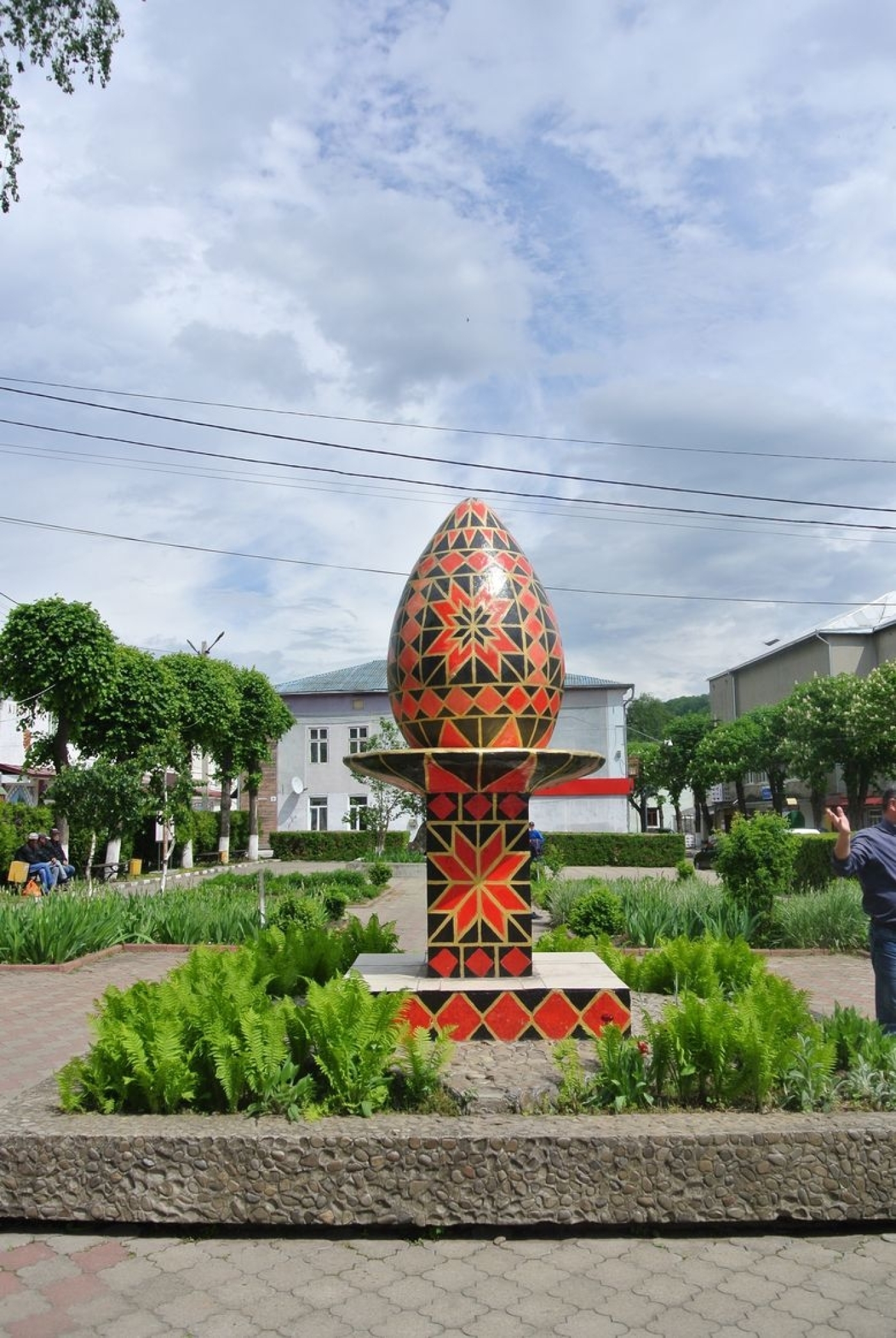
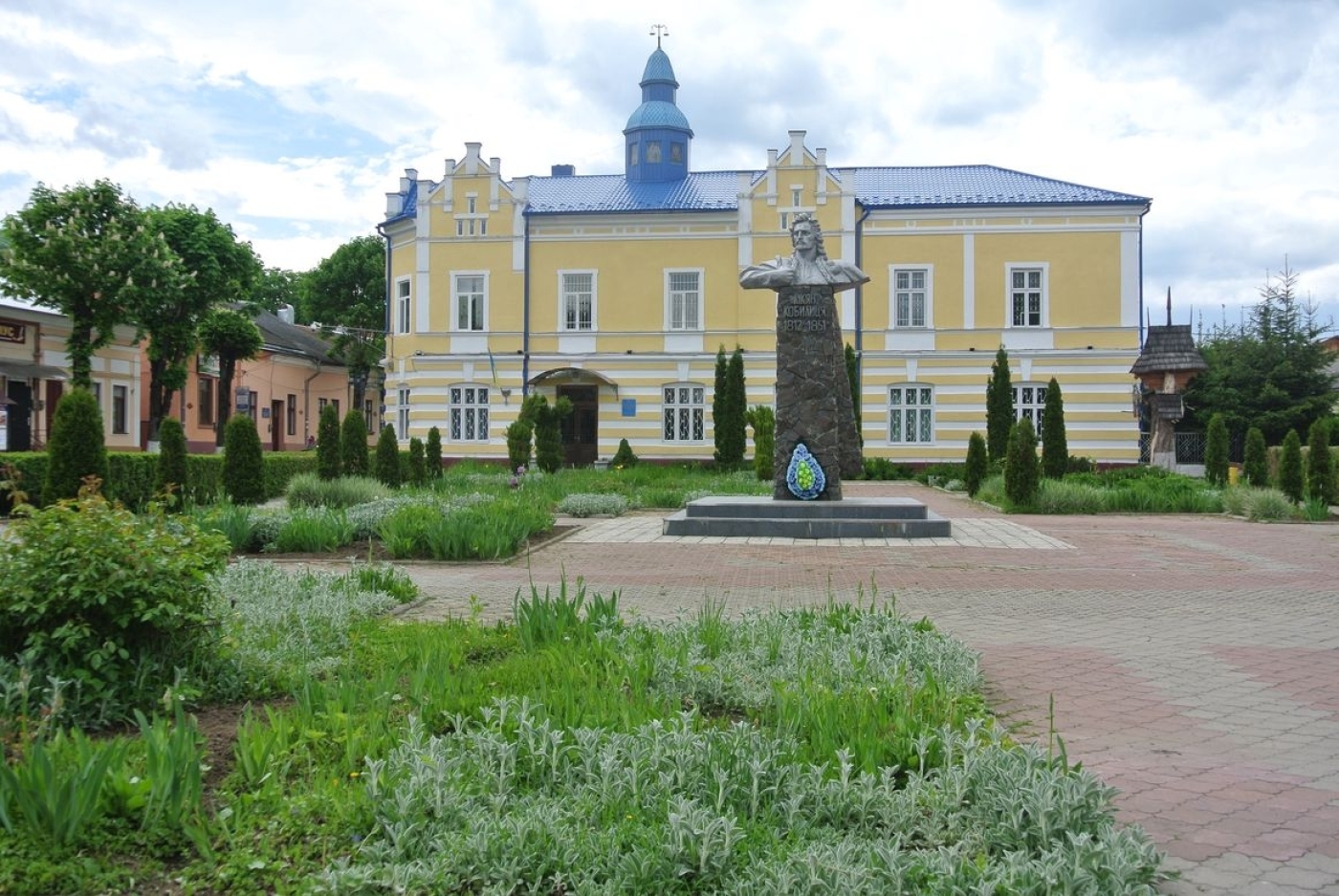
The townscape: A ring square with buildings and a street running around the square characterise the centre. Most of the houses in the centre date from the Austrian and Romanian periods. There are several monuments in the central square. One commemorates the 19th century National Uprising and was erected during the Soviet era and depicts Lukyan Kobylytsya (1812-1851). He was the leader of peasant uprisings in Bukovina in the 1840s and a member of the Austrian Parliament in 1848. Kobyltsya repeatedly mobilised popular uprisings and was arrested several times. There are monuments and streets named after him, especially in western Ukraine, like here in Vyzhnytsia. The monument stands in front of a building painted in the Ukrainian national colours of blue and yellow. In the centre of the square is a statue of a giant Easter egg - the painted eggs are part of traditional regional craftsmanship and can also be seen in smaller versions in the Vyzhnytsia Museum of Hutsul Art. The third monument depicts the Ukrainian national poet Taras Ševčenko, who is important for the national movement and the establishment of the Ukrainian written language. Opposite the square is the former main synagogue of the Reformed Jewish community, behind which was the large Jewish cemetery.
Text: Marit Haferkamp
Note: The information for this article comes from lectures and discussions during the day excursion to Vyzhnytsia, Rostoky and Ispas on 12 May 2017 as part of the seminar and project “Digital Topography of Multicultural Bukovina”.