According to Schlamp, the German House, which was built in 1910, was a place for events, meetings and networking until 1940. He describes the years up to 1940 as the heyday of German culture in Chernivtsi.
After the fall of communism, people with German roots were particularly interested in making German culture present in Chernivtsi. Between 2000 and 2010, various activities were carried out to unite the German population. The main aim of the German House was to be recognised by the German population and to let them know "that there is someone who will help and support them". They should also not be afraid to identify themselves as Germans in public. During the Soviet era, the German House was not run as such.
Schlamp explains that the city of Chernivtsi owns the German House and offers it for use free of charge. There are no rental costs, only running costs. The German House can be used for any projects, literary readings, theatre performances and various festivals and is open to all residents of Chernivtsi, regardless of their nationality. The German House also cooperates with other national houses, such as the Polish House. There have been several joint projects in the past.
Schlamp emphasises the importance of the German House in his hometown, saying that the German House understands both the German and Ukrainian mentality and can therefore be seen as a bridge between Ukraine and Germany. The German community is also very useful for the city's economy.
Those interested in the German House can also find out more about it through social media such as Facebook. The German House also offers German courses, which are free for people of German descent and cost around €20 per semester for everyone else. Courses are fully booked. In addition to German courses, the German House is also committed to helping the older generation, whose living situation has deteriorated since 2014. It organises fundraising events and sponsors essential medicines.
The biggest event is the Festival of German Culture, which takes place every two years in Chernivtsi. In 2017, the International Youth Theatre Festival will be held for the first time. Unfortunately, there are still too few people interested in culture, says Schlamp. But the few who do are setting the direction in which the city should develop. They have a vision of what needs to be done, both in the cultural sector and in urban development.
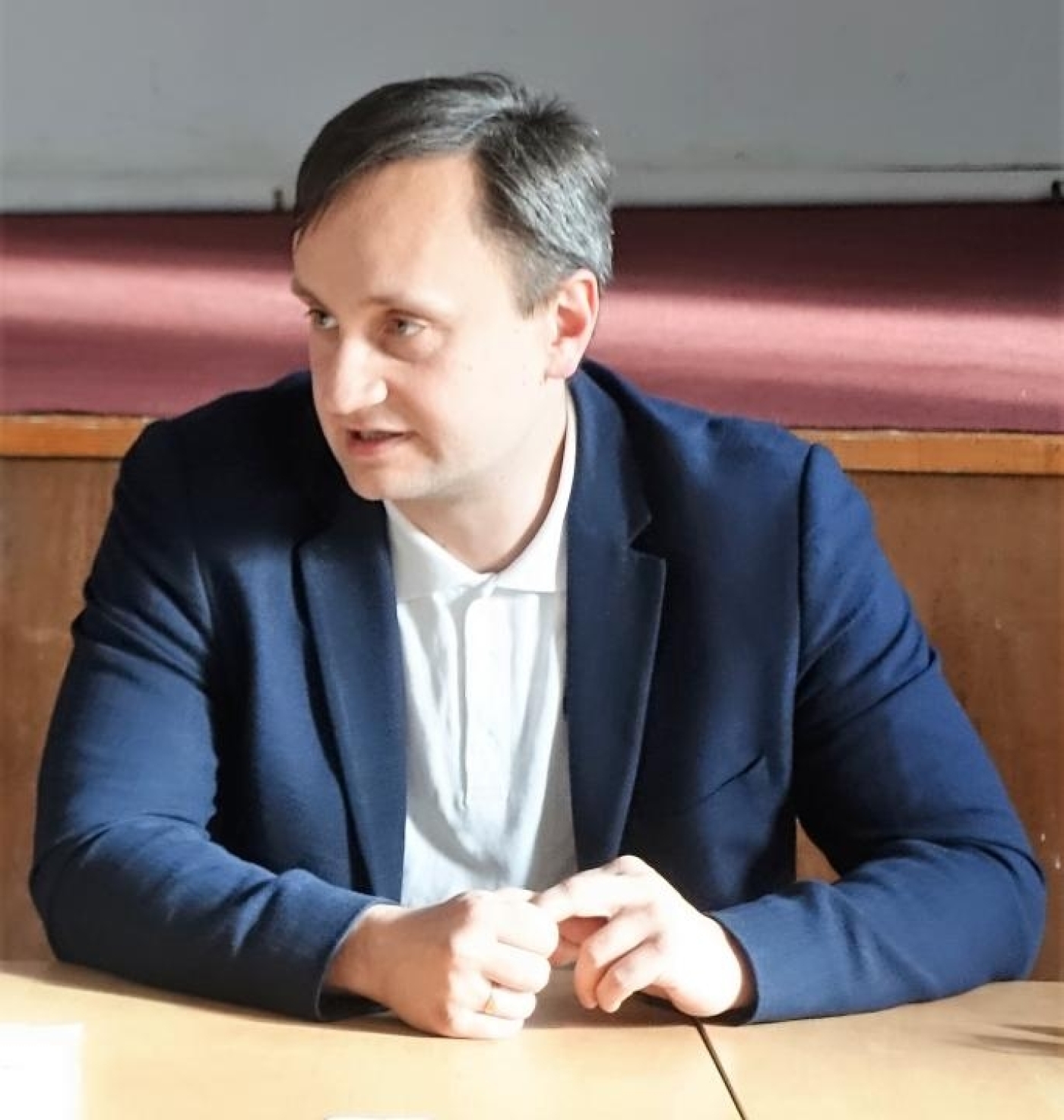
The interview with Alexander Schlamp was conducted in German by Veronika Hilbertová and Patricia Rodriguez on 11 May 2017 at the German House in Chernivtsi.
Photo: Markus Winkler