Question: Mr Byku, Chernivtsi, with its colourful population, was a tolerant city in ethnic matters during the Habsburg era. Has this mutual acceptance been lost with the fall of the Austro-Hungarian monarchy? As a representative of one of Chernivtsi's ethnic groups, what do you think?
It is hard to ignore the fact that our city has lost its old face since the collapse of the Austro-Hungarian monarchy. The monarchy has lost its old face. Apart from the economic damage, the culture was also exposed to the constant 'red marked' waves of change. But the cheerful people of Chernivtsi did not let the changing occupiers get them down, and to this day they remain tolerant and helpful to each other.
Please tell us about the history of the Romanian House.
Our house is part of the 140-year-old cultural heritage of Romania. During the Austrian period, there was always a lively exchange and tolerant coexistence here. Private sponsors and the restaurant in the basement provided income, so there were no difficulties in running the house. Later, of course, during the Soviet era, it was closed and reopened after the fall of the Soviet Union.
What cultural events does the Romanian House offer today?
At the moment, we have a permanent exhibition that is thematically related to Romanian folk culture. Here you can see some typical household items, unique knitted shirts and scarves, but also woven carpets and tapestries. Our house also offers space for book launches and cultural events of this kind.
How is the house currently financed?
As you can see, the house is not in the best condition at the moment. We are always short of money, and it is in desperate need of renovation. Since the Second World War, the Romanian House has no longer been fully owned by the community. Without additional efforts, most of which are in vain, it is almost impossible to obtain financial support in specific cases.
What is the current state of cooperation with the local Germans, Jews and Ukrainians?
We are all on good terms with each other, but there is a lack of external impetus to encourage greater cooperation and more frequent exchanges.
Do you see any dangers for the Romanian House and for the Bukovina Cultural Centre in general in the light of recent political developments?
Whenever you take up arms, culture must remain silent. Recent political developments can be seen in two ways, and the ongoing war in the east is still a danger. Nevertheless, I think that Ukraine has taken a big step forward. That gives me confidence.
Do you still have cultural and economic contacts with the Romanian government? If so, what form does this cooperation take and who benefits more from it?
These days it is almost exclusively cultural exchange. We often give concerts in Romania and our Romanian partners and friends visit us when the opportunity arises. Of course, both sides benefit from this exchange.
Mr Byku, thank you very much for talking to us.
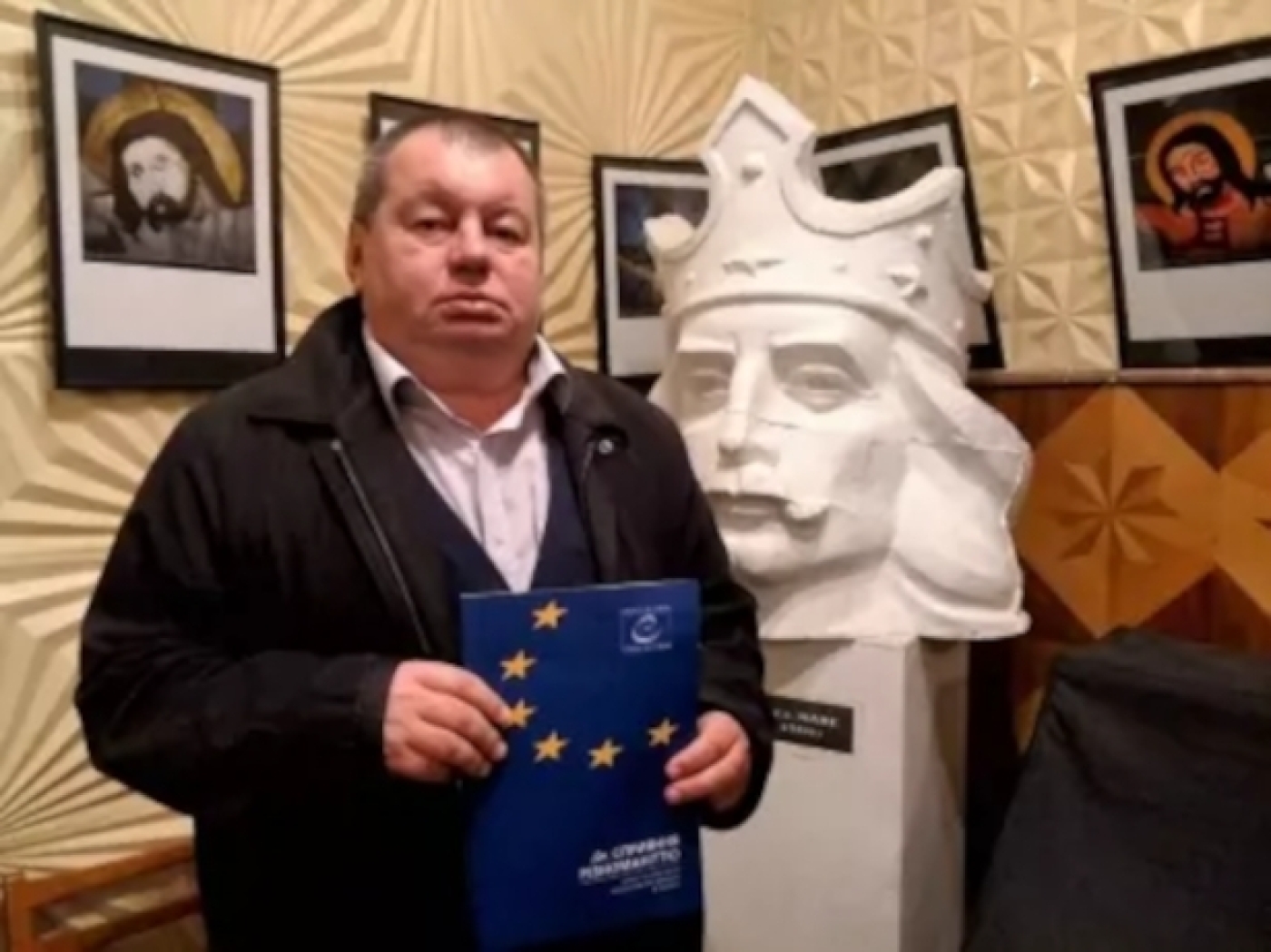
Oksana Herheliinyk, Ruslana Bovhyria, Lela Phartsvania and Heinrich Höhne interviewed Vasile Byku at the Romanian House in Chernivtsi on 11 May 2017.
Photo: hromadskeradio.org