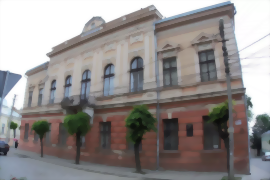
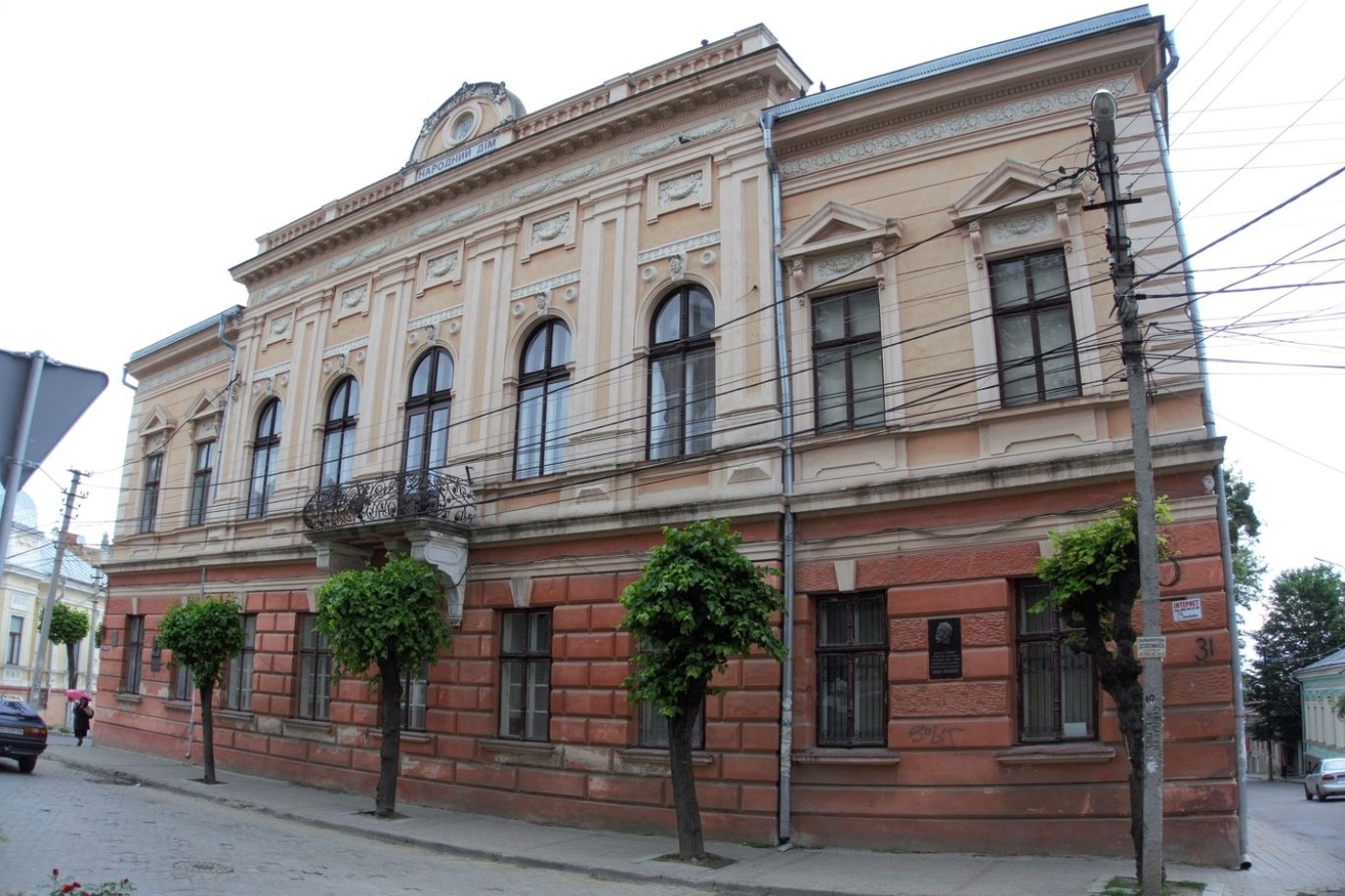
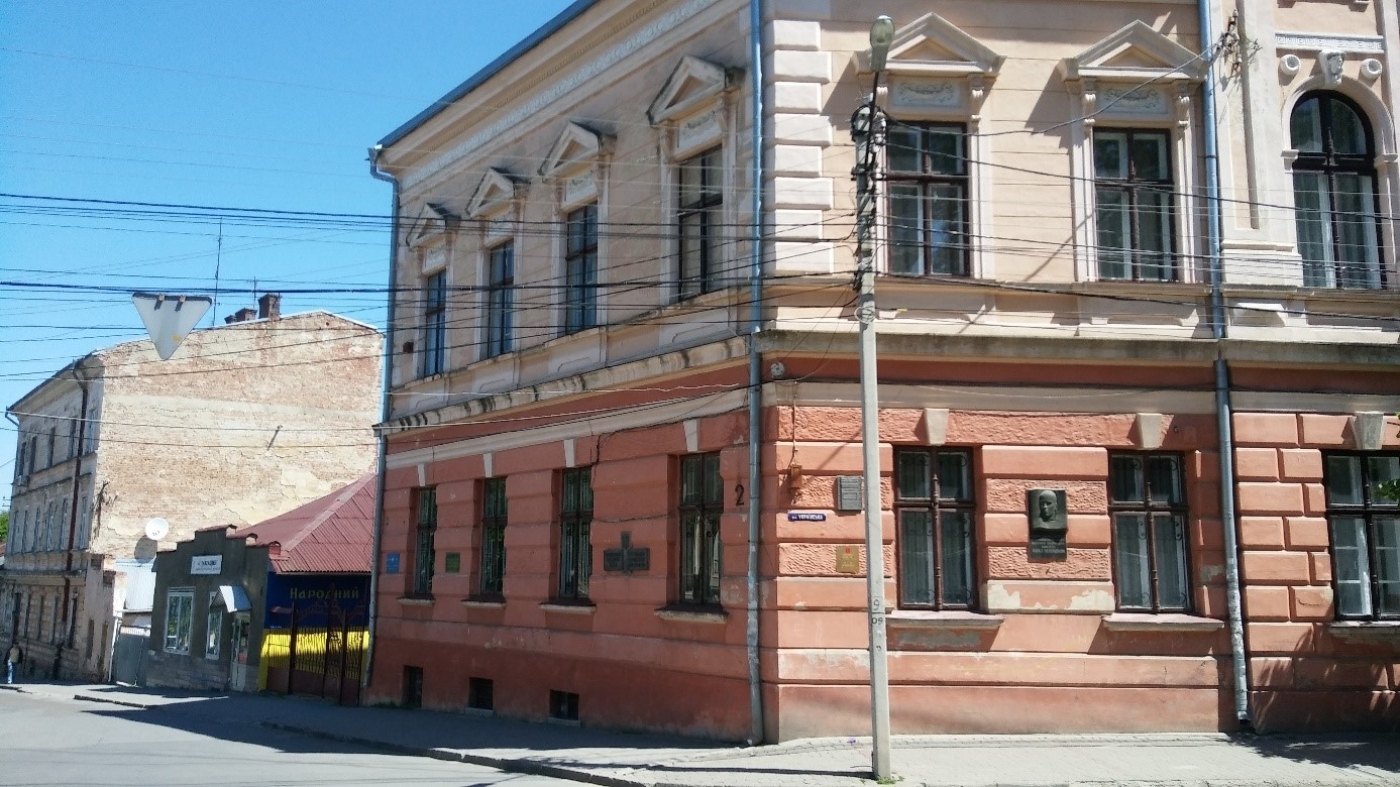
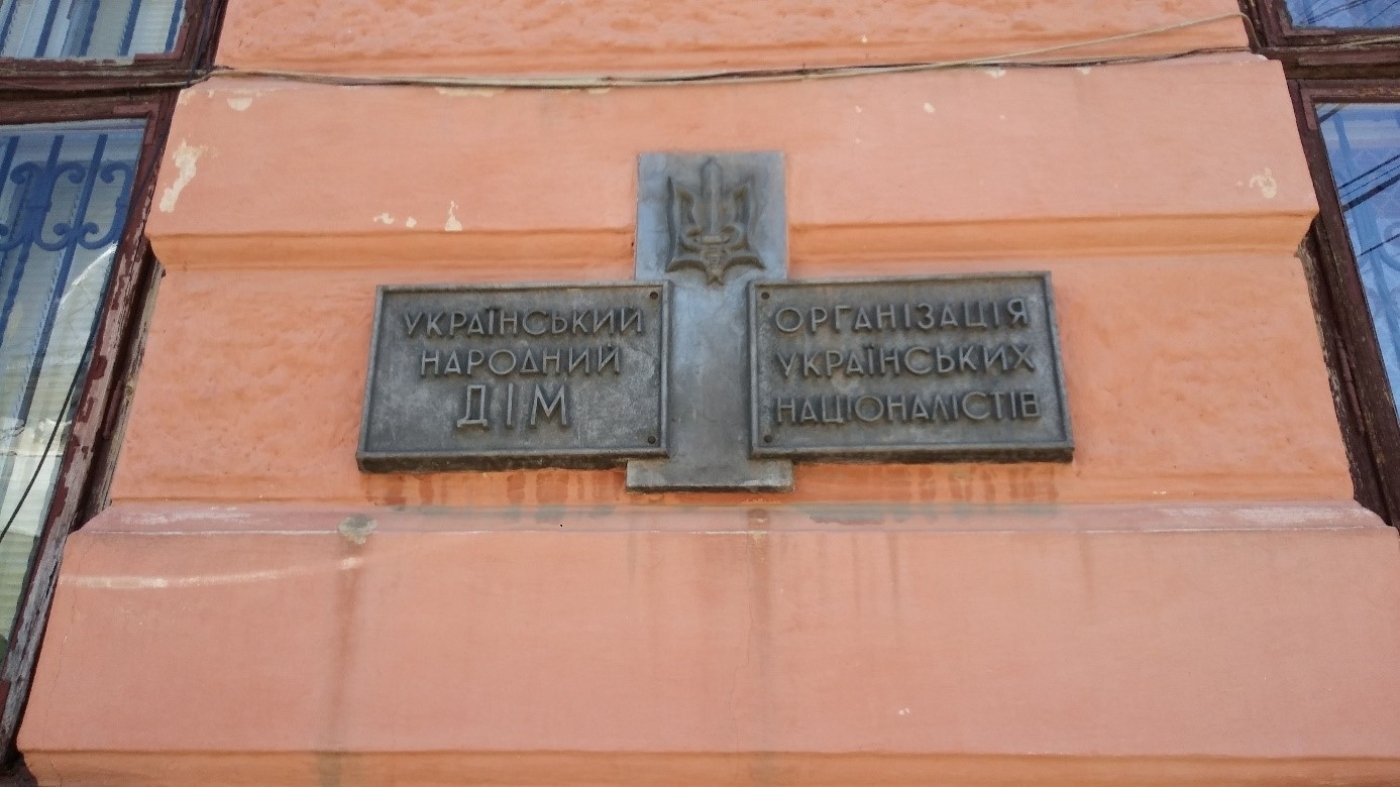
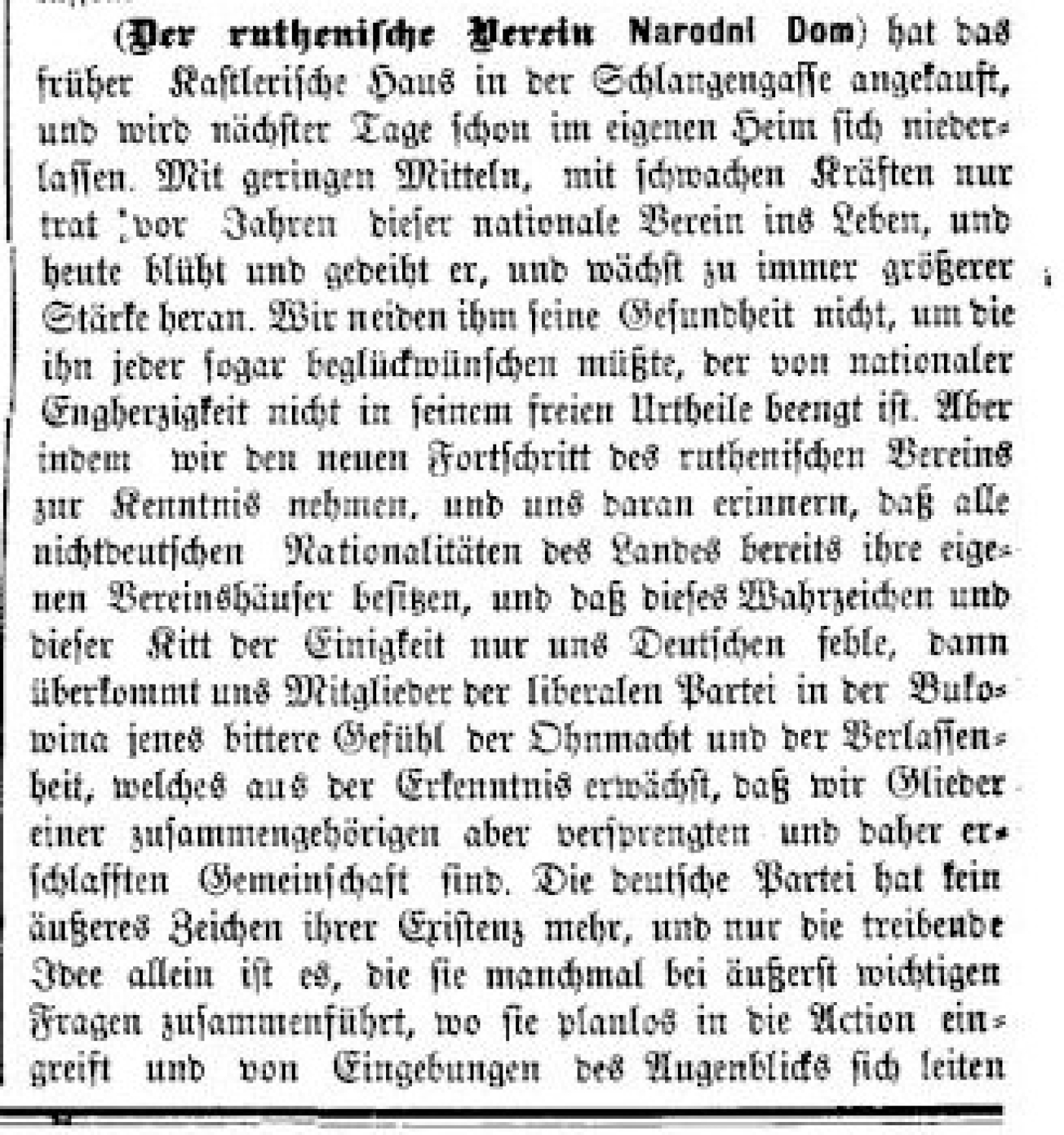
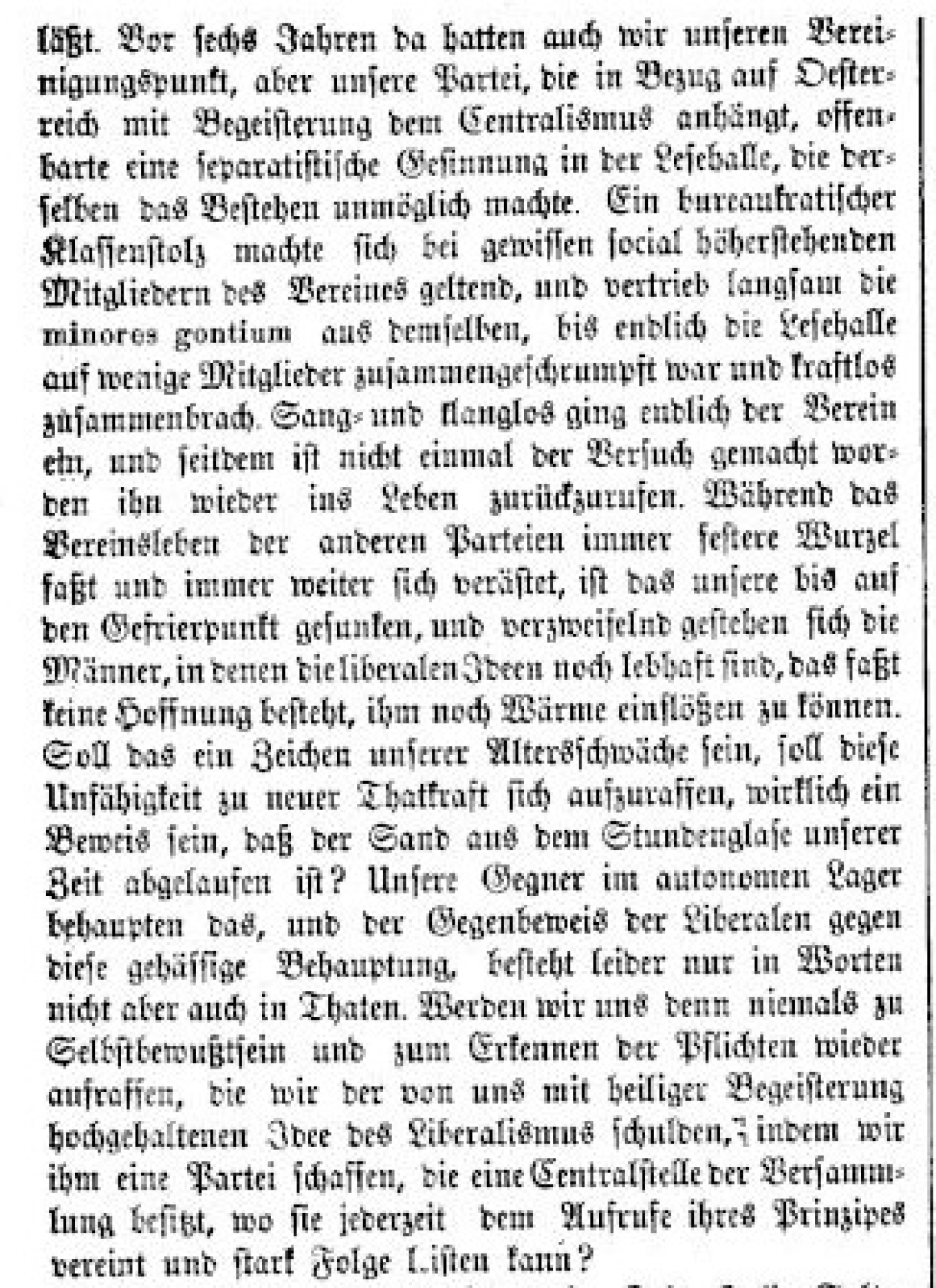
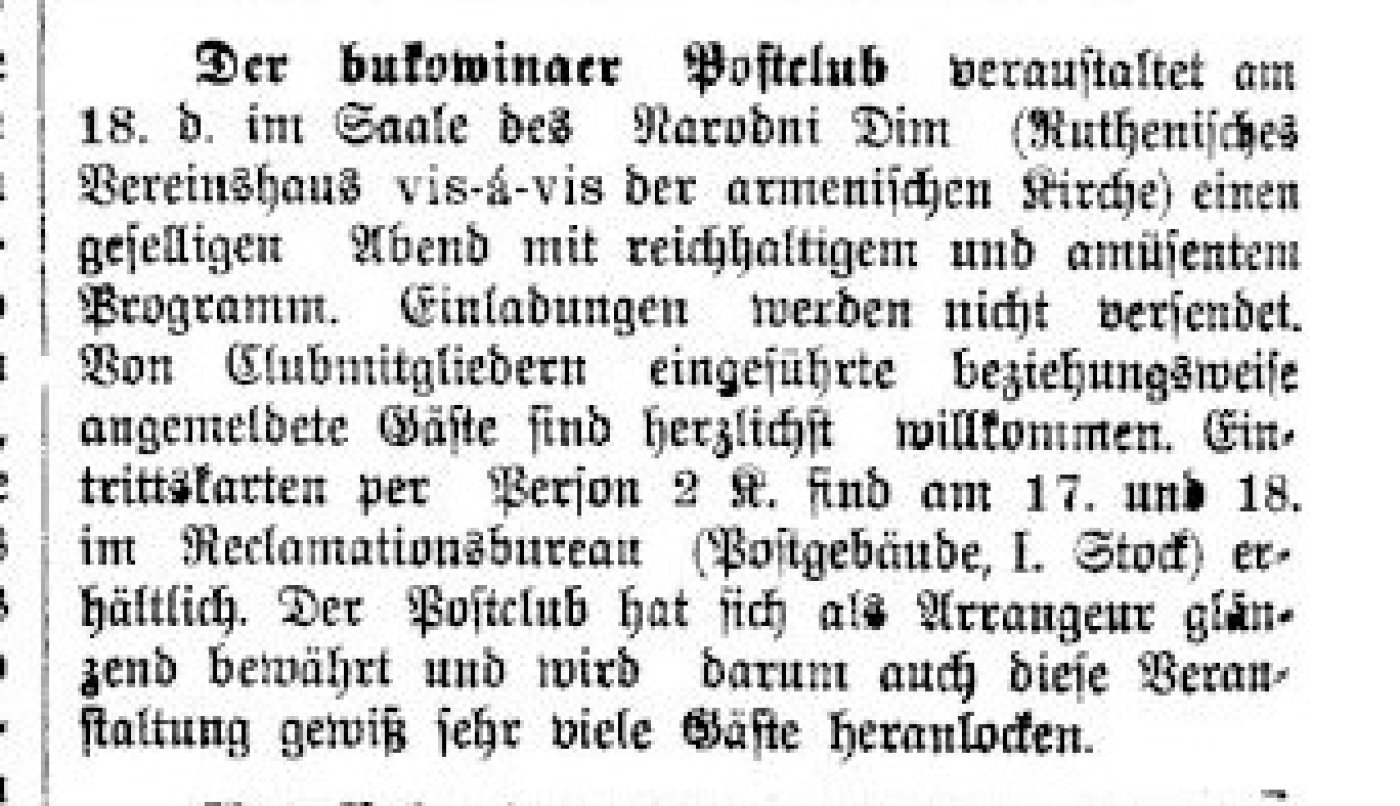
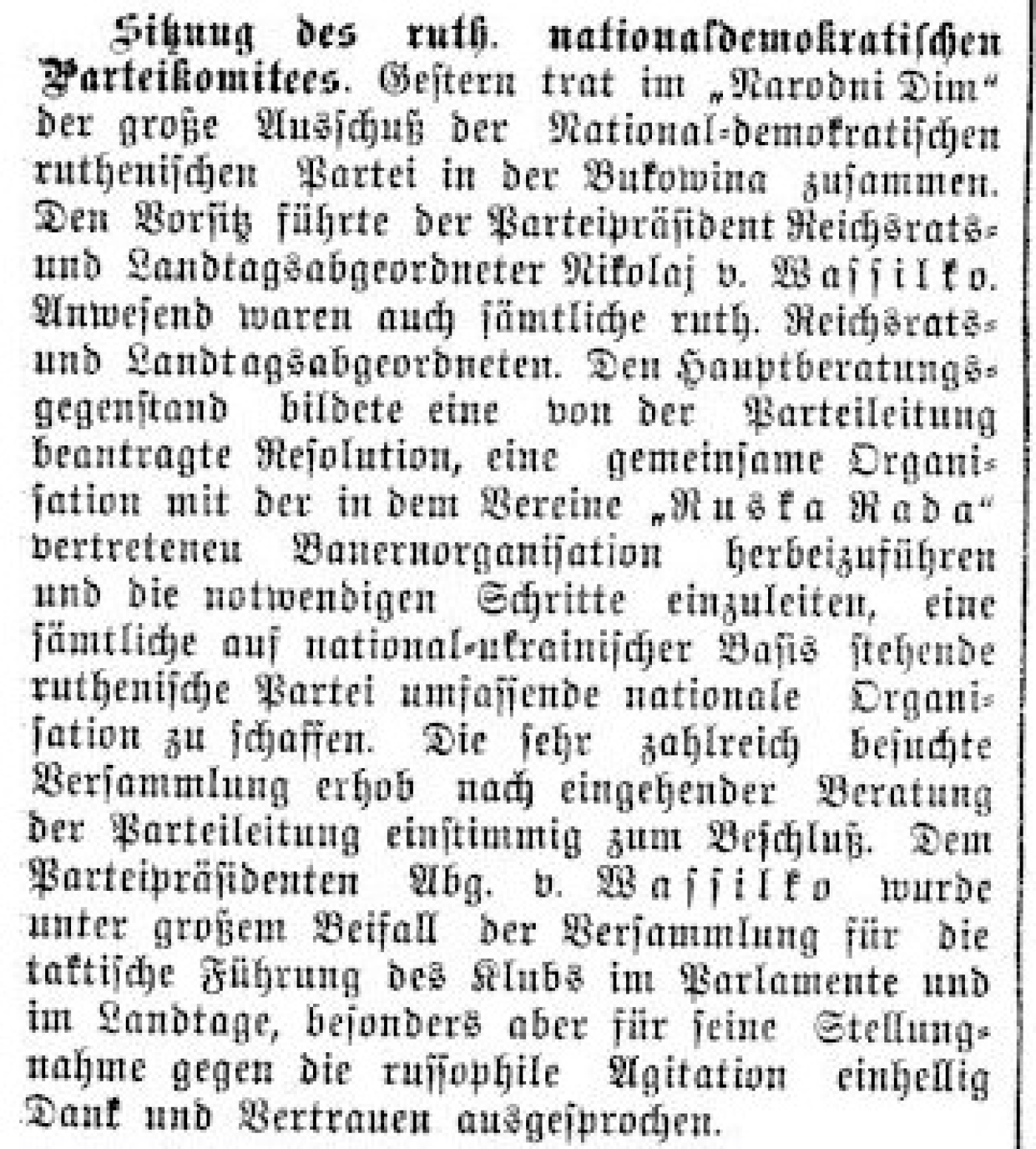
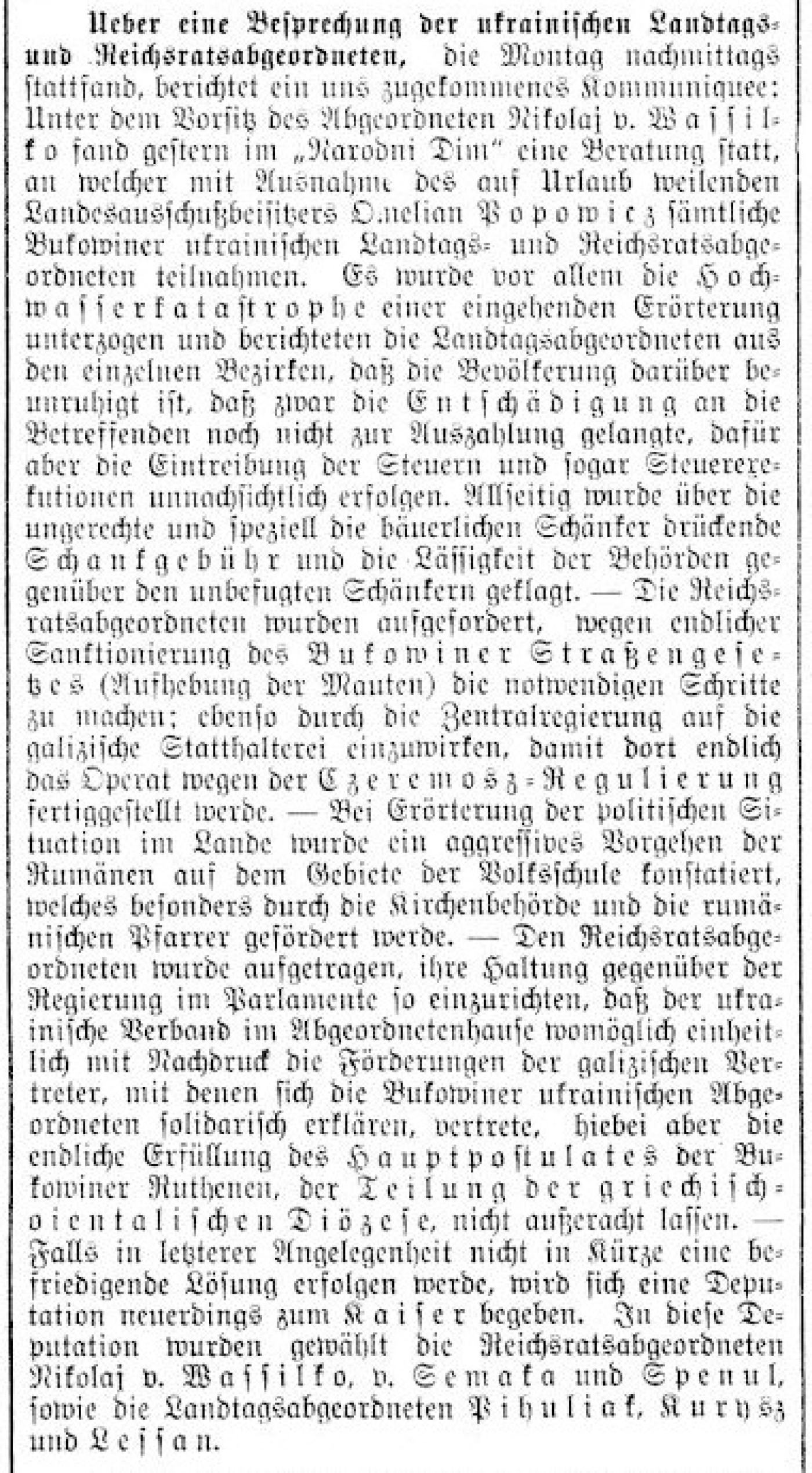
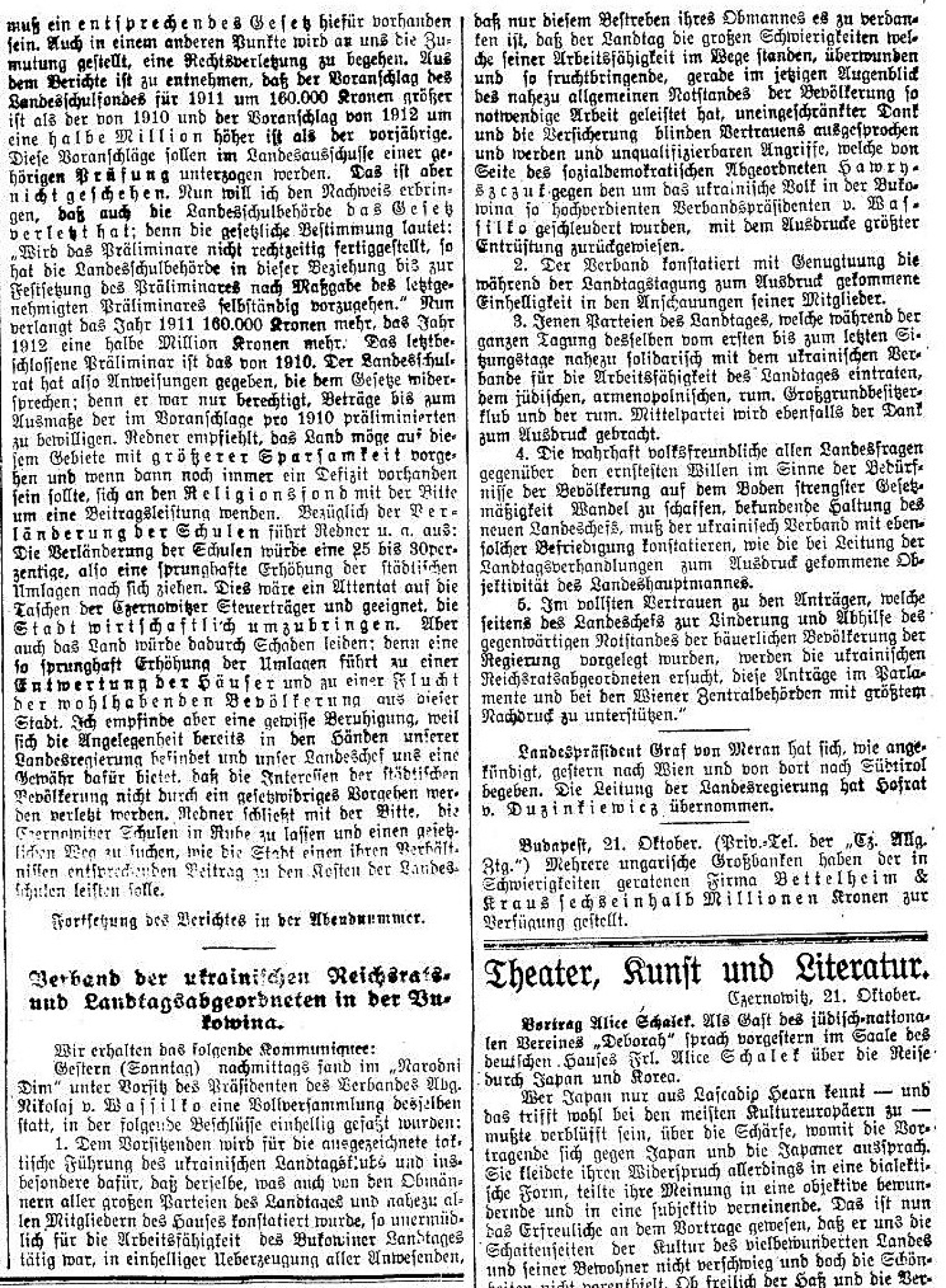
The Ukrainian national movement in Chernivtsi - along with the Rus'ka Besida - was largely fuelled by the Ukrainian People's House. Its first director was Erotej Pihuljak, with Omeljan Popovyč as secretary. Both were actively involved in the development of the school system and were particularly committed to Ukrainian education. The main aim was to introduce the peasantry to Ukrainian culture and to give them greater access to education, the Ukrainian language and history. To this end, a school for secondary school pupils from the surrounding areas was established in the Volkshaus in 1896. However, as the number of students soon exceeded one hundred, the school moved to its own building in 1906.
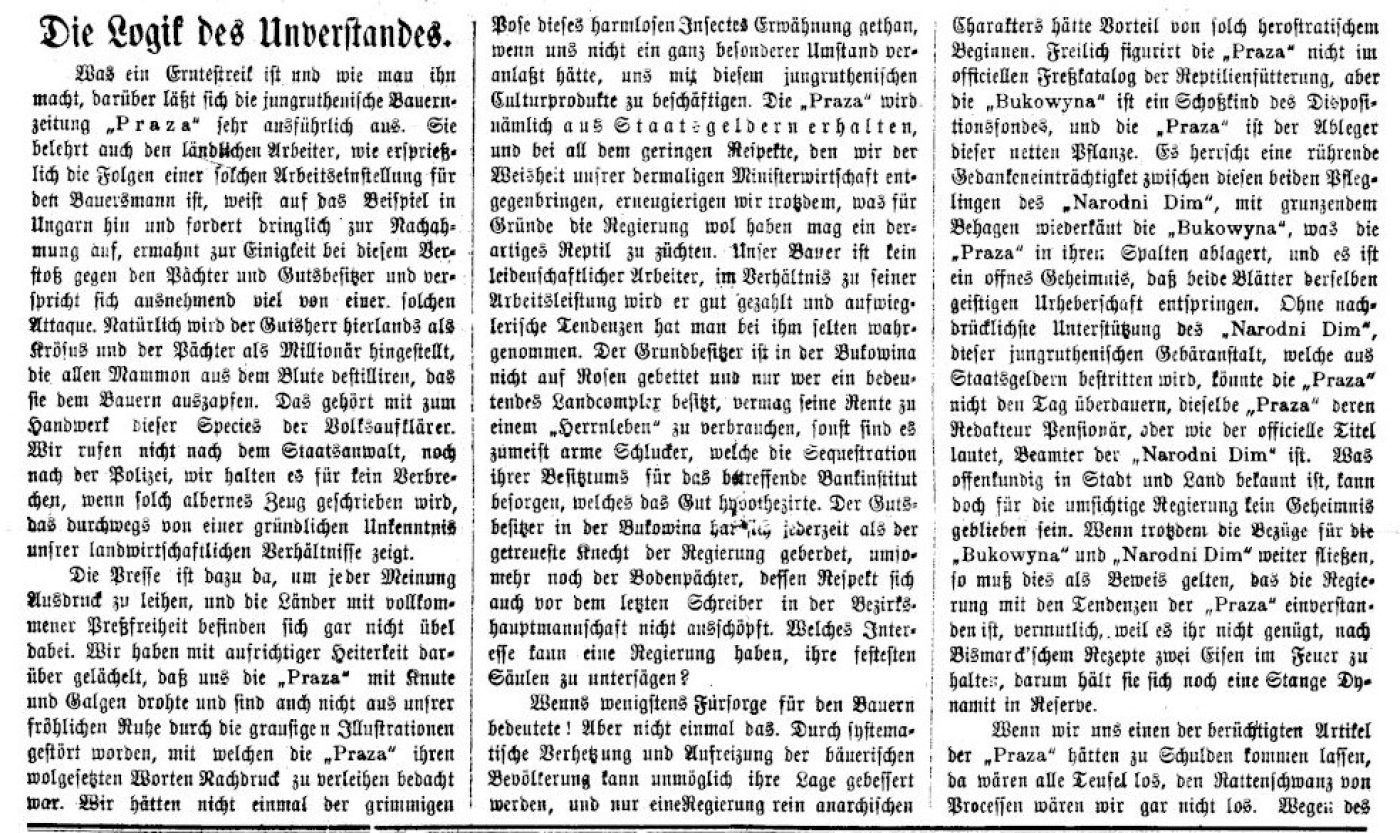
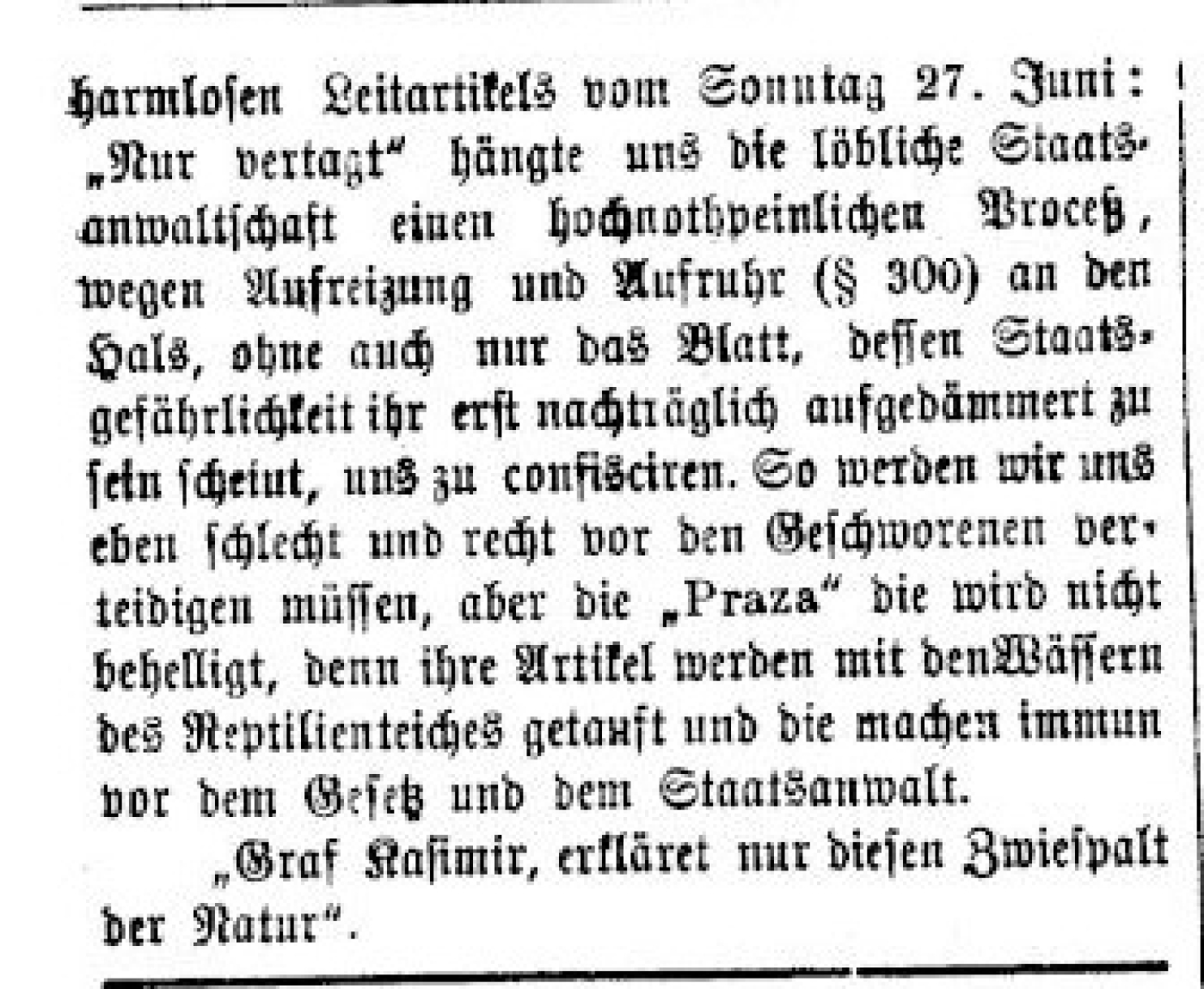
A Ukrainian public library was also set up in the Volkshaus, and the newspaper Bukovyna, which was important for the national movement, was printed there. At the same time, associations based on the principle of Raiffeisen banks and gymnastics clubs (self-defence associations) were established. By 1905, the house was home to more than 60 groups and associations. As Mariana Hausleitner points out, the establishment created the conditions for Ukrainians to actively participate in the cultural and political life of Chernivtsi from the turn of the century. One of the main purposes of the people's houses in the city was to facilitate encounters and networking between groups defined by their respective languages. The houses thus became a real and symbolic meeting place for the national groups of Bukovina. The Ukrainian national movement was decisively shaped by the house from the end of the 19th century. In this context, the change of name from “Ruthenian” (Rus'kij narodnyi dim) to “Ukrainian” (Ukrajns'kyi narodnyi dim) in 1910 was an important turning point in the self-image of the Ukrainian population.
Immediately after the Romanians came to power in Bukovina in 1918-19, the People's and National Houses in Chernivtsi were closed or, in some cases, restricted in their work. The Romanian army occupied the Ukrainian House and used the printing press for propaganda purposes. Many of the long-standing Ukrainian activists were arrested or, like Omeljan Popovych, had to flee abroad. It was not until the 1920s that the national houses were able to resume their activities, becoming important cultural centres for the minorities in a period of increasing Romanianisation of everyday life. During the Soviet period (1944-1991), the activities of the National Houses were suspended. It was not until the 1990s that the houses were able to reorganise themselves.
Currently (2018), Volodymyr Staryk is the director of the Ukrainian National House. Since perestroika, he has been actively involved in rebuilding the national houses in Chernivtsi and fulfils his leading role in the Ukrainian House on a voluntary basis (see interview with Volodymyr Staryk). The basement of the building now houses offices, association rooms and a large meeting room. A small exhibition documenting the history of the Ukrainian national movement is also located in the back of the building. The large ballroom on the upper floor of the building, with additional offices, is used by various groups, initiatives and associations in Chernivtsi. Although the focus is on Ukrainian activities, the space is also open to other events.
Text: Kirsten Heyerhoff
Sources: Mariana Hausleitner: Fünf verschiedene Vereinshäuser in Czernowitz und ihre Entwicklung in bis 1914. In: Peter Haslinger, Heidi Hein-Kircher, Rudolf Jaworski: Heimstätten der Nation. Ostmitteleuropäische Vereins- und Gesellschaftshäuser im transnationalen Vergleich (Tagungen zur Ostmitteleuropa-Forschung, 32). Marburg 2013, S. 89-112