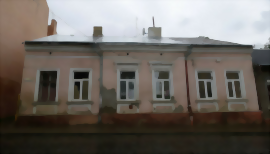
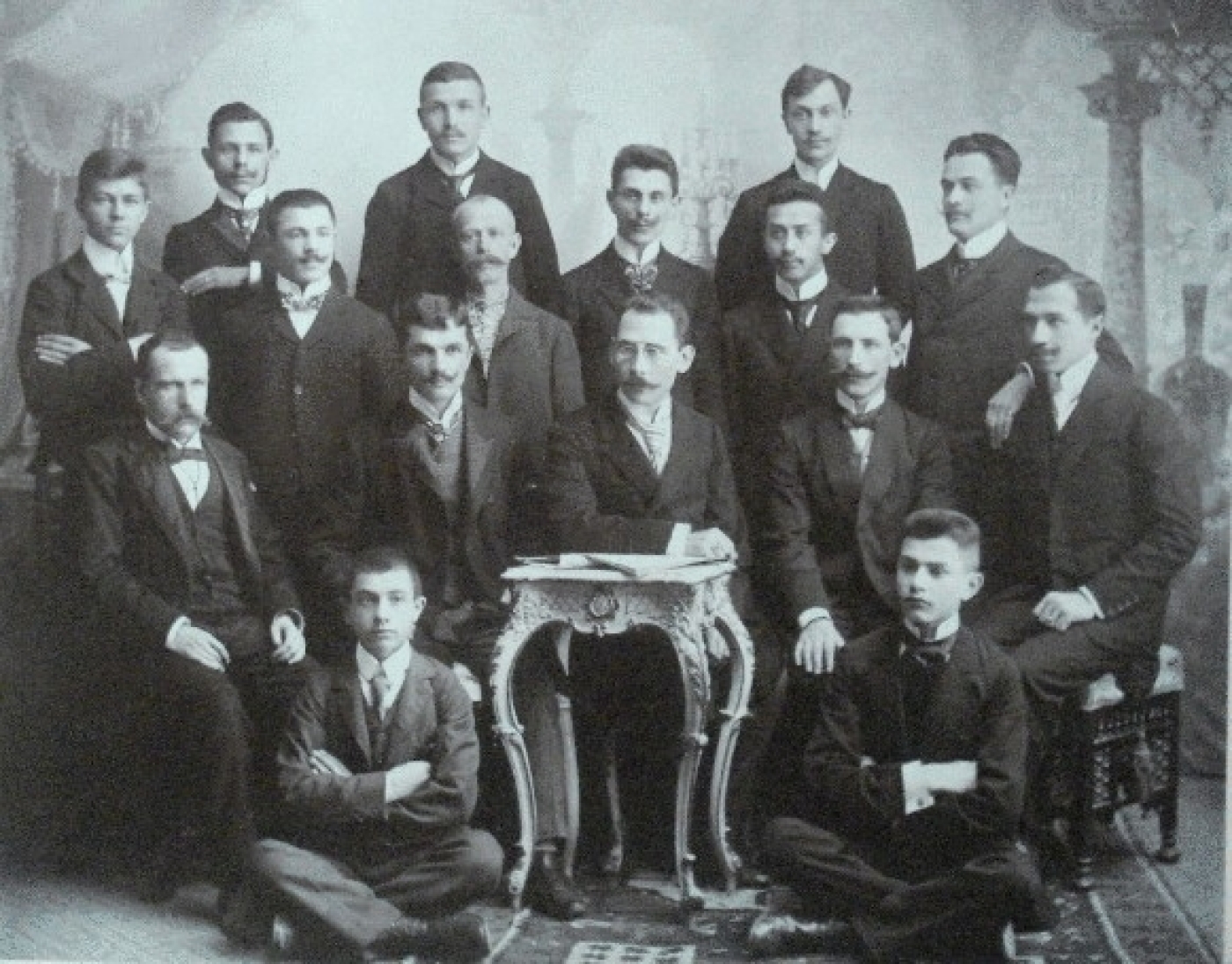
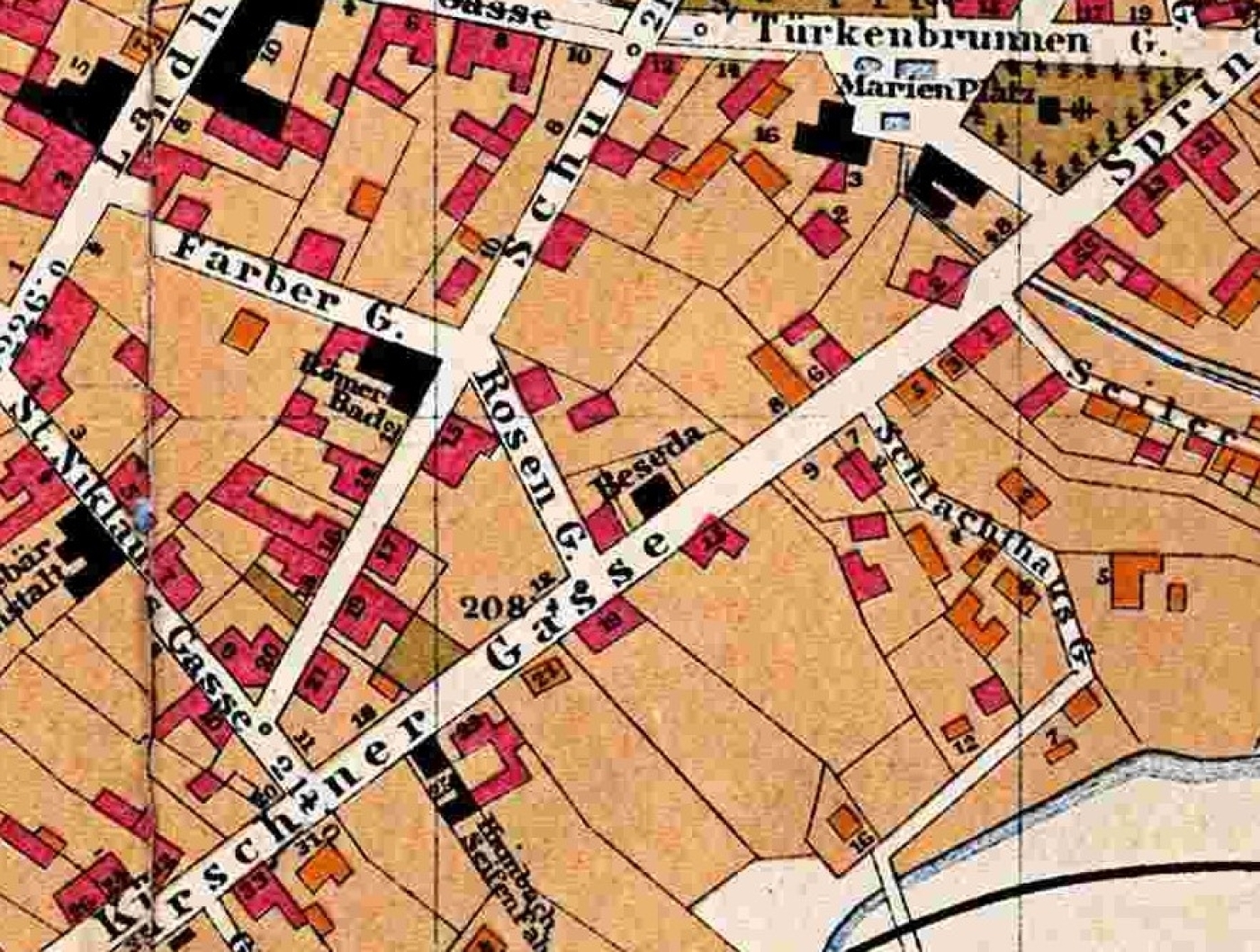
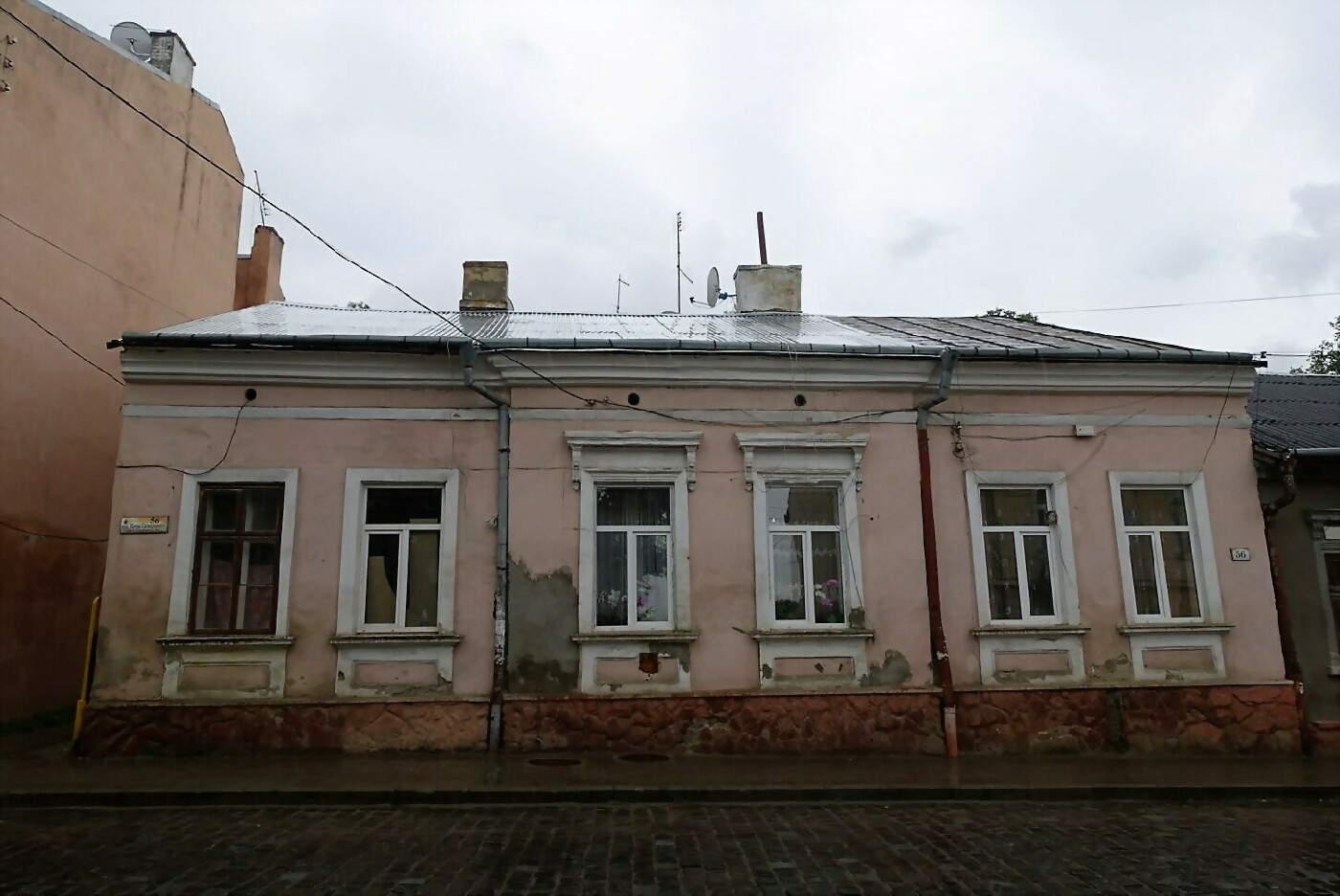
The founding assembly, which met in what was then the Hotel „Zum goldenen Lamm“, had around 150 members, including several Orthodox clergymen and representatives of Ruthenian intellectuals, including the priest Vasyl Prodan and the writer and musician Sydir Vorobkevych. Prodan was elected chairman and led the association until 1878. He belonged to the conservative moscophile branch of the national movement, which was based on Orthodoxy and promoted Old Church Slavonic as the language of education.
According to its first statutes, the association was to provide education and support the social life of the Ruthenians. In 1870 Ruska besida published the newspaper Bukovynska zorja (Bukovyn Star), which was short-lived with sixteen issues. The organisation was made up not only of Muscovites, but also of supporters of the Ukrainophile movement, who were in favour of Ukrainian independence and language. The struggle within the Bukovinian Association was won by the Ukrainophiles (ukr. Narodovci). In 1884 the Muscophiles were expelled from the association. In the same year, on the initiative of Stepan Smalʾ-Stocʾkyj, the statutes of the association were changed: the association now proclaimed the enlightenment and prosperity of the Ruthenian people as its primary goal. In 1885, the first Ukrainian-language political newspaper Bukovyna was founded in Bukovina. Its co-founder and editor were Yuri Fedkovych, one of the most important Ukrainian-language writers in Bukovina.
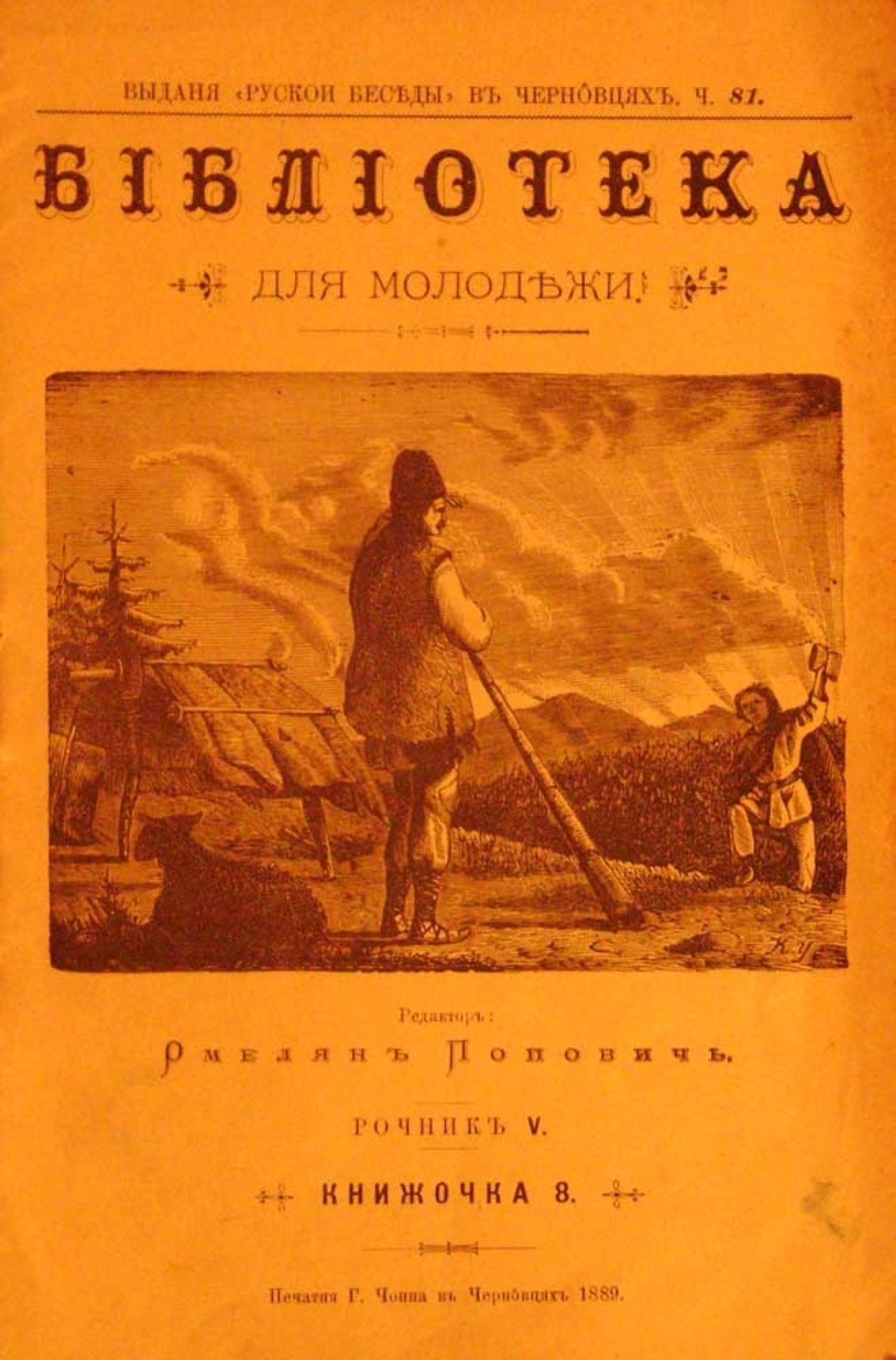
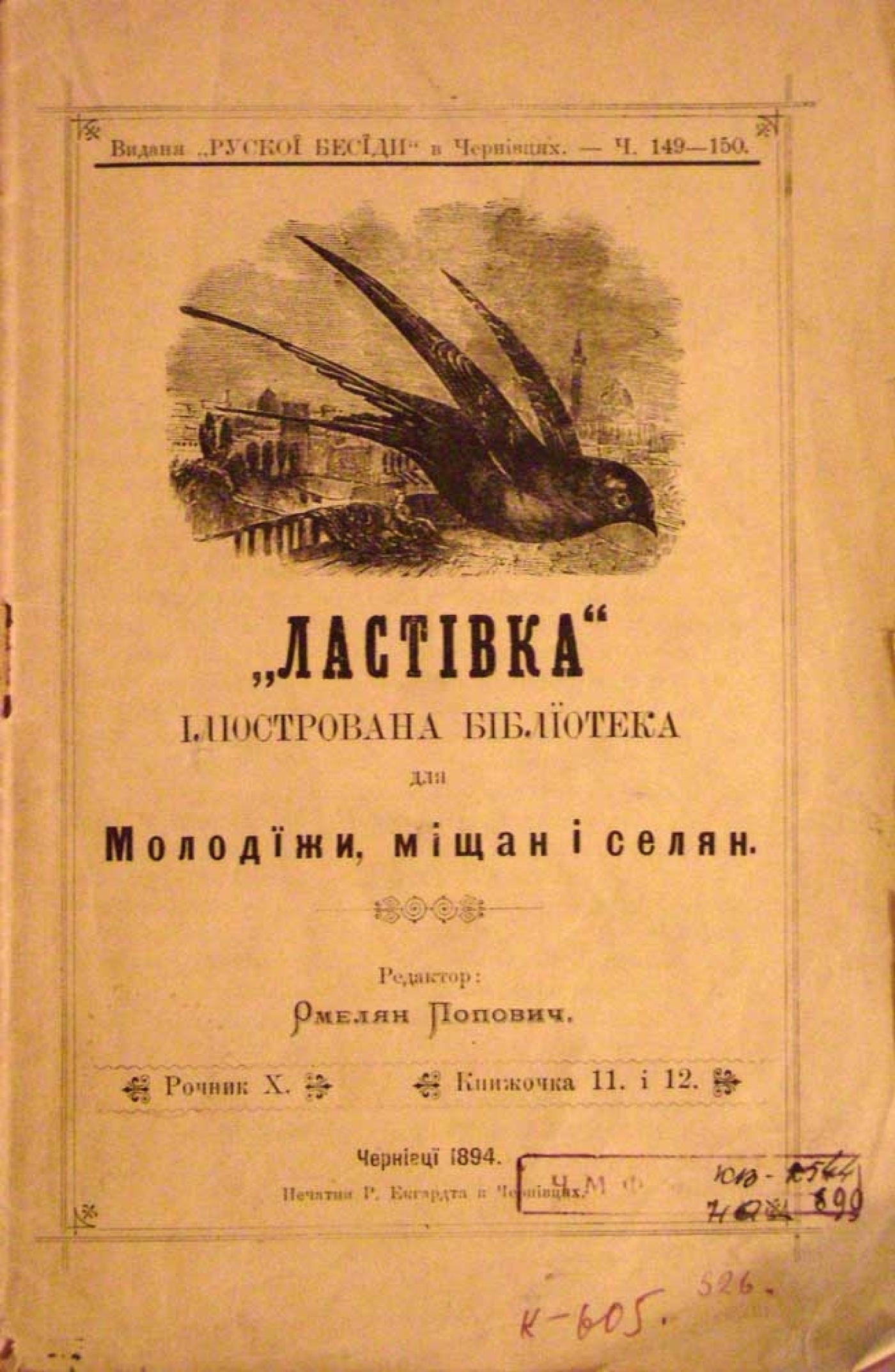
From the 1880s, Rusʾka besida established reading rooms in several villages. By 1912 it had nine branches in Bukovina, around 150 reading rooms and 908 members. The association also had two foundations which enabled poorer pupils to receive an education. Rusʾka besida not only published a newspaper, but also a monthly pamphlet 'Library for Youth, Peasants and Citizens', the annual Bukovina Orthodox calendar, the monthly magazines Lastivka (Swallow) and Čytalʾnja (Reading Room), and various books.
The Rusʾka besida association gave rise to several political, literary and cultural organisations in Bukovina. In 1870, members of the Rusʾka beside founded the Ruska Rada (Ruthenian Council), which sought to establish a chair of Ruthenian at the University of Chernivtsi in 1875. Other organisations included the Miščansʾka čytalʾnja (Civic Reading Room, 1880), the Ukrainian House (1884), the Ukrainian School (1887) and the Women's Community of Bukovina (1906).
After the annexation of Bukovina by Romania, reading rooms were banned in the former crown lands. The Association was able to continue its activities in the city only to a limited extent. After the Soviet occupation in 1940, the association was banned.
Text: Kateryna Stetsevych
Source:
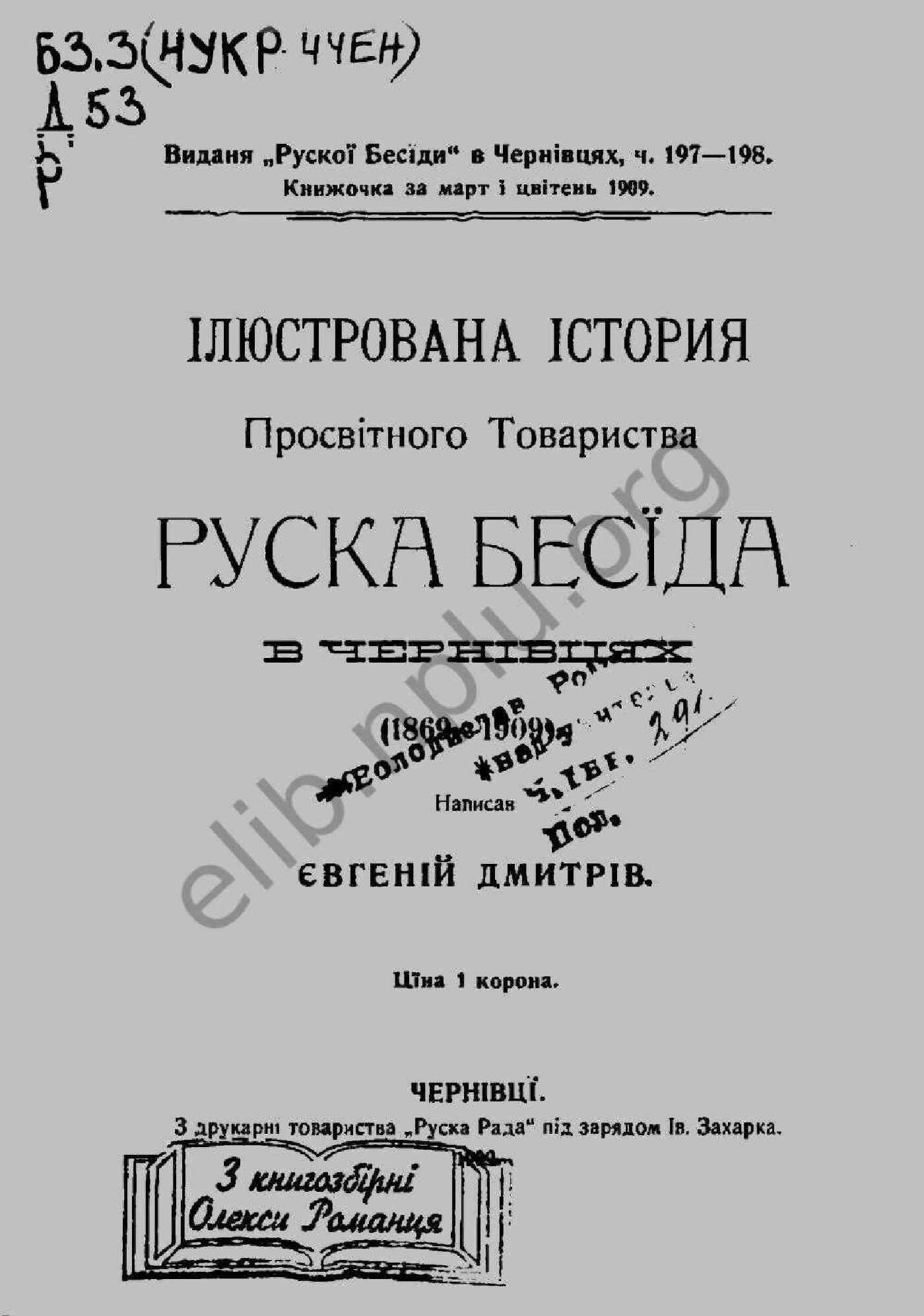
- Evhenij Dmytriv: Iljustrovana istorija Prosvitnjoho tovarystva Rusʾka besida, Černovci 1909 [Zur Geschichte des Vereins]