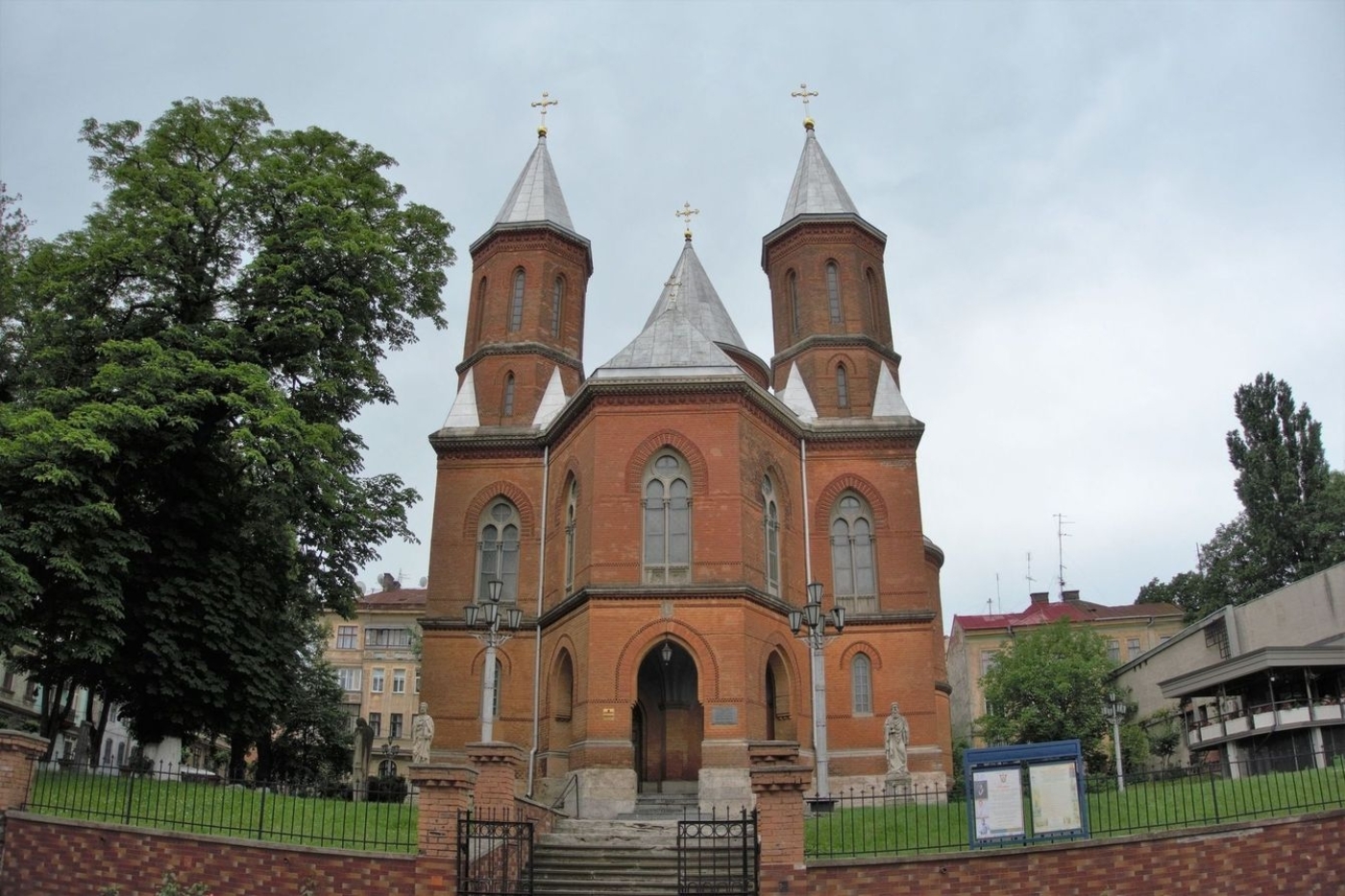
Armenian Church

The Armenian Catholic Diocese of Chernivtsi was established in 1836, although the first Armenian migrants had already settled in Bukovina towards the end of the 14th century. At that time, both northern and southern Bukovina belonged to the Moldavian Principality, which was ruled by Prince Alexander the Good (Alexandru cel Bun). In 1401, Suceava officially became the first Armenian diocese in Bukovina. Armenian merchants and craftsmen enjoyed tax privileges, which encouraged the resettlement of the Armenian population in Bukovina.
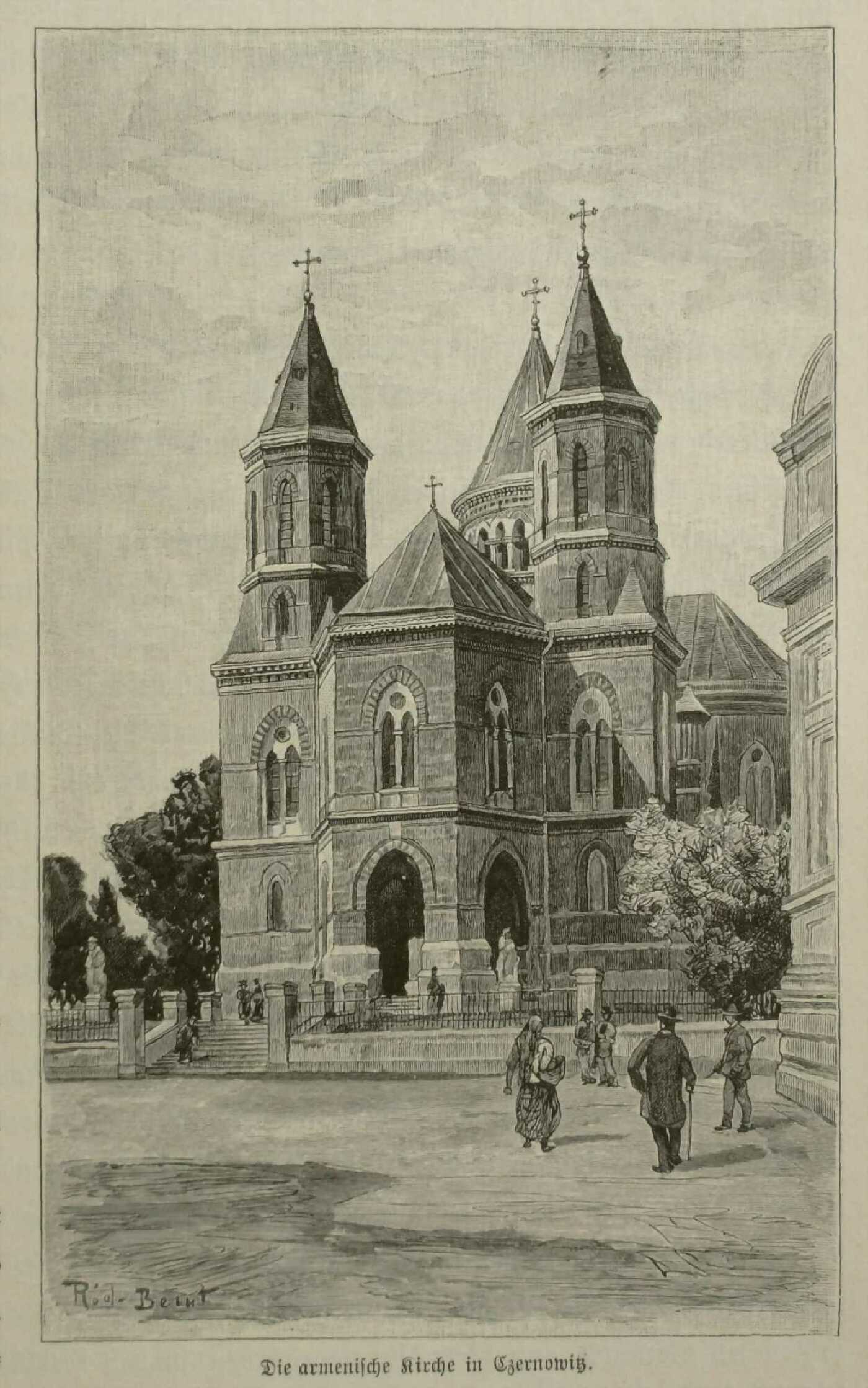
Armenian Church
Religious buildings & cemeteries
built
1875 - 1875

After the annexation of Galicia and Bukovina to the Habsburg Empire in 1775, the next wave of migration took place: the united Armenians from Galicia and the Gregorian Orthodox Armenians from Moldavia resettled in Bukovina. In 1820 there were 30 Armenian houses in Chernivtsi. The compact settlement of Armenians in the city centre was known as the Armenian Quarter. 

In 1864, a committee was set up to plan the construction of the Armenian Catholic Church. The Czech architect Josef Hlavka, who had also built the Metropolitan's residence, was commissioned to build the church. On 9 October 1875, the building was consecrated as the Greek Catholic Church of the Holy Apostles Peter and Paul in the Byzantine-Gothic style. Thanks to its special acoustics, the church, popularly known as the 'Armenian' church, was used not only for liturgies and as a parish hall for the local Armenians, but also as a concert hall. The church was used as a place of worship until 1940. After the annexation of Northern Bukovina by the Soviet Union in 1944, the Armenian church was converted into a warehouse. Since the 1990s, the Philharmonic Orchestra has regularly used the church for organ recitals. 

Text: Kateryna Stetsevych