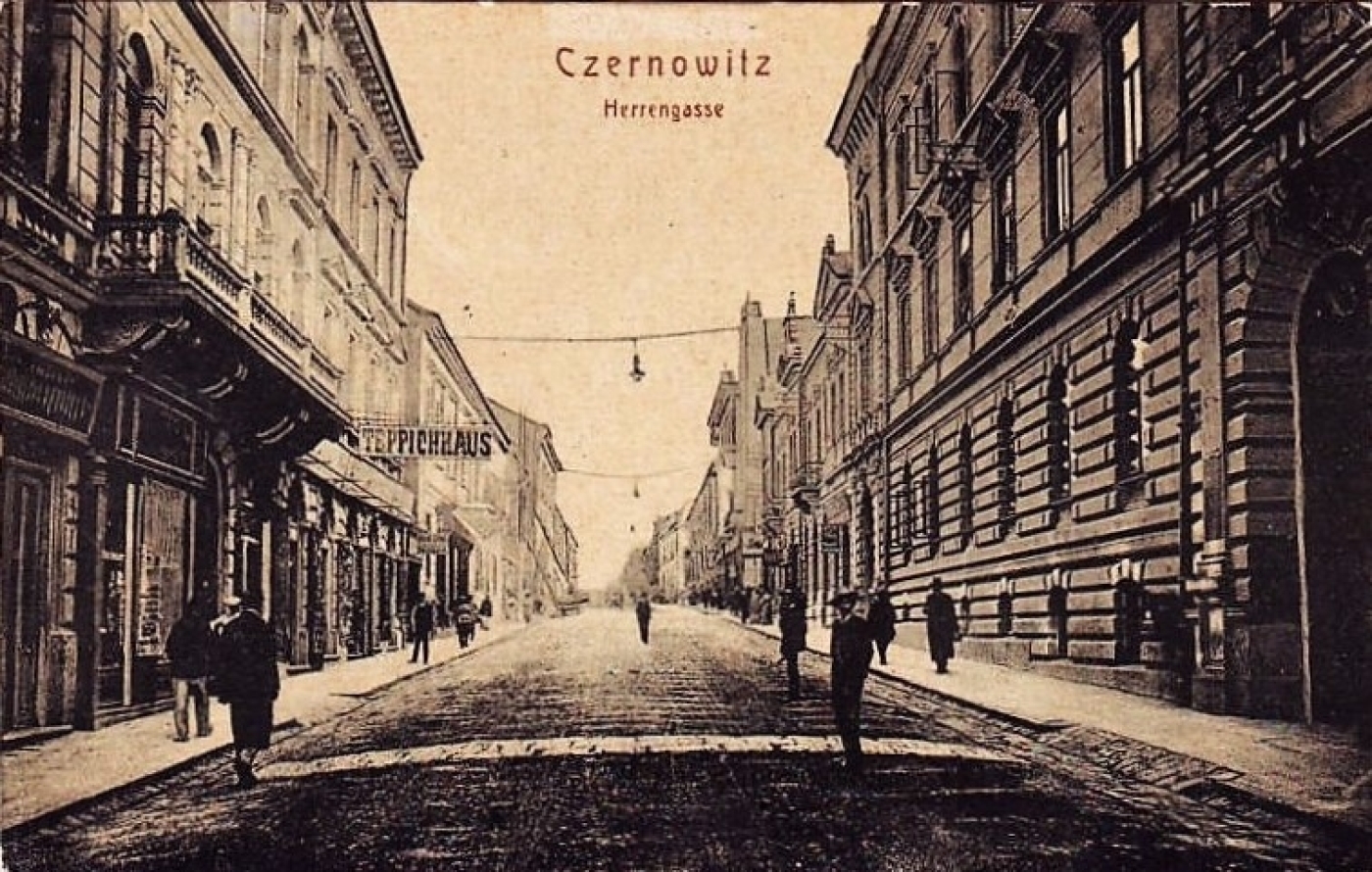
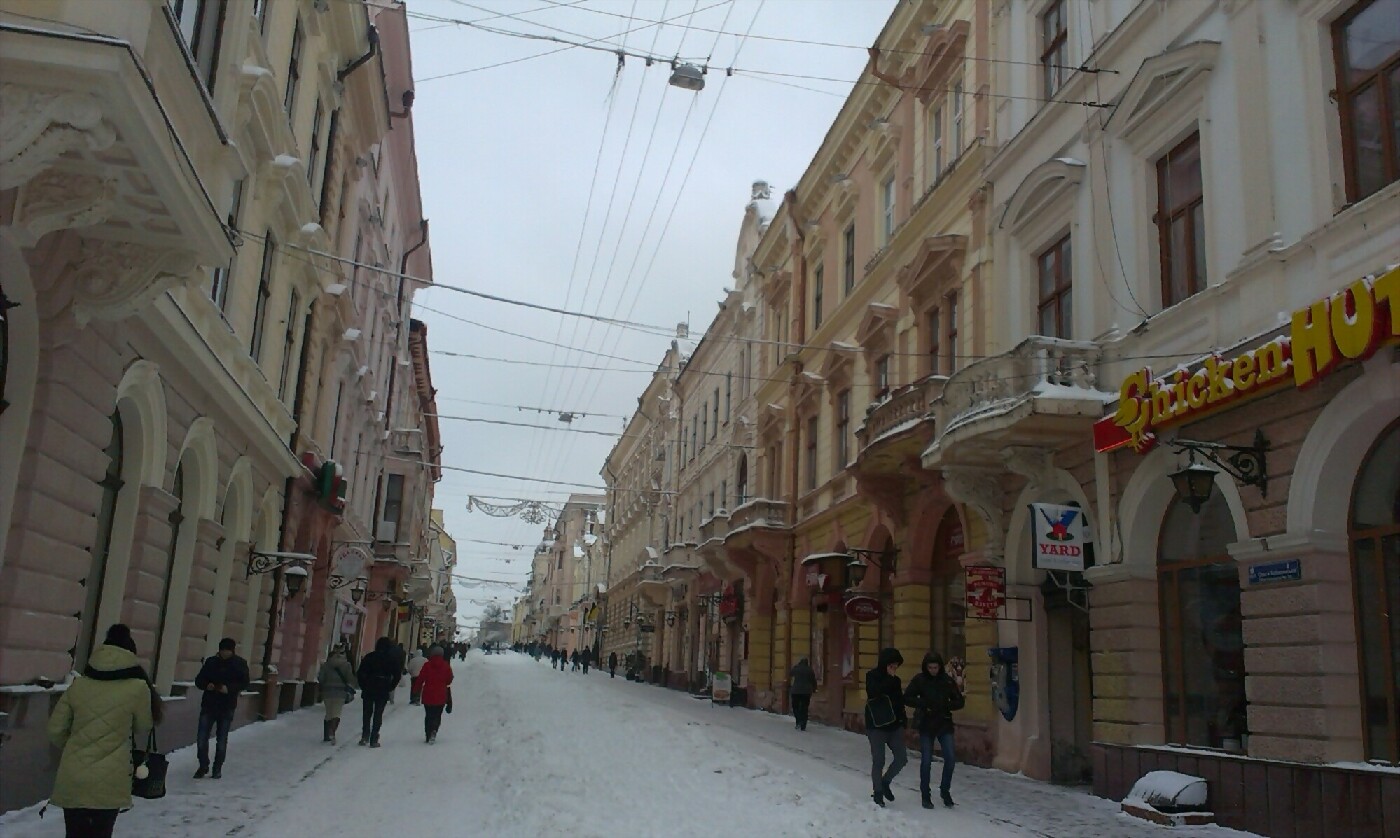
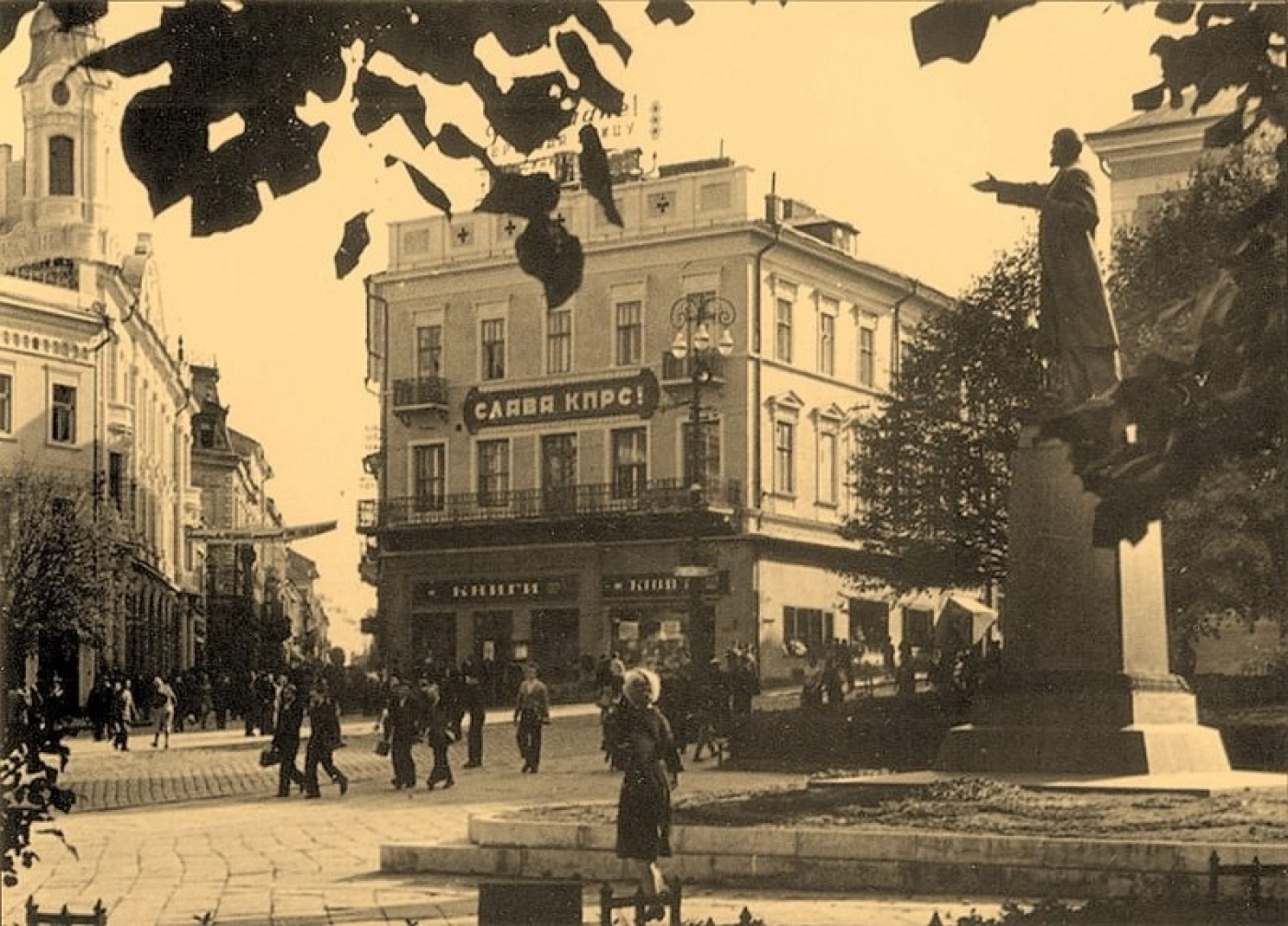
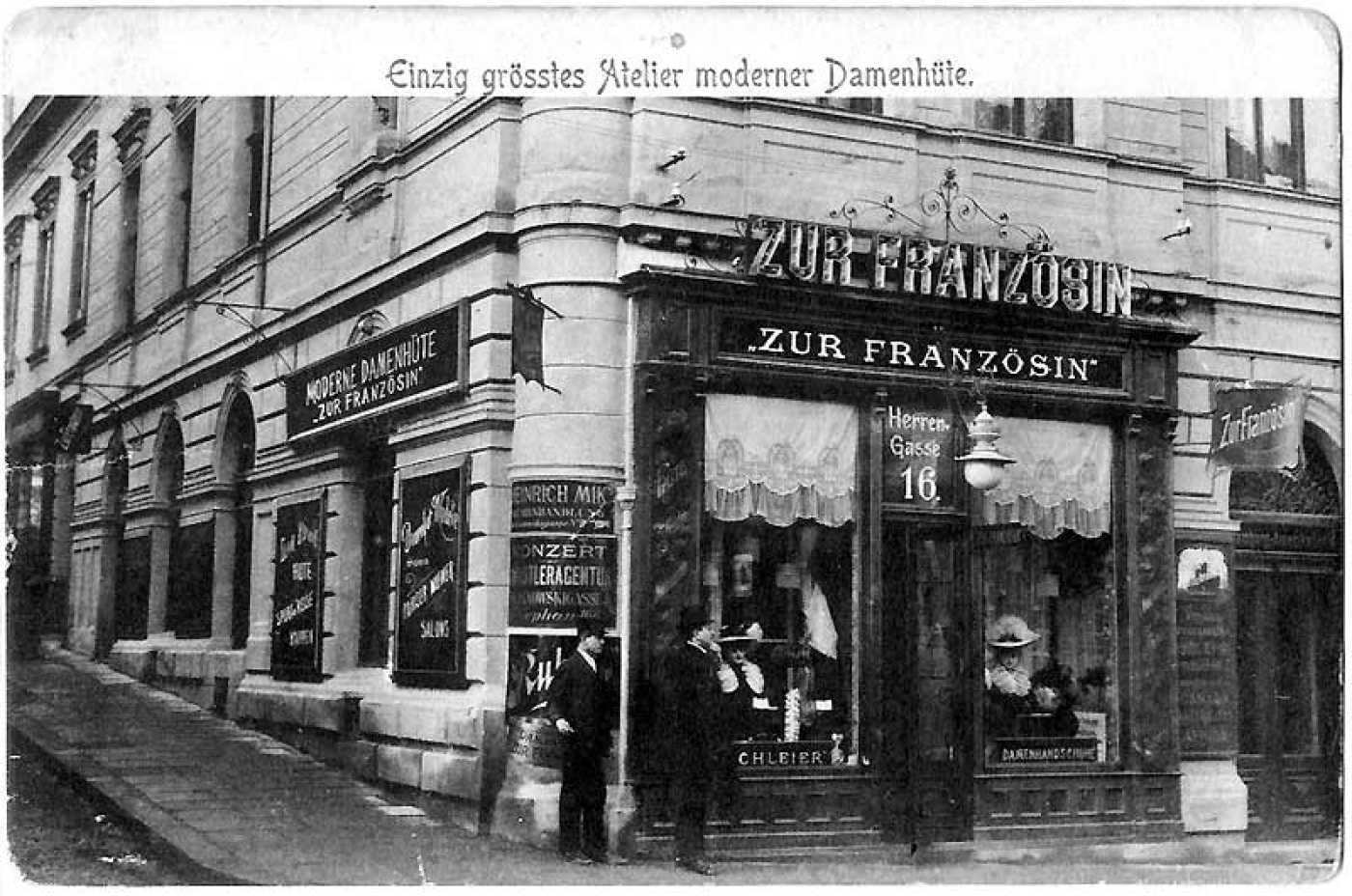
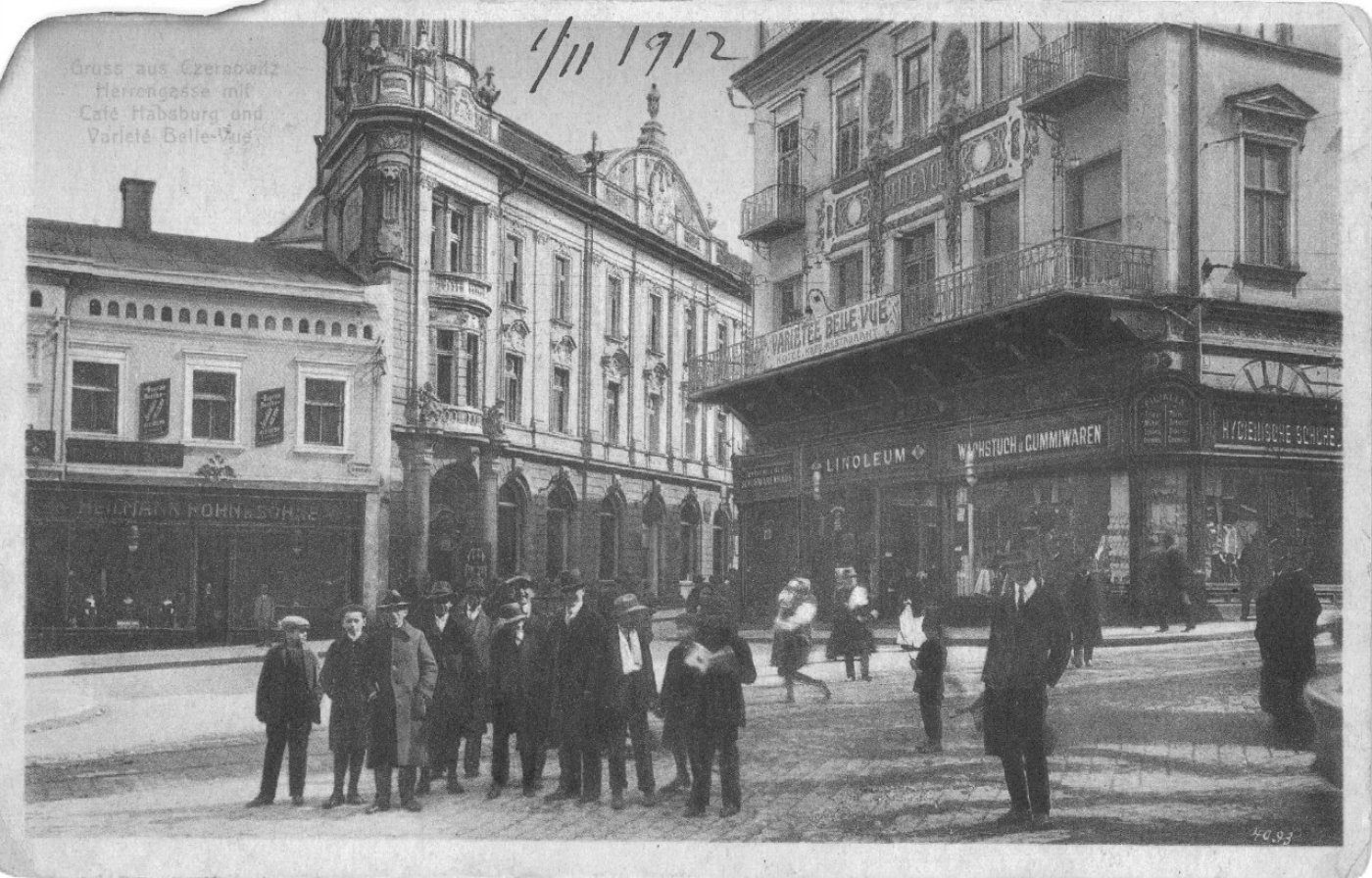
Multi-storey houses were built, most of which had cafés, restaurants, banks and shops on the ground floor and were inhabited on the other floors. The upper middle class of the city lived here. The name of the street and some of the establishments (coffee houses) reflected the close ties with Vienna. In the Romanian period, the street was renamed Iancu Flondor Street in the early 1920s, and since the Soviet and Ukrainian periods it has been known as Olga Kobyljanskastr.
Buildings and numbers (selection)
No. 1: This building was built in 1898. Until 1919 it housed the Habsburg Café, then the “Grant” Coffee House, and later various banks.
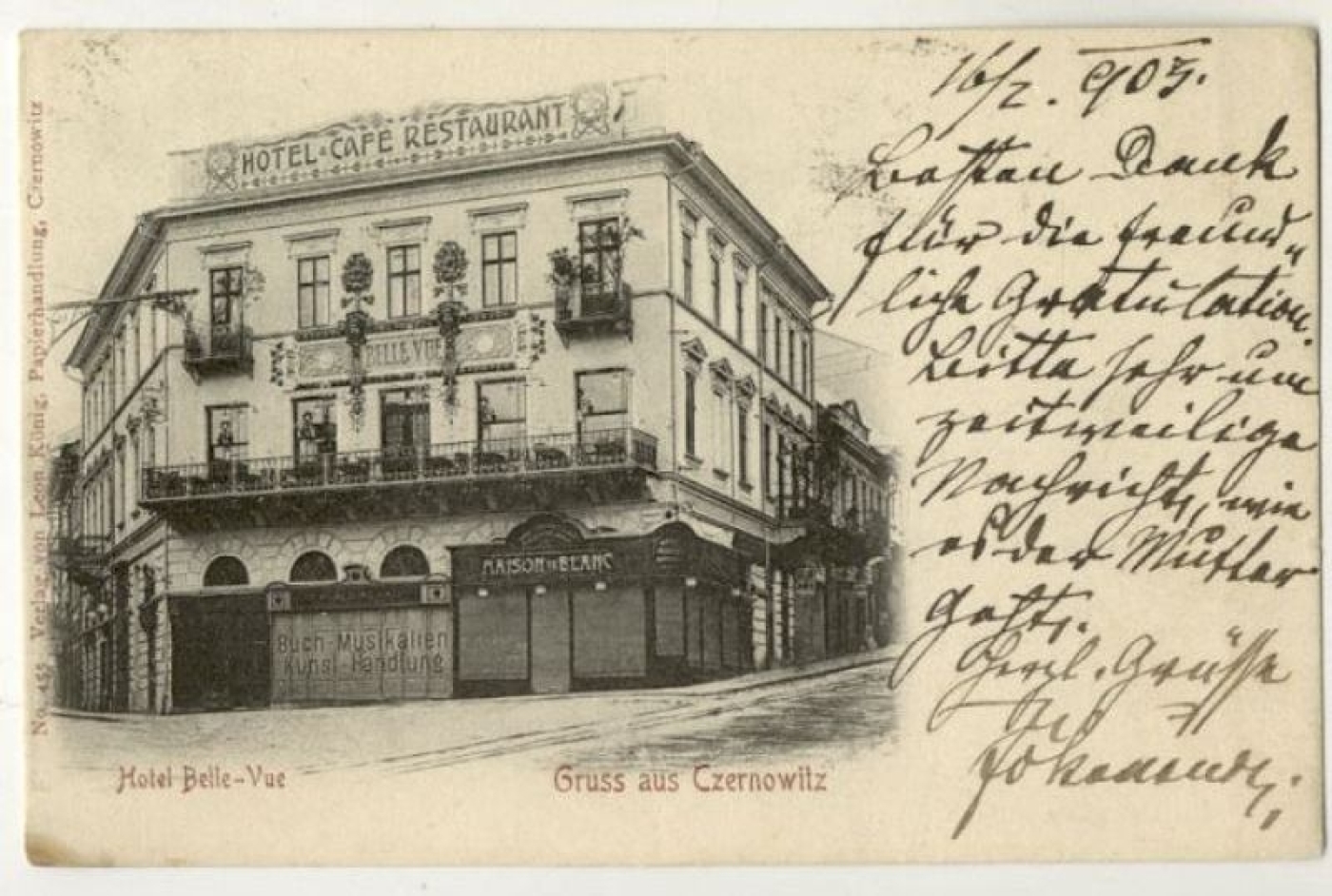
No. 2: The Belle Vue Hotel with a restaurant and a ladies' dress shop. In 1937 there was a sweet shop and from 1949 a stationery shop.
No. 5: Café de l'Europe
No. 9: Music shop, travel agency, photo studio, today the House of Romanian Culture.
No. 12: Built in 1878. Various shops (glassware, hairdresser, photo studio, restaurant).
No. 22: This is one of the oldest buildings. In 1919 there was a Romanian bank, later a printing house and other shops.
No. 28 (formerly No. 30): The building belonged to the Orthodox Religious Fund. During the First World War it was the headquarters of General Brussilov. Today it is a museum of regional history.
No. 36 (formerly no. 40): Dom Polski (Polish House)
No. 43: Pharmacy since 1903.
No. 53: Deutsches Haus (German House, built in 1910)
Text: Oksana Herheliinyk