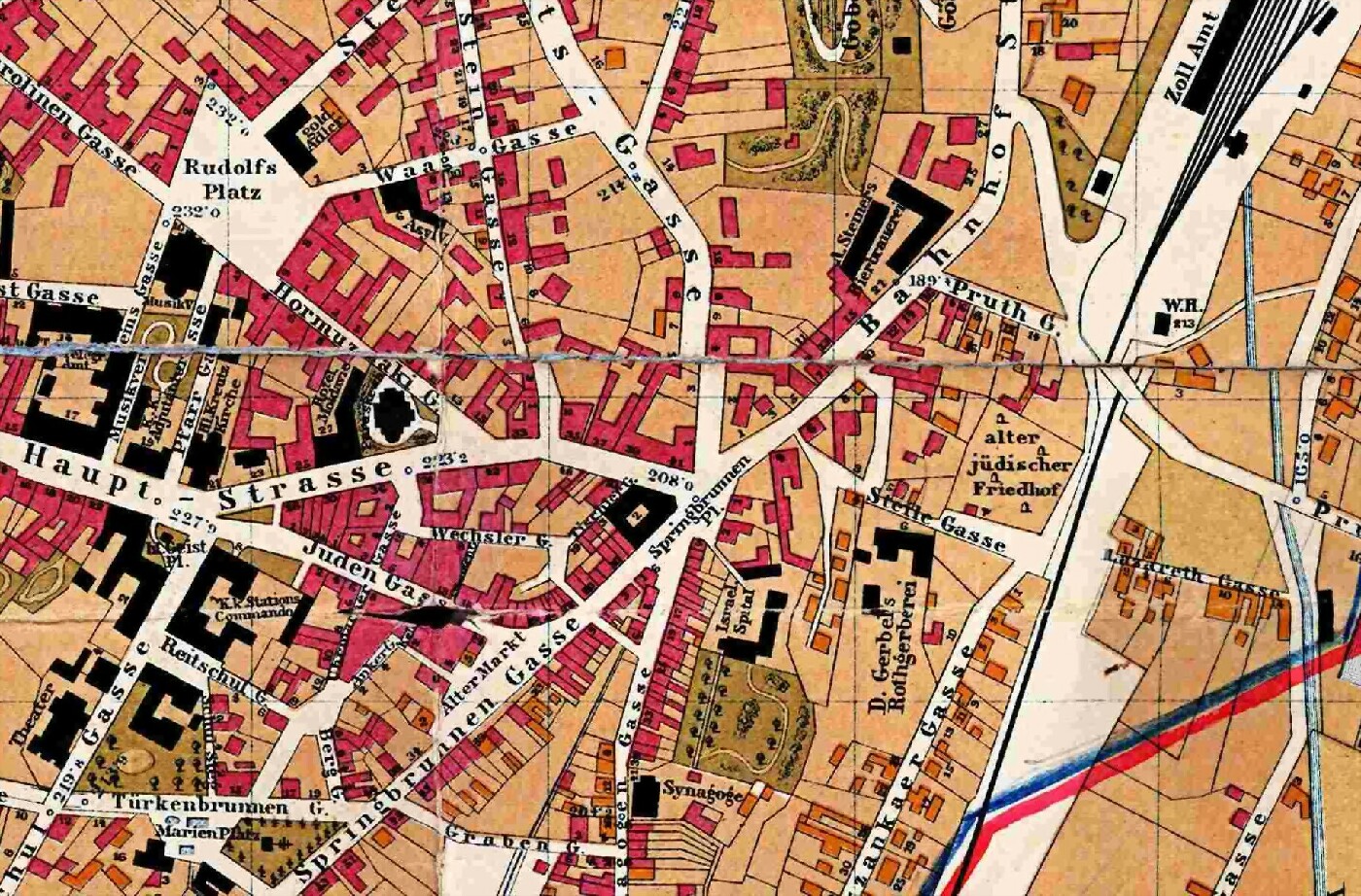
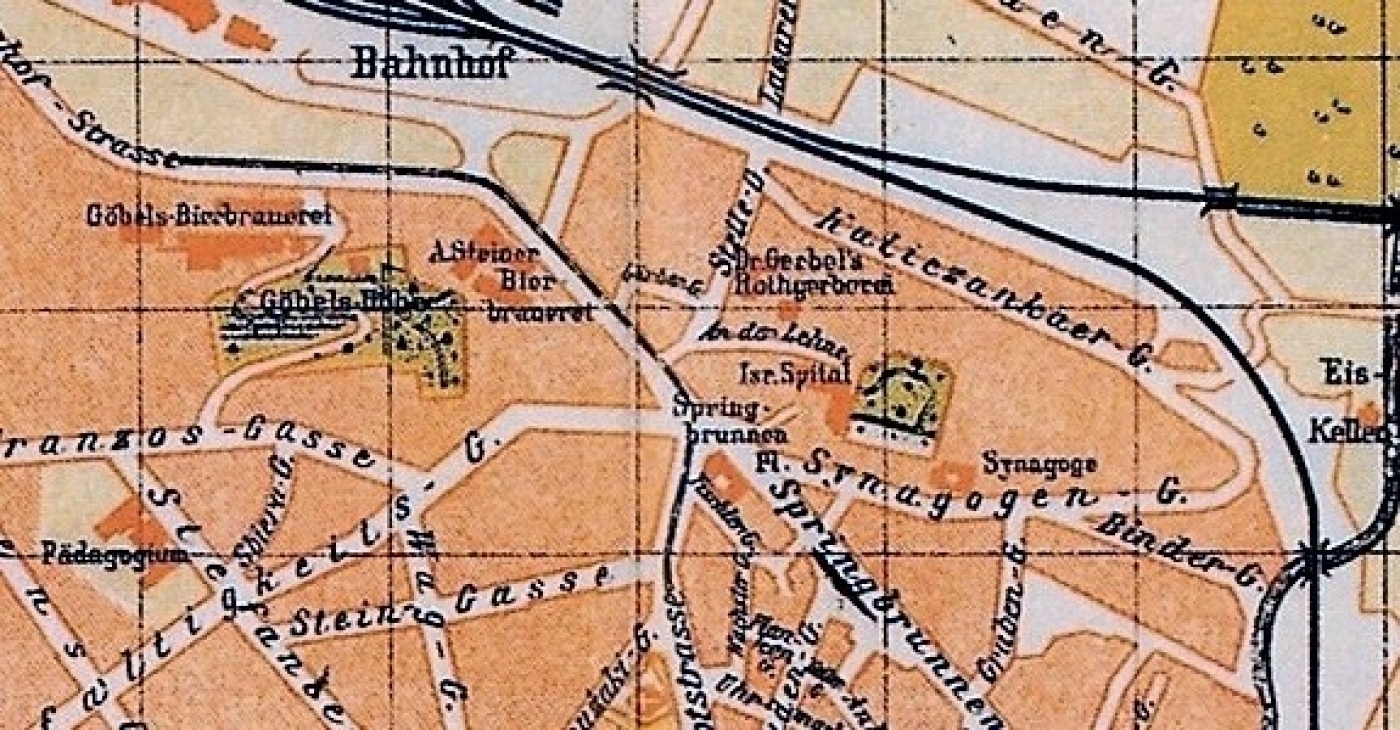
These included Synagogengasse and Springbrunnengasse, located in the oldest (Jewish) quarter, where most of the buildings were made of wood until the mid-19th century. These included Synagogengasse and Springbrunnengasse, located in the oldest (Jewish) quarter, where most of the buildings were still made of wood and were relatively small (one to two storeys) and the milieu consisted mainly of small merchants and craftsmen, Bahnhofsgasse, which led up very steeply from the Bahnhofsplatz, Dreifaltigkeitsgasse, which led into a bourgeois and relatively quiet quarter bordered by the Archbishop's Residence and Habsburg Hill, and finally Enzenberg-Hauptstraße, which led directly into the political and economic centre of the city: Ringplatz, the town hall and Herrengasse.
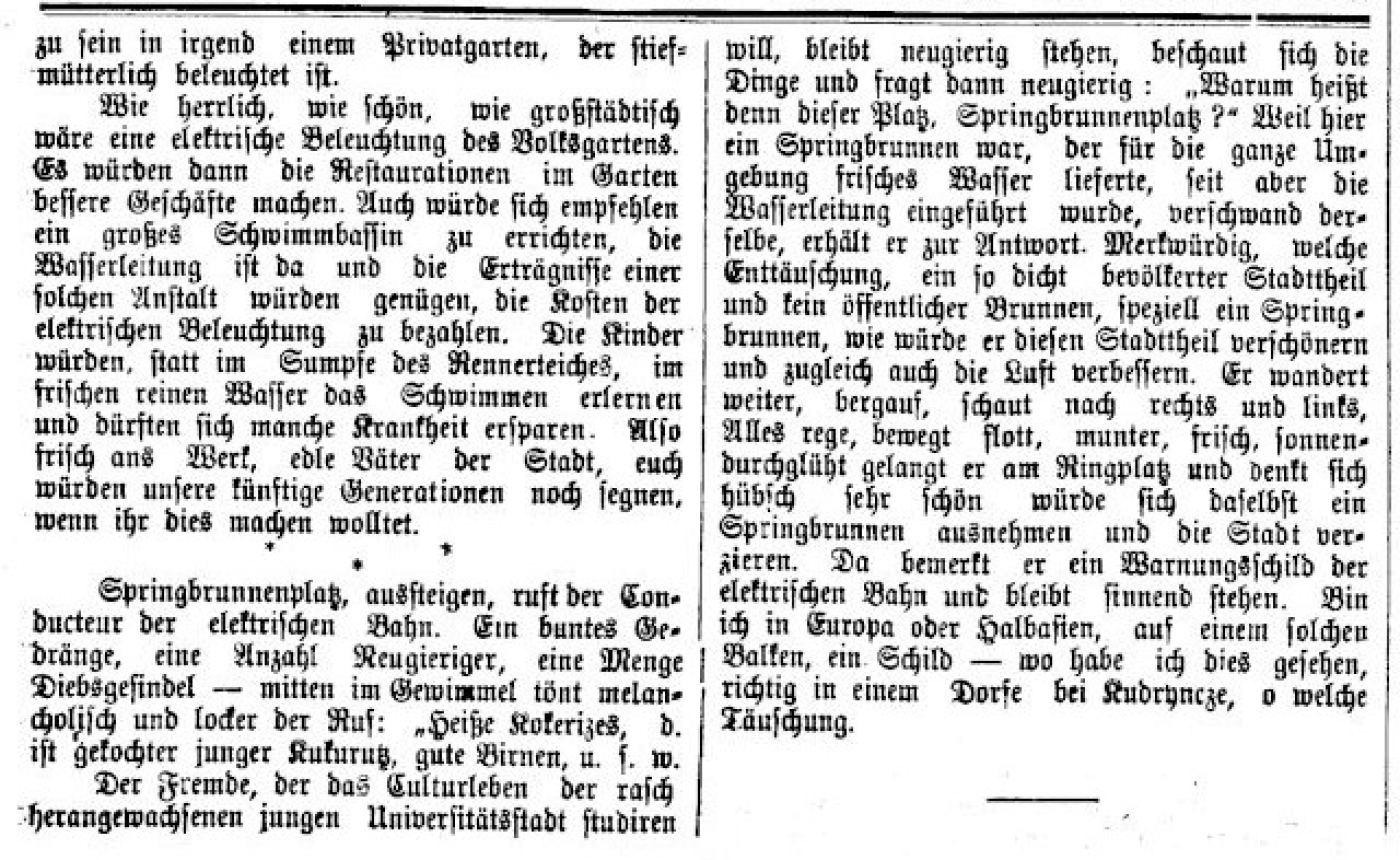
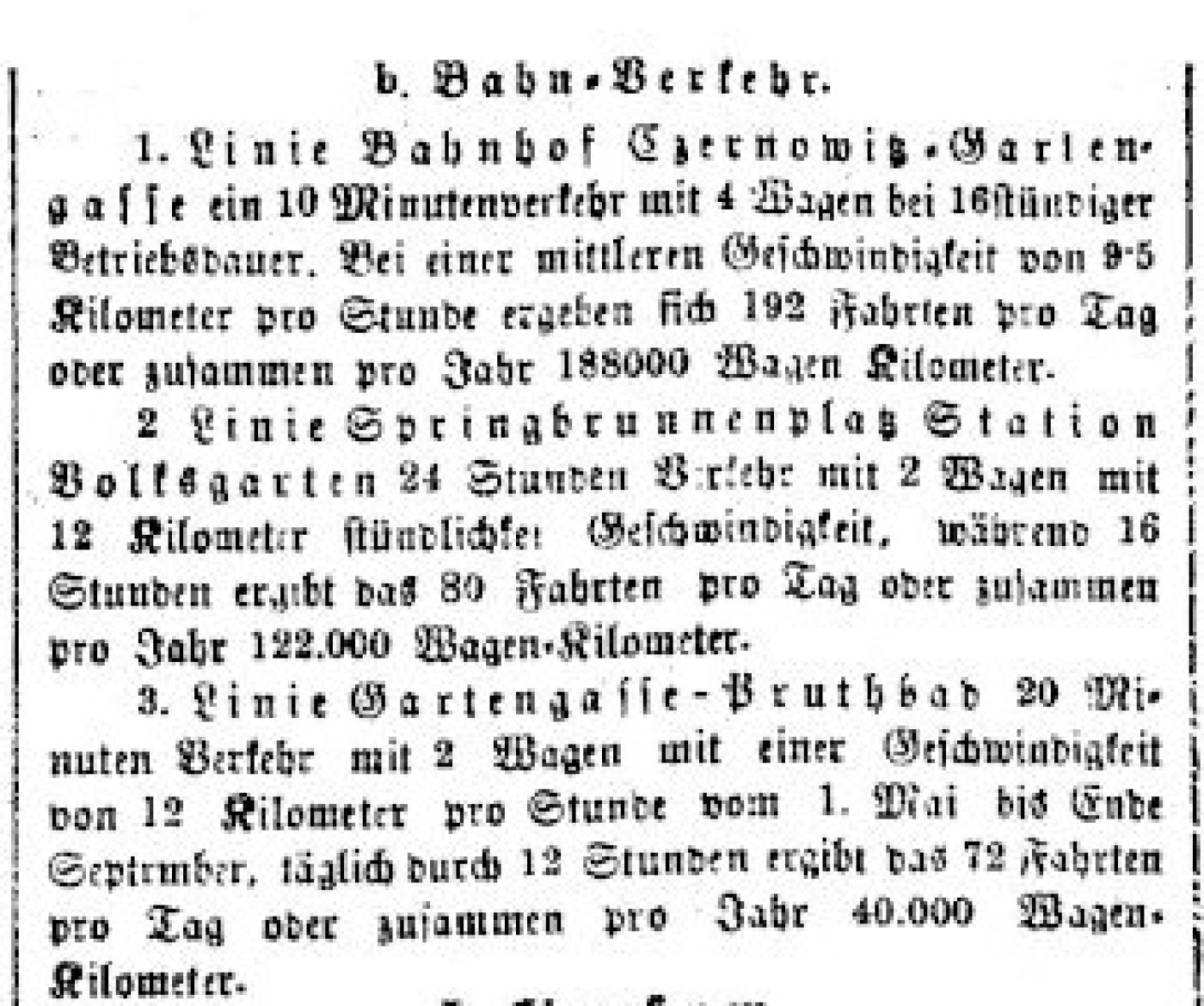
The local press described Springbrunnenplatz as a place where travellers and merchants could stop with their horse-drawn carts (e.g. at the 'Hotel Bukowina') and where there were numerous places to eat and drink. Springbrunnenplatz was also a busy stop for the electric tram which ran from here to Volksgarten and the Volksgarten terminus. An article from 1897 describes the hustle and bustle of the square and explains its name: “Springbrunnenplatz, get out, shouts the conductor of the electric railway. A colourful crowd, a few curious people, a lot of thieves - in the midst of the hustle and bustle, the call sounds melancholy and relaxed: 'Heiße Kokerzes‛, that's boiled young Kukuruz, good pears, and so on. The stranger, who has come to study the cultural life of this fast-growing young university town, stops, looks around and then asks: Why is this place called Spring Fountain Square? Because there used to be a fountain here that supplied fresh water to the whole neighbourhood, but it disappeared when the water mains were laid, he is told. Strange, what a disappointment, such a densely populated neighbourhood and no public fountain, especially a fountain that would beautify this part of the city and improve the air at the same time”. (Bukowinaer Rundschau, 20 August 1897, p. 2). The Springbrunnenplatz was popularly known as “Ham”: Contemporary witness Hardy Breier recalls: “The Ham was removed before my time but the name persisted. We never called the place Springbrunnenplatz - just Ham. I think the name is of Turkish origin and was an arthesian well, used as a watering place for horses“. (Source: czernowitz.ehpes.com). In October 1941 the Springbrunnenplatz was a central part of the ghetto.
Text: Markus Winkler